

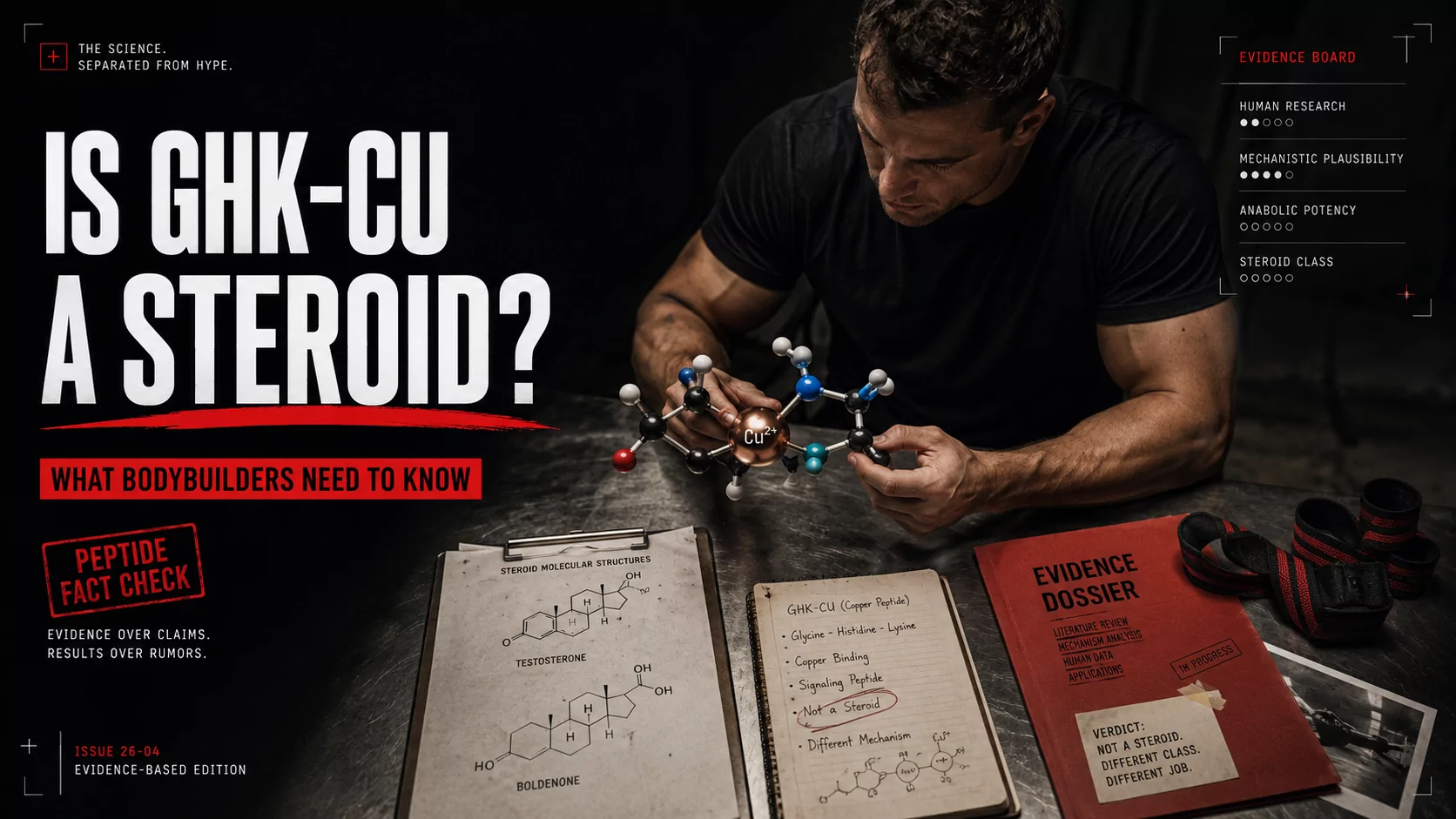
Bodybuilders encounter GHK-Cu in discussions about injury recovery, connective tissue, skin quality, hair support and peptide “stacks.” Because it is often sold beside growth hormone secretagogues and other performance-oriented compounds, beginners may assume it is another type of steroid.
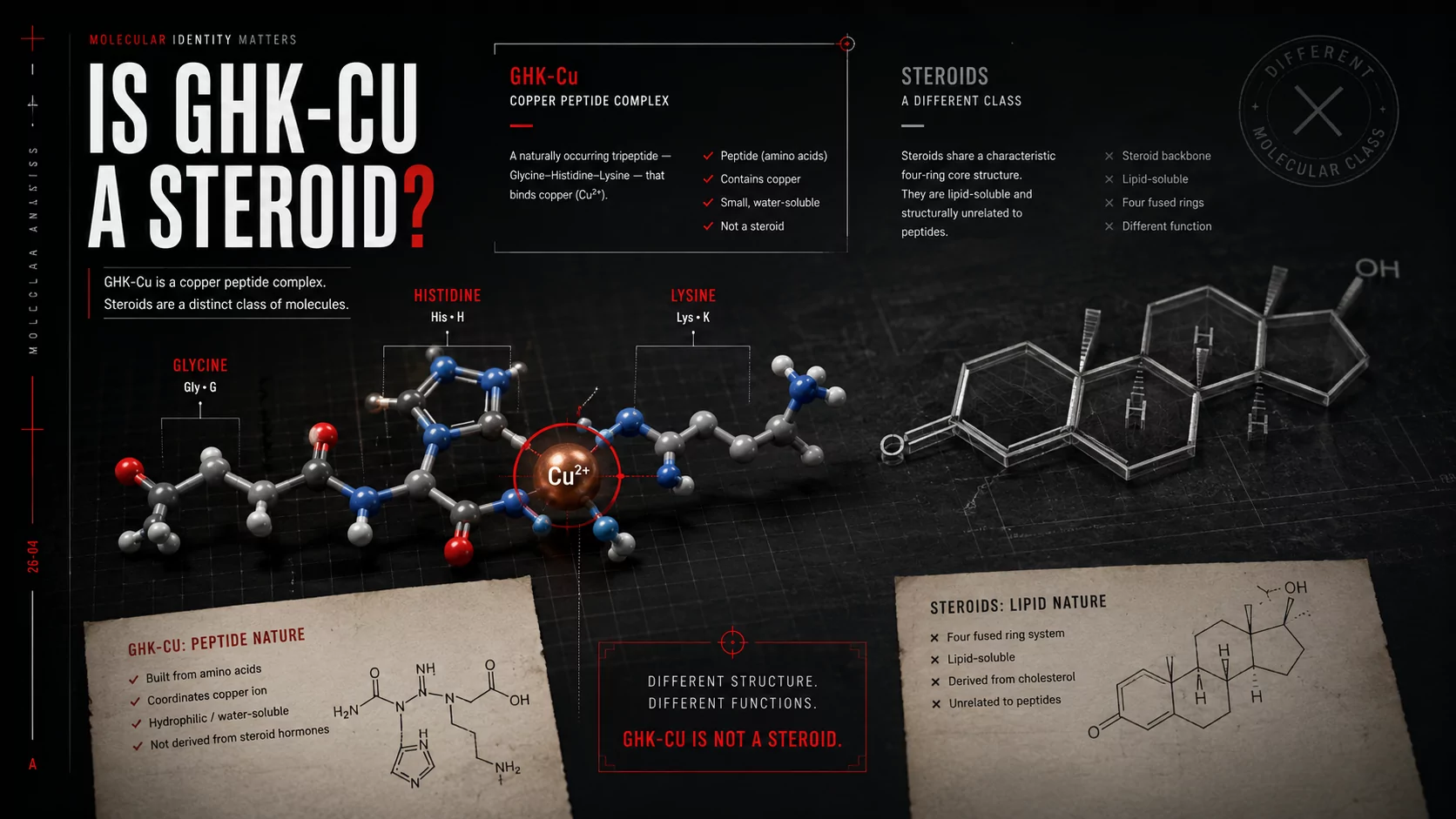
GHK-Cu is not an anabolic steroid. It is a copper-binding tripeptide made from three amino acids: glycine, histidine and lysine. It has no steroid structure, does not act as a testosterone derivative and is not known to produce muscle growth through the androgen receptor.
That direct answer does not make GHK-Cu simple. Research has connected this naturally occurring peptide with collagen turnover, tissue remodeling, antioxidant activity and wound-repair signaling. However, much of the enthusiasm surrounding systemic and injectable use extends beyond the available human evidence.
This guide explains what GHK-Cu is, how it differs from anabolic steroids, what it may realistically offer bodybuilders, and why topical skincare evidence should not be treated as proof that an injectable peptide is safe or effective.
Important: GHK-Cu has not been approved by the FDA as an injectable bodybuilding, injury-recovery or anti-aging treatment. This article is educational and does not provide a personal dosage, injection or stacking protocol.
Is GHK-Cu a Steroid?
No. GHK-Cu is neither an anabolic steroid nor a corticosteroid.
Anabolic-androgenic steroids are compounds structurally related to testosterone. Their physique and performance effects primarily arise from binding to androgen receptors, changing gene transcription and increasing androgenic signaling in tissues such as skeletal muscle.
GHK-Cu belongs to an entirely different chemical category. It is a complex formed when the naturally occurring tripeptide GHK binds a copper ion. Rather than acting through androgen receptors, it has been investigated for its influence on cellular repair signals, extracellular-matrix turnover, inflammation and copper-dependent biological processes.
Key distinction: Steroids manipulate androgenic or steroid-hormone pathways. GHK-Cu is a small copper-carrying peptide associated primarily with tissue-remodeling signals. Sharing the same bodybuilding marketplace does not make the compounds pharmacologically similar.
Why Is GHK-Cu Mistaken for a Steroid?
The confusion usually comes from marketing context rather than chemistry. GHK-Cu is frequently:
- Sold by companies that also sell anabolic drugs and performance peptides
- Discussed in bodybuilding forums and enhancement communities
- Included in recovery-focused peptide blends
- Promoted for connective tissue, hair and skin support during steroid cycles
- Supplied as a lyophilized powder in a vial
None of those features defines a steroid. Packaging, injection route and target audience do not determine a molecule’s drug class.
What Is GHK-Cu?
GHK-Cu is the copper complex of glycyl-L-histidyl-L-lysine. The letters G, H and K represent the three amino acids in the peptide:
- G: Glycine
- H: Histidine
- K: Lysine
- Cu: Copper
The GHK peptide has a strong affinity for copper ions. When copper is bound to it, the resulting complex is commonly written as GHK-Cu or GHK-Cu2+.
GHK was originally identified in human plasma and has also been found in saliva and urine. Its concentration appears to decline with age, which has helped make it a subject of skin-aging and regenerative research.
A Naturally Occurring Peptide, but Not a Conventional Nutrient
Calling GHK-Cu “natural” can create the wrong impression. A molecule occurring naturally in the body is not automatically safe at any concentration, through every delivery route or when supplied by an unregulated manufacturer.
Insulin, testosterone and growth hormone also occur naturally, yet administering them externally can produce powerful effects and serious risks. What matters is the formulation, amount, route, purity, individual health status and quality of supporting evidence.
What Does Copper Do?
Copper is an essential trace element needed for multiple enzymes involved in energy production, antioxidant defense, connective-tissue formation, iron metabolism and nervous-system function.
GHK may function partly as a copper carrier, binding the ion and helping make it available within biological environments. The peptide also appears to influence cellular signaling beyond simply transporting copper.
This does not mean that more copper always improves recovery. Excess copper can be harmful, and total exposure from diet, supplements and copper-containing compounds should not be ignored.
GHK-Cu vs. Anabolic Steroids
| Feature | GHK-Cu | Anabolic steroids |
|---|---|---|
| Chemical class | Copper-bound tripeptide | Testosterone-related steroid compounds |
| Primary pathway | Cell signaling, copper transport and tissue remodeling | Androgen-receptor activation |
| Direct muscle-building effect | Not established | Well established for many compounds |
| Androgenic activity | Not known to be androgenic | Varies by steroid but is generally present |
| Testosterone suppression | No established direct suppressive mechanism | Common with exogenous anabolic steroids |
| Virilization risk | Not expected through an androgenic mechanism | Possible, especially in women |
| Estrogen conversion | Does not aromatize into estrogen | Some steroids can aromatize |
| Main bodybuilding interest | Recovery, connective tissue, skin and hair | Muscle mass, strength and physique enhancement |
| Human performance evidence | Very limited | Substantial evidence for anabolic effects, alongside substantial risks |
| FDA-approved bodybuilding use | No | No |
GHK-Cu Is Non-Androgenic, Not Necessarily “Anabolic”
The word anabolic broadly refers to building larger or more complex molecules and tissues. In fitness marketing, however, it is often used loosely to imply muscle growth.
GHK-Cu may support processes involved in collagen synthesis and tissue repair, but this does not make it an anabolic steroid or a proven skeletal-muscle anabolic agent. Remodeling collagen around a wound is biologically different from adding significant contractile muscle tissue.
How Does GHK-Cu Work?
GHK-Cu does not have one simple mechanism. Laboratory and animal research suggests that it can influence multiple cellular pathways involved in repair and tissue maintenance.
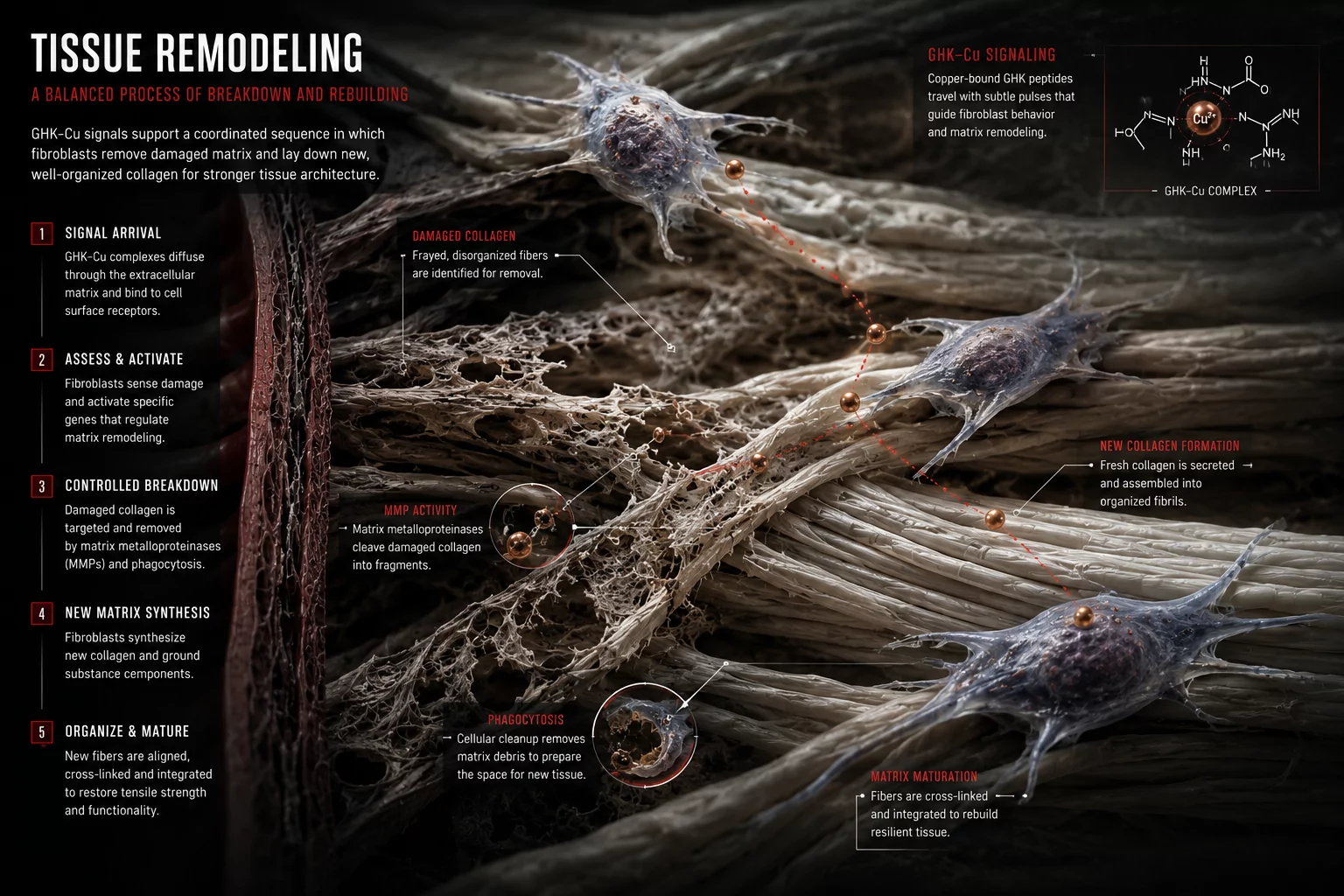
A scientific review indexed by the National Library of Medicine describes research connecting GHK-Cu with collagen, elastin and glycosaminoglycan synthesis, fibroblast activity, blood-vessel growth and tissue repair. Much of this evidence is preclinical, and the findings should not be translated directly into guaranteed bodybuilding outcomes.
Fibroblast Activity
Fibroblasts are cells that produce and organize components of the extracellular matrix, including collagen. GHK-Cu has been studied for its ability to support fibroblast function and influence the environment in which skin and connective tissue remodel.
This mechanism explains why copper peptides are better established in cosmetic and dermatological discussions than in muscle-building research.
Collagen and Extracellular-Matrix Turnover
Collagen is not merely “produced” and left in place. Healthy tissue constantly balances synthesis, breakdown and reorganization.
Research suggests GHK-Cu may influence both collagen production and matrix-remodeling enzymes. This distinction is important: effective repair requires damaged matrix to be removed and appropriately replaced, not simply covered with more collagen.
Copper Delivery
The histidine component of GHK helps coordinate copper. Copper is required by lysyl oxidase, an enzyme involved in cross-linking collagen and elastin. Those cross-links contribute to the mechanical strength of connective tissue.
GHK-Cu should not be interpreted as a general treatment for copper deficiency. Diagnosing and treating mineral deficiencies requires a different clinical approach.
Inflammatory Signaling
Inflammation is necessary for early repair but can become harmful when excessive or prolonged. Preclinical work suggests GHK-Cu may modulate inflammatory signals and reduce some forms of oxidative stress.
“Anti-inflammatory” does not mean it acts like a painkiller or guarantees relief from tendonitis, arthritis or post-training soreness. A substance can alter laboratory inflammatory markers without producing a meaningful clinical benefit.
Gene-Expression Research
GHK has attracted interest because laboratory analyses suggest it may influence the expression of numerous genes associated with tissue maintenance and repair.
This sounds dramatic, but all biologically active substances affect gene expression in some way. A gene-expression change is not automatically beneficial, clinically important or safe over the long term.
Why Do Bodybuilders Use GHK-Cu?
Bodybuilders generally do not use GHK-Cu as a substitute for testosterone or other anabolic agents. Interest is usually centered on maintaining the tissues and appearance affected by intense training, dieting and enhancement practices.
Connective-Tissue Support
Heavy resistance training places repeated stress on tendons, ligaments and other connective tissues. Because GHK-Cu is associated with collagen remodeling, some athletes view it as a recovery-support compound.
There is currently no strong human evidence proving that injectable GHK-Cu repairs a torn tendon, heals a strained muscle or prevents training injuries. Any such claim should be treated as experimental rather than established.
Readers researching peptide-based injury claims may also find our evidence-focused guide to BPC 157 and injury recovery useful. Neither compound should replace imaging, rehabilitation or appropriate load management when an injury is significant.
Skin Quality During Bulking and Cutting
Rapid changes in body weight can affect skin appearance. Bodybuilders may also experience acne, dryness, stretch marks, repeated shaving irritation or damage from extensive sun exposure.
Topical copper peptides are marketed to support skin texture, elasticity and repair. This application has greater practical and research support than using injectable GHK-Cu for systemic bodybuilding recovery, although results are generally gradual rather than transformational.
Hair and Scalp Support
Androgenic compounds can accelerate genetically predisposed hair loss by increasing androgen signaling in susceptible follicles. GHK-Cu is sometimes promoted as a way to support follicles or improve scalp condition.
It should not be described as an androgen blocker. GHK-Cu does not neutralize dihydrotestosterone, reverse a person’s genetic susceptibility or reliably prevent steroid-related hair loss.
Hair thinning can have multiple causes, including androgenetic alopecia, calorie restriction, thyroid dysfunction, iron deficiency, illness and medication effects. A dermatologist can help distinguish them.
Cosmetic Recovery
Competitive bodybuilding is judged visually. Interest in GHK-Cu may therefore involve skin tone, scar appearance and overall cosmetic presentation as much as athletic recovery.
Those goals differ from increasing strength or hypertrophy. Someone expecting a steroid-like change in muscle fullness or training performance is likely to be disappointed.
Does GHK-Cu Build Muscle?
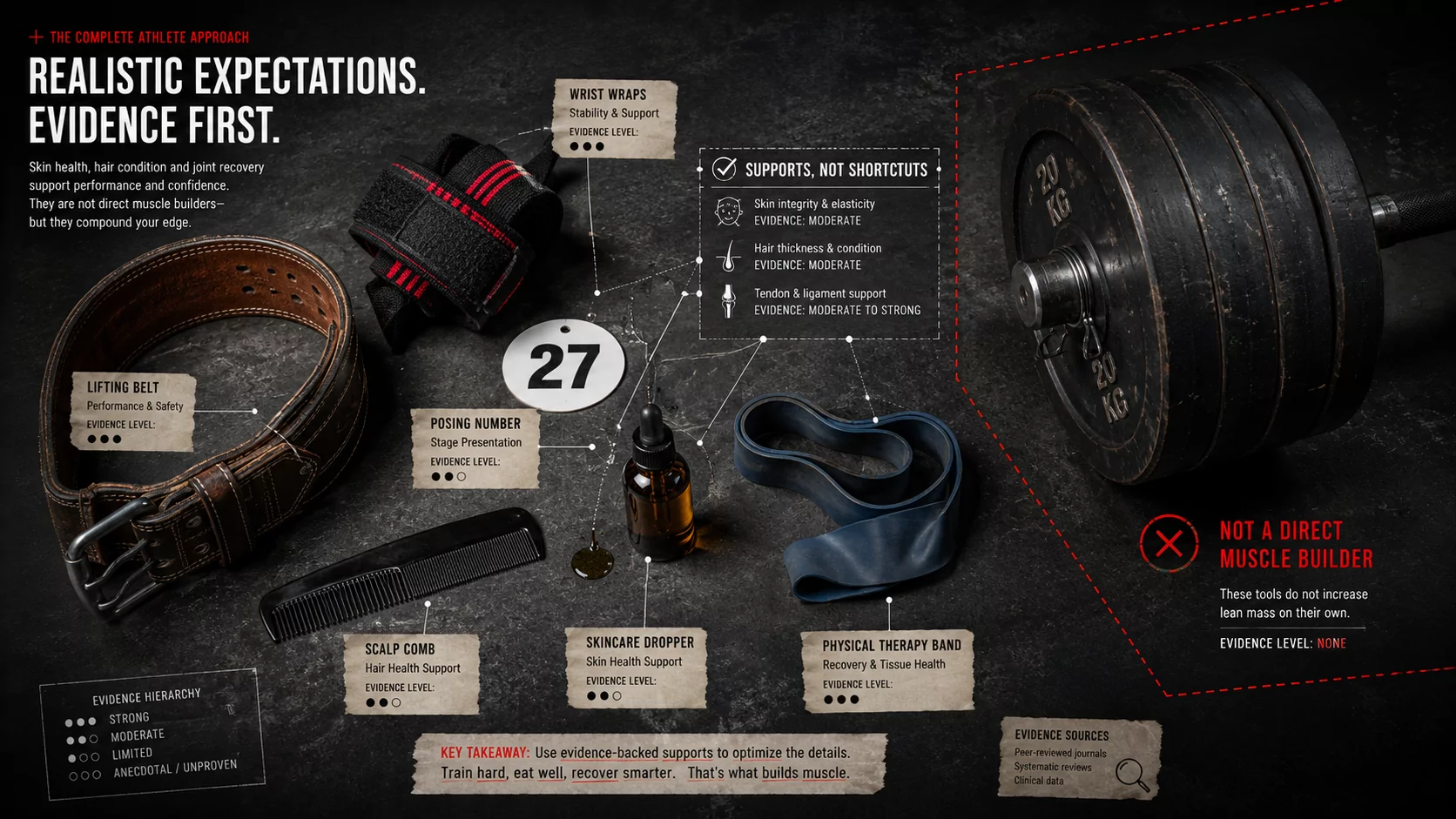
There is no convincing human evidence that GHK-Cu directly produces significant skeletal-muscle hypertrophy in healthy bodybuilders.
GHK-Cu is not known to activate androgen receptors, raise testosterone, increase growth hormone in a clinically established manner or reproduce the direct anabolic signaling of conventional performance-enhancing drugs.
Direct Muscle Growth
Claims that GHK-Cu “regenerates tissue” are sometimes expanded into claims that it builds muscle. This is an unjustified leap.
Skeletal-muscle hypertrophy depends on mechanical tension, training volume, adequate energy and protein, recovery, genetics and hormonal conditions. GHK-Cu has not been shown to meaningfully replace or amplify those factors in trained humans.
Indirect Training Benefits
A compound that genuinely improved skin integrity or connective-tissue recovery could theoretically help an athlete train more consistently. That would be an indirect benefit rather than a direct anabolic effect.
The indirect argument remains speculative for injectable GHK-Cu because controlled athletic studies are lacking.
What Realistic Expectations Look Like
Realistic expectations depend on the form being used:
- Topical skincare: Gradual improvements in texture, hydration or the appearance of fine lines may be plausible.
- Scalp products: Possible support for scalp condition or follicular environment, but not guaranteed regrowth.
- Injectable use: Systemic recovery claims remain inadequately supported and carry additional safety uncertainty.
- Muscle growth: No strong evidence of a meaningful direct effect.
Potential Benefits of GHK-Cu: What the Evidence Suggests
1. Skin Remodeling
The most credible GHK-Cu discussion concerns skin biology. Copper-peptide research has investigated collagen synthesis, elastin, fibroblast function, skin thickness and the appearance of photodamaged or aging skin.
Even here, evidence quality varies by formulation and study. A cosmetic serum is not equivalent to a lyophilized injectable product, and one topical formula cannot automatically validate another.
2. Wound-Repair Signaling
Laboratory and animal research has connected GHK-Cu with several stages of repair, including inflammatory modulation, new blood-vessel formation, fibroblast activity and extracellular-matrix remodeling.
These findings make GHK-Cu scientifically interesting, but they do not prove that self-administered injectable GHK-Cu will safely accelerate recovery from sports injuries. Human wound healing is influenced by circulation, infection, diabetes, nutrition, smoking, medications and the severity of the damage.
3. Collagen and Elastin Support
GHK-Cu may influence the production and organization of collagen and elastin. These structural proteins matter for skin and connective tissue, but producing more of them does not guarantee stronger tendons or injury resistance.
Collagen fibers must be organized and cross-linked correctly. Too much disordered scar tissue can impair function rather than improve it.
4. Antioxidant Activity
Copper participates in enzymes involved in oxidative defense, while GHK-Cu has shown antioxidant effects in experimental models. This may help protect tissues from some types of oxidative damage.
For athletes, oxidative stress is not universally harmful. Exercise-induced oxidative signals contribute to normal adaptation, and aggressively suppressing them is not automatically beneficial.
5. Inflammatory Modulation
Research suggests GHK-Cu can influence inflammatory mediators. The more accurate phrase is inflammatory modulation, because repair requires a coordinated inflammatory phase rather than the complete elimination of inflammation.
6. Hair-Follicle Research
GHK-Cu has been investigated for effects on follicular activity and scalp tissue. Its role remains less established than standard evidence-based treatments for androgenetic hair loss.
Bodybuilders using androgenic compounds should not assume a copper-peptide product will override the hormonal drivers of genetically susceptible hair loss.
7. Healthy-Aging Research
GHK levels appear to decline with age, and experimental studies have generated interest in its potential influence on age-related gene-expression patterns and tissue repair. A review of this emerging field is available through PubMed’s overview of GHK as an anti-aging peptide.
“Anti-aging” remains a broad marketing term rather than a specific clinical outcome. Evidence that a compound affects skin or cellular pathways does not prove that it extends lifespan, prevents disease or reverses biological aging in humans.
Topical vs. Injectable GHK-Cu
Route of administration is one of the most important distinctions in this topic. Evidence and risks cannot be transferred freely between topical and injectable products.
| Feature | Topical GHK-Cu | Injectable GHK-Cu |
|---|---|---|
| Primary interest | Skin texture, cosmetic repair and scalp care | Systemic recovery and regenerative claims |
| Research base | More established, though still formulation-dependent | Limited human safety and efficacy data |
| Main risks | Irritation, sensitivity and product interactions | Contamination, infection, immune reactions, dosing uncertainty and unknown systemic effects |
| Sterility required | No, unless applied to special clinical situations | Yes |
| FDA-approved injectable use | Not applicable | No |
| Relevance to bodybuilding | Primarily cosmetic skin or scalp support | Experimental recovery claims |
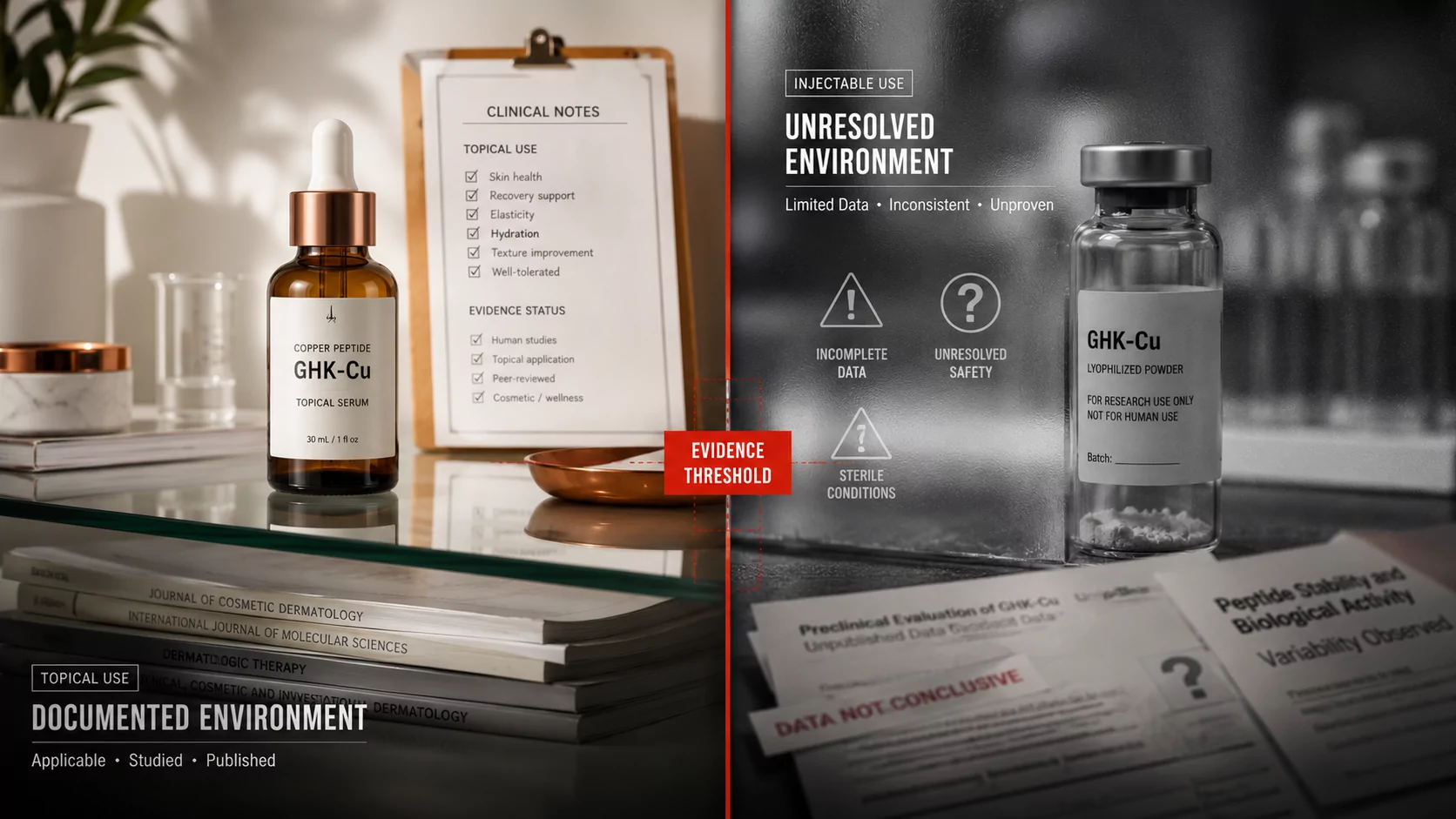
Topical Products
Copper peptides are used in cosmetic serums, creams and scalp formulations. Product performance depends on concentration, stability, delivery system, other ingredients and packaging.
Topical products can still irritate sensitive skin. Introducing one product at a time and following its manufacturer directions makes adverse reactions easier to identify.
Injectable Products
Injectable GHK-Cu creates a different risk profile. The product must be correctly identified, accurately concentrated, sterile, low in endotoxins and stable through storage and handling.
The FDA states that compounded injectable GHK-Cu may present an immunogenicity risk because of possible aggregation and peptide-related impurities. It also notes that human data are limited for evaluating safety. Readers can review the agency’s current discussion of bulk drug substances that may present significant compounding risks.
A high peptide-purity percentage does not prove sterility or rule out bacterial endotoxins. Those are separate quality tests.
Product Listings Are Not Medical Validation
Readers researching commercial options may encounter listings such as real GHK-CU from Dragon Pharma. A product listing can provide information about vial size, labeled concentration and available testing, but it does not establish that injectable GHK-Cu is FDA-approved or medically appropriate for an individual.
Before relying on a laboratory report, confirm that it identifies the exact product and batch. Potency testing alone cannot validate sterility, long-term stability or clinical effectiveness.
Potential Pros and Cons of GHK-Cu for Bodybuilders
Potential Advantages
- Not an anabolic steroid: It does not share the androgenic mechanism of testosterone derivatives.
- No known direct testosterone suppression: GHK-Cu is not expected to shut down the reproductive axis through androgen-receptor feedback.
- Interesting tissue-remodeling research: GHK-Cu has been studied in relation to fibroblasts, collagen and wound-repair signaling.
- Topical versatility: Copper peptides are available in skincare and scalp-care formulations that do not carry injection-related risks.
- Potential cosmetic relevance: Skin texture, scar appearance and scalp condition may matter to physique athletes.
- Different role from performance drugs: Its proposed value centers on tissue maintenance rather than hormonal muscle building.
Potential Disadvantages
- Not a proven muscle builder: It should not be expected to produce steroid-like hypertrophy or strength.
- Limited injectable evidence: Human research does not establish a safe, effective systemic bodybuilding protocol.
- Unknown long-term effects: Extended systemic use has not been adequately studied.
- Product-quality uncertainty: Online peptides may be mislabeled, degraded, contaminated or incorrectly concentrated.
- Possible immune reactions: Aggregation and peptide impurities are concerns with injectable formulations.
- Copper-related concerns: Excessive or poorly controlled exposure may be inappropriate for some users.
- Marketing often exceeds the data: Regeneration claims are frequently presented with more certainty than the research supports.
- Cost: Repeated peptide use can become expensive without providing a measurable performance benefit.
Possible GHK-Cu Side Effects
The safety profile depends heavily on formulation and route. A topical cosmetic cannot be evaluated as though it creates the same exposure as an injection.
Topical Irritation
Possible reactions include redness, itching, burning, dryness or a rash. These symptoms may come from GHK-Cu itself or another ingredient in the formula.
Severe swelling, blistering or spreading dermatitis warrants discontinuation and medical advice.
Injection-Site Reactions
Redness, discomfort, swelling or bruising can occur around an injection site. Increasing pain, heat, drainage, fever or expanding redness can indicate infection and should not be dismissed as a routine peptide reaction.
Allergic or Immune Reactions
Modified, aggregated or impure peptide material may provoke an immune response. Symptoms such as hives, facial swelling, throat tightness, wheezing or difficulty breathing require urgent medical care.
Contamination and Endotoxins
A vial may contain the labeled peptide and still be unsafe because of bacteria, fungi or bacterial endotoxins. Endotoxin exposure can cause fever, chills, severe malaise and systemic inflammation.
Visual appearance cannot establish sterility. A clear solution is not necessarily a safe solution.
Unknown Systemic Effects
Long-term systemic GHK-Cu exposure has not been characterized adequately in humans. This is especially relevant when it is combined with several other experimental peptides or performance-enhancing drugs.
Copper Imbalance
The amount of elemental copper delivered by a GHK-Cu preparation may not be comparable with an ordinary mineral supplement, but users should still consider total copper exposure.
People with disorders of copper metabolism, significant liver disease or unexplained abnormal copper markers require medical guidance rather than experimentation.
Seek urgent medical care for difficulty breathing, facial or throat swelling, fainting, confusion, high fever, rapidly spreading injection-site redness or other signs of a severe allergic or systemic reaction.
Can GHK-Cu Be Used with Anabolic Steroids?
GHK-Cu is commonly discussed alongside steroid cycles because the compounds serve different proposed purposes. Steroids are used for anabolic and performance effects, while GHK-Cu is marketed around connective tissue, skin and hair.
A different mechanism does not guarantee that a combination is safe, necessary or effective.
Why Bodybuilders Combine Them
Common reasons include attempts to:
- Support skin during rapid weight gain
- Reduce the appearance of stretch marks or scars
- Maintain scalp and hair condition
- Support connective tissue during high training loads
- Add a recovery-oriented compound to a larger enhancement protocol
GHK-Cu Does Not Cancel Steroid Risks
GHK-Cu should not be viewed as protection from high blood pressure, adverse cholesterol changes, cardiac remodeling, infertility, testosterone suppression, liver strain or psychiatric effects associated with anabolic-drug use.
It also does not act as a proven shield against androgenic hair loss or acne.
Stacking Makes Side Effects Harder to Interpret
Introducing several compounds at once makes it difficult to determine what caused a rash, swelling, fatigue, inflammation or abnormal laboratory result.
This problem becomes greater when product purity and concentration are uncertain. A “recovery stack” may increase complexity without supplying evidence that the combination works better than appropriate rehabilitation and training adjustments.
GHK-Cu vs. Other Recovery Peptides
GHK-Cu is often grouped with peptides despite having a different focus from growth hormone secretagogues and appetite-regulating drugs.
| Compound | Primary mechanism or research focus | What it should not be confused with |
|---|---|---|
| GHK-Cu | Copper transport, skin biology and tissue-remodeling signals | An anabolic steroid or direct muscle builder |
| BPC 157 | Experimental tissue and gastrointestinal repair research | An approved injury treatment |
| CJC-1295 DAC | Prolonged stimulation of the GH/IGF-1 axis | Direct recombinant HGH |
| CJC-1295 No DAC with ipamorelin | Shorter growth hormone secretory signaling | A collagen-specific peptide |
| Dragontropin | Direct recombinant human growth hormone | A GHRH analogue or copper peptide |
For a clearer comparison between direct HGH and peptide-based signaling, our Dragontropin HGH review explains how recombinant somatropin differs from compounds that act upstream of growth hormone.
Is GHK-Cu Legal and Allowed in Tested Sport?
Legal status depends on the product form, route, claims, jurisdiction and how it is manufactured or sold. A cosmetic ingredient, a compounded preparation and an online “research” vial may fall under different rules.
In the United States, injectable GHK-Cu is not an FDA-approved treatment. The agency’s compounding position and evaluation of non-injectable routes are separate from formal drug approval.
Anti-Doping Considerations
GHK-Cu is not an anabolic steroid, but that fact alone does not guarantee that every GHK-Cu product or method of administration is acceptable in tested sport.
The current World Anti-Doping Agency Prohibited List contains broad categories in addition to specifically named substances. Athletes should check the exact product, route and applicable rules with their anti-doping organization or another authoritative medication-checking service before use.
Online peptide products also create contamination and mislabeling risks. Under strict-liability anti-doping systems, an athlete may be responsible for a prohibited substance found in a sample even when it was not disclosed on the label.
Who Should Be Especially Cautious?
Self-experimentation deserves particular caution for people with:
- Known copper-metabolism disorders
- Significant liver or kidney disease
- A history of severe allergic reactions to injectable products
- Active skin infections or open wounds
- Unexplained neurological or systemic symptoms
- Pregnancy, plans for pregnancy or breastfeeding
- Multiple medications or experimental compounds
- Participation in drug-tested sport
A serious tendon, ligament or muscle injury also deserves proper diagnosis. Masking discomfort or relying on a peptide while continuing to overload damaged tissue can delay appropriate care.
How to Evaluate GHK-Cu Product Claims
Before accepting a claim, ask what was actually studied:
- Was the evidence from cells, animals or humans?
- Was the product topical or injectable?
- Was the outcome cosmetic appearance, a laboratory marker or functional healing?
- How many participants were included?
- Was there a placebo or comparison group?
- Was the exact commercial formulation tested?
- Did the study involve athletes or injured bodybuilders?
- Were long-term side effects evaluated?
The phrases “supports collagen,” “activates repair genes” and “promotes regeneration” may describe interesting mechanisms without proving that a product heals an injury faster or improves athletic performance.
What a Lab Report Can and Cannot Establish
A useful report may help establish peptide identity, quantity and purity. It should identify the product, batch, testing date, analytical method and laboratory.
Standard purity or mass testing does not necessarily establish:
- Sterility
- Endotoxin levels
- Absence of all contaminants
- Correct storage throughout distribution
- Clinical effectiveness
- Long-term safety
For injectable products, these missing quality dimensions are not minor details.
Frequently Asked Questions About GHK-Cu
No. GHK-Cu is a copper-bound tripeptide, not a testosterone-derived steroid. It does not share the structure or primary androgen-receptor mechanism of anabolic steroids.
It has been associated with tissue-repair and collagen-related processes, but it is not established as a direct skeletal-muscle anabolic compound. It should not be expected to produce steroid-like hypertrophy.
There is no convincing evidence that GHK-Cu meaningfully increases testosterone in healthy bodybuilders.
It has no established direct mechanism for suppressing the hypothalamic-pituitary-gonadal axis in the way exogenous anabolic steroids do. Human systemic-use data remain limited, however.
Traditional steroid PCT is intended to address reproductive-axis suppression. Because GHK-Cu is not an androgen and is not known to cause that form of suppression, the rationale does not apply in the same way.
There is no strong human evidence that it directly builds meaningful muscle mass. Any proposed bodybuilding value is more commonly related to skin, connective tissue or recovery rather than hypertrophy.
Preclinical research makes tissue remodeling an area of interest, but injectable GHK-Cu has not been proven to heal tendon injuries in controlled human athletic studies. Tendon injuries require appropriate diagnosis and progressive rehabilitation.
It may support scalp or follicular conditions, but evidence is limited. It is not established as a reliable replacement for standard treatments and may not overcome androgen-driven genetic hair loss.
No established evidence shows that GHK-Cu functions as a clinically meaningful DHT blocker.
The molecule may be related, but the exposure, formulation, evidence and risks differ substantially. Topical cosmetic findings cannot be used to prove the safety of injection.
GHK-Cu is not FDA-approved as an injectable treatment for recovery, bodybuilding or anti-aging. Its status in cosmetic products and ongoing compounding evaluations should not be confused with formal drug approval.
Topical copper peptides are generally regarded as better characterized than injectable use, although irritation can occur. The FDA has identified limited human safety data and potential immunogenicity concerns for compounded injectable GHK-Cu.
GHK-Cu is not androgenic and is not expected to produce steroid-like virilization. That does not establish the safety of systemic or injectable use, particularly during pregnancy or breastfeeding.
The combination is marketed in some recovery blends, but controlled human evidence has not established that the stack is safe or more effective than either component alone.
It should not be relied on as protection against steroid-accelerated androgenetic alopecia. It does not remove the underlying androgenic stimulus.
Athletes should not assume permission merely because GHK-Cu is not an anabolic steroid. They should check the exact product, route and current rules with their anti-doping authority before use.
Final Verdict: GHK-Cu Is a Copper Peptide, Not a Steroid
GHK-Cu is chemically and pharmacologically different from anabolic steroids. It is a naturally occurring copper-binding tripeptide associated with tissue-remodeling, collagen, skin and wound-repair research. It does not act as a testosterone derivative and should not directly suppress natural testosterone through the conventional androgenic pathway.
For bodybuilders, its most plausible value lies in cosmetic skin applications and the possibility of connective-tissue support—not direct muscle gain. Even those expectations require restraint. Much of the regenerative evidence comes from laboratory, animal or topical research rather than controlled trials of injectable GHK-Cu in trained athletes.
Topical and injectable use must also be separated. A copper-peptide serum may cause local irritation, but an injectable product adds concerns involving sterility, endotoxins, concentration accuracy, immune reactions and unknown systemic effects.
Bottom line: GHK-Cu is not a steroid and should not be expected to deliver steroid-like gains. Its biology is scientifically interesting, particularly for skin and tissue remodeling, but injectable bodybuilding claims remain ahead of the human evidence. Treat it as an experimental peptide—not as a proven muscle builder, injury cure or safeguard against the side effects of anabolic drugs.