

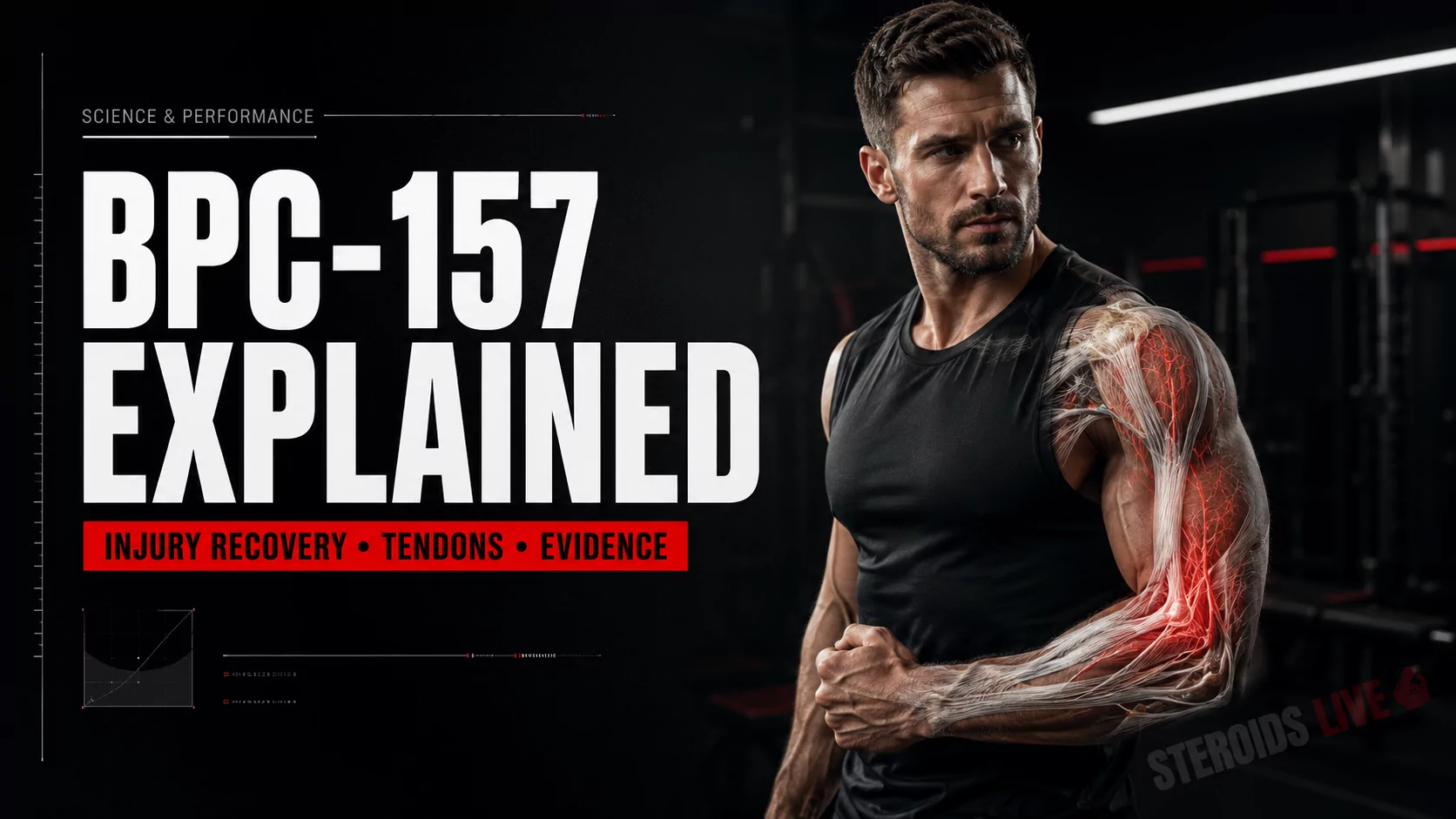
For bodybuilders and athletes, an injury does more than cause pain. It interrupts progressive overload, limits exercise selection and can erase months of momentum. That is why BPC-157 has attracted so much attention in strength and fitness circles. The peptide is frequently described online as a shortcut to faster tendon, ligament and muscle recovery—but the scientific picture is more complicated than the marketing suggests.
Laboratory and animal research has produced intriguing findings involving tendon cells, blood-vessel responses and soft-tissue repair. At the same time, strong clinical evidence in injured athletes is still missing. BPC-157 is not an FDA-approved treatment, its long-term safety in humans has not been established, and it is prohibited for drug-tested athletes.
This guide explains what BPC-157 is, how researchers believe it may influence healing and what athletes should understand before treating an experimental compound as a proven recovery therapy.

Important: BPC-157 should not be considered a substitute for medical diagnosis, physical therapy or a structured return-to-training plan. Persistent pain, sudden weakness, major swelling, instability or loss of function should be assessed by a qualified healthcare professional.
What Is BPC-157?
BPC-157 is a synthetic peptide consisting of 15 amino acids. Its name is commonly expanded as “Body Protection Compound 157.” It was developed from a sequence associated with a protein found in gastric juice, although commercially produced BPC-157 is synthesized rather than extracted directly from the human stomach.
A peptide is simply a short chain of amino acids. Amino acids are best known as the building blocks of protein, but certain peptide sequences can also act as biological signals. Depending on their structure, they may interact with receptors, enzymes or cellular pathways involved in metabolism, inflammation, hormone activity and tissue maintenance.
BPC-157 is not an anabolic steroid, testosterone derivative or growth hormone. It is also not known to build muscle directly. Its reputation in bodybuilding comes from preclinical research suggesting that it may influence processes involved in healing rather than from a demonstrated ability to increase muscle protein synthesis or strength.
Why BPC-157 Became Popular Among Athletes
Heavy resistance training repeatedly loads muscles, tendons, ligaments and joint structures. Most of that stress is productive when training volume and recovery are well managed. Problems develop when accumulated fatigue, poor technique, sudden workload increases or previous injuries exceed a tissue’s ability to adapt.
Tendons are particularly frustrating because they generally adapt more slowly than muscle. A lifter may feel strong enough to press, squat or pull heavy loads while the connective tissue supporting those movements remains irritated. This creates the familiar cycle of training through discomfort, reducing volume briefly and then aggravating the same area again.
BPC-157 appeals to athletes because it is promoted as a way to:
- support tendon and ligament recovery;
- help damaged muscle tissue repair;
- moderate excessive inflammatory activity;
- improve blood flow around injured tissue;
- reduce the time spent away from productive training; and
- support recovery from recurring overuse problems.
These potential applications explain the excitement, but they should not be confused with confirmed clinical benefits. Most of the positive findings come from cell experiments and animal models, not large controlled trials involving injured human athletes.
How Could BPC-157 Influence Injury Recovery?
Healing is not one isolated event. It is a coordinated sequence involving inflammation, blood-vessel activity, immune signaling, cell migration, collagen remodeling and gradual restoration of tissue strength. BPC-157 has been investigated in relation to several of these processes.
1. Tendon-cell migration and survival
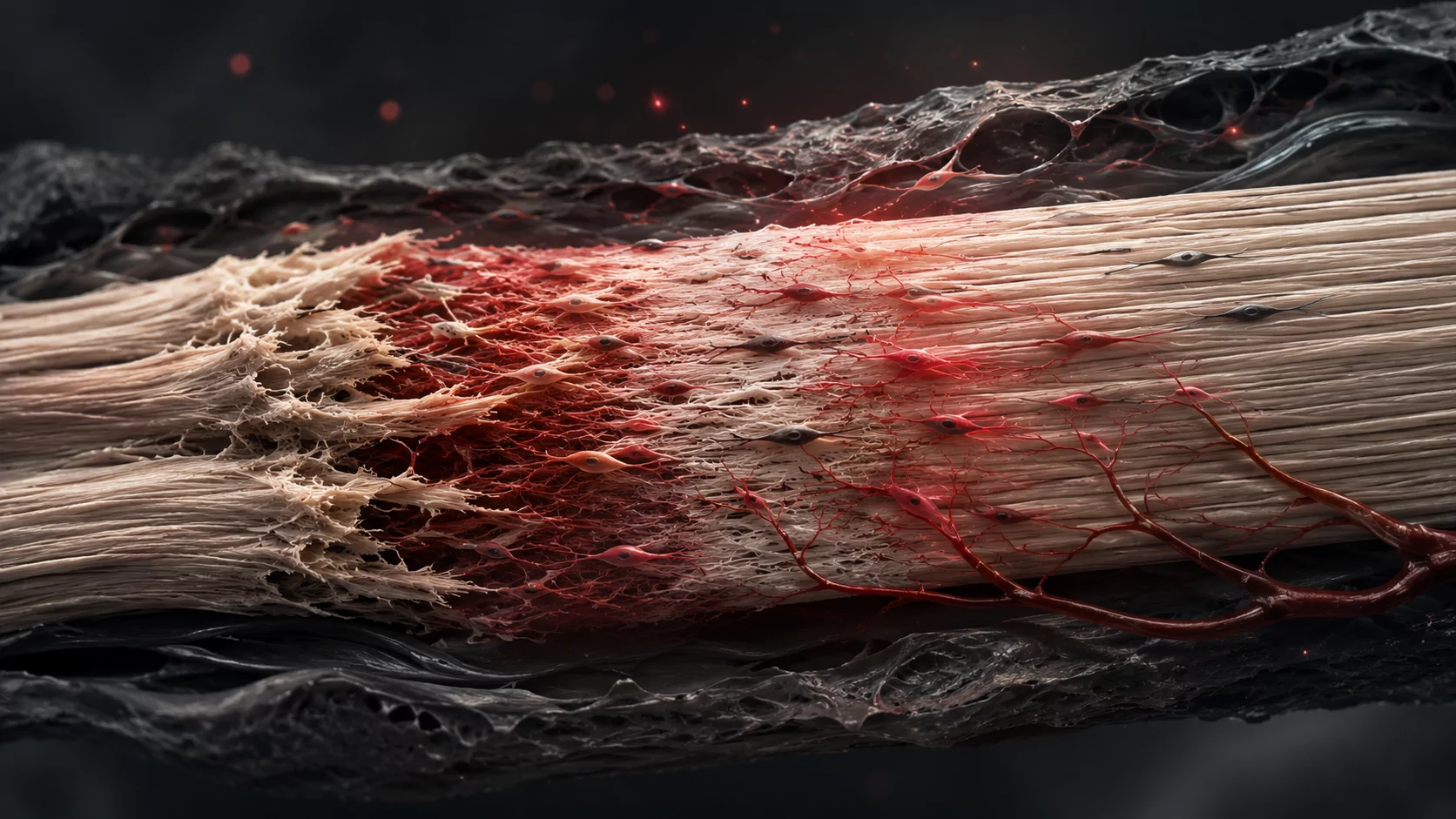
Fibroblasts are cells that help produce and organize components of connective tissue, including collagen. In laboratory research involving rat Achilles tendon cells, BPC-157 was associated with increased tendon-explant outgrowth, improved cell survival under oxidative stress and greater cell migration.
These findings matter because repair cells must reach the damaged area and remain functional before they can contribute to tissue remodeling. The relevant tendon-healing study indexed by the National Library of Medicine offers a plausible cellular mechanism for the peptide’s reputation. However, an isolated-cell experiment cannot tell us whether the same effect produces faster or stronger tendon healing in an injured person.
2. Angiogenesis and blood-vessel regulation
Healing tissue requires oxygen, amino acids and other nutrients. Those resources are delivered through the vascular system, making an appropriate blood supply an important part of recovery.
Animal studies suggest that BPC-157 may influence angiogenesis—the development of new blood vessels—and help regulate vascular responses around damaged tissue. This does not necessarily mean that the compound indiscriminately creates blood vessels. Researchers have more often described an angiomodulatory effect, meaning that it may affect how vascular repair is coordinated.
That distinction is important. Blood-vessel formation is a complex process, and altering it could have consequences that are not yet fully understood. A mechanism that appears beneficial in a controlled injury model cannot automatically be assumed safe across different medical conditions.
3. Collagen organization and connective-tissue repair
Collagen provides structural support within tendons, ligaments, skin and other tissues. After an injury, new collagen must be produced, aligned and remodeled according to the loads placed on the healing area.
Preclinical BPC-157 research has reported changes consistent with improved connective-tissue repair. This may help explain why the peptide is discussed most often in relation to stubborn elbow, shoulder, knee and Achilles problems rather than ordinary post-workout muscle soreness.
Even when a compound supports collagen-related processes, however, tissue must still be loaded progressively. Healing tissue that is never exposed to appropriate mechanical stress may not regain the strength, orientation or tolerance required for demanding athletic movement.
4. Inflammatory signaling
Inflammation is often treated as the enemy of recovery, but that is an oversimplification. The initial inflammatory response helps clear damaged material and begins the repair process. Problems arise when inflammation becomes excessive, prolonged or disconnected from normal tissue remodeling.
BPC-157 has shown anti-inflammatory and cytoprotective activity in several experimental models. In theory, this could create a more favorable environment for recovery. It does not mean that BPC-157 works like a standard pain reliever, nor does it prove that suppressing symptoms would restore an athlete’s load tolerance.
Pain relief can also be misleading. Feeling better before a structure has regained capacity may encourage a premature return to heavy training and increase the risk of reinjury.
5. Nitric-oxide pathways
Nitric oxide participates in vascular tone, circulation and numerous cellular signaling processes. Some BPC-157 research proposes that the peptide interacts with nitric-oxide pathways, potentially contributing to its observed effects on blood vessels and tissue protection.
This is one example of why BPC-157 cannot be reduced to a simple claim such as “more blood flow equals faster healing.” Its proposed actions appear to involve several interconnected systems, many of which have not been mapped adequately in humans.
What Types of Injuries Are Commonly Associated With BPC-157?
Online discussions frequently connect BPC-157 with a wide range of sports injuries. The most common categories include the following.
Tendon problems
Tendon-related complaints are perhaps the main reason strength athletes investigate BPC-157. Examples include patellar tendinopathy, Achilles irritation, distal biceps pain, rotator-cuff symptoms and the elbow pain that can develop after years of pressing, pulling or gripping.
Preclinical tendon research is promising, but there is not enough quality human evidence to say that BPC-157 reliably accelerates recovery from any specific tendinopathy.
Muscle strains and tears
Animal experiments have investigated BPC-157 in models of crushed or transected muscle. These studies have reported improvements in certain healing measurements. Athletes have therefore associated it with hamstring strains, calf injuries, adductor problems and partial pectoral tears.
The severity of muscle injuries varies enormously. A mild strain and a major tear requiring surgical consultation are not interchangeable. Attempting to self-manage a serious injury because a peptide may promote repair can delay appropriate treatment.
Ligament injuries
Ligaments connect bone to bone and help stabilize joints. BPC-157 is often promoted for sprains involving the knee, ankle, wrist or shoulder. Although animal research has examined ligament and tendon-to-bone healing, robust clinical evidence supporting use after human ligament injuries remains unavailable.
Joint pain and overuse symptoms
Joint pain may originate from cartilage, tendons, bursae, ligaments, bone, nerves or referred pain from another region. BPC-157 is sometimes presented as a universal solution for “joint recovery,” but that phrase ignores the importance of an accurate diagnosis.
A peptide cannot correct poor squat mechanics, excessive weekly volume, unsuitable footwear, unstable programming or an exercise that repeatedly aggravates a specific structure.
Post-surgical recovery
Some athletes become interested in peptides while recovering from orthopedic surgery. This is an especially inappropriate setting for unsupervised experimentation. Surgical recovery may involve medications, infection risk, clotting considerations and carefully controlled rehabilitation milestones. Any unapproved compound should be discussed openly with the surgeon and rehabilitation team.
What Does the Scientific Evidence Actually Show?
The most responsible description of BPC-157 is biologically interesting but clinically unproven.
A growing body of laboratory research has reported potentially beneficial effects involving tendons, muscles, ligaments, bone, blood vessels and gastrointestinal tissue. These findings provide hypotheses worth investigating. They do not establish that BPC-157 safely accelerates injury recovery in athletes.
A recent narrative review of BPC-157 in musculoskeletal medicine concluded that the compound shows substantial regenerative potential in preclinical studies but emphasized the minimal human evidence and need for controlled clinical trials.

The major limitations include:
- Heavy reliance on animal models: Results in rats do not always translate to humans.
- Limited independent replication: A meaningful portion of the research comes from a relatively small number of research groups.
- Lack of standardized human protocols: There is no clinically established dose, route, treatment duration or monitoring standard for sports injuries.
- Few meaningful human outcomes: Athletes care about pain, function, reinjury rates, tissue strength and return-to-sport time. These outcomes have not been established through large controlled trials.
- Insufficient long-term safety data: Short-term tolerance does not establish safety months or years later.
Anecdotal reports can generate useful research questions, but they are highly vulnerable to placebo effects, natural healing, simultaneous physical therapy and changes in training load. When an athlete rests, improves sleep, begins rehabilitation and uses BPC-157 at the same time, it is impossible to know which factor produced the improvement.
Does BPC-157 Really “Accelerate” Recovery?
Based on animal and cellular research, BPC-157 may influence mechanisms capable of supporting repair. Based on human clinical evidence, it has not yet been proven to accelerate recovery from common bodybuilding or sports injuries.
This distinction should shape the language used around the compound:
- Reasonable: “BPC-157 has shown potentially beneficial effects in preclinical tissue-healing models.”
- Not established: “BPC-157 heals torn tendons faster in athletes.”
- Reasonable: “Researchers have observed changes involving cell migration, vascular responses and tissue repair.”
- Not established: “BPC-157 will get you back to full-strength training in a specific number of days.”
The peptide’s popular reputation is therefore ahead of the clinical evidence.
BPC-157 Is Not a Replacement for Rehabilitation
Even a future therapy proven to improve biological healing would not eliminate the need for rehabilitation. Recovery requires more than repairing microscopic damage. The athlete must also rebuild:
- range of motion;
- coordination and movement confidence;
- tendon and muscle load tolerance;
- strength at different joint angles;
- speed and force-production capacity; and
- sport-specific performance.
A bodybuilder returning from a shoulder injury, for example, may need to rebuild pressing tolerance through controlled ranges, slower tempos and gradually increasing loads. An endurance athlete with an Achilles problem may need staged calf loading before resuming normal mileage. No peptide can perform those adaptations on the athlete’s behalf.
The strongest recovery framework usually combines an accurate diagnosis, sensible load management, progressive rehabilitation, adequate protein, sufficient calories and consistent sleep. Cellular energy availability may also influence training recovery, which is explored further in our guide to NAD+ and mitochondrial function for athletes.
Safety and Regulatory Concerns
The absence of frequent published adverse events should not be interpreted as proof of safety. With an unapproved and inconsistently monitored compound, adverse outcomes may be underreported, misattributed or never formally documented.
The U.S. Food and Drug Administration’s compounding safety information identifies concerns involving potential immunogenicity, peptide-related impurities and insufficient safety information for proposed routes of BPC-157 administration.
Important uncertainties include:
- possible immune reactions;
- contamination or sterility failures;
- incorrect concentration or mislabeled contents;
- unknown interactions with medications or medical conditions;
- uncharacterized long-term effects; and
- risks associated with unsupervised injection.
Angiogenesis also deserves careful attention. Supporting blood-vessel development may be useful during normal repair, but vascular growth is involved in other biological processes as well. Claims that BPC-157 is completely harmless because it is “only a peptide” are not scientifically defensible.
Product Quality Is a Separate Question From Effectiveness
Two different issues are often blended together in discussions about research peptides:
- Does the compound produce the biological effect being claimed?
- Does the vial actually contain the compound and concentration shown on its label?
A legitimate-looking label cannot prove clinical effectiveness, and promising research cannot guarantee that an online product is accurately manufactured. Peptides may be vulnerable to degradation, contamination, incorrect concentration and storage problems.
Readers comparing branded listings may encounter products marketed as authentic Dragon Pharma BPC 157. Product branding and seller claims should still be evaluated separately from medical evidence, regulatory approval and individualized safety considerations.
Laboratory documentation may provide information about identity, purity or concentration, but it does not convert an investigational product into an approved injury treatment. A certificate should also be traceable to the tested batch and an identifiable independent laboratory rather than presented as a generic image reused across multiple products.
Is BPC-157 Prohibited in Competitive Sports?
Yes. BPC-157 is listed by the World Anti-Doping Agency under category S0, which covers non-approved substances. It is prohibited at all times, both in and out of competition.
Drug-tested athletes should review the current WADA Prohibited List and the rules of their specific federation. A product being widely available online—or being described as a research peptide—does not make it permissible under anti-doping regulations.
Competitive athletes are generally responsible for prohibited substances found in their samples, even when exposure is unintentional. Contamination and inaccurate labeling can therefore create both health and career risks.
How BPC-157 Differs From Common Performance Compounds
BPC-157 vs. anabolic steroids
Anabolic steroids interact with androgen receptors and can directly influence muscle growth, strength and other androgen-dependent effects. BPC-157 is not androgenic and is not used as a testosterone replacement. Its interest centers on experimental tissue-repair mechanisms.
BPC-157 vs. growth hormone secretagogues
Compounds such as GHRP-2 are designed to stimulate growth-hormone release through specific receptor pathways. BPC-157 is not categorized as a growth-hormone secretagogue. Readers interested in that distinction can review our separate guide to GHRP-2 and growth-hormone signaling.
BPC-157 vs. recovery-support supplements
Protein, creatine, carbohydrates, vitamins and minerals provide nutrients or support known physiological functions. BPC-157 is an experimental signaling peptide with unresolved human efficacy and safety. It should not be placed in the same evidence category as established nutritional fundamentals.
BPC-157 vs. general recovery peptides
Different peptides are promoted for different biological targets. Some are discussed in relation to growth-hormone release, appetite, metabolism or cellular aging. Others, such as Livagen, are marketed around organ and recovery support. Our article on Livagen, recovery and anti-aging research explains another area of peptide interest, but the same rule applies: proposed mechanisms must be separated from proven clinical outcomes.

A Smarter Injury-Recovery Strategy for Athletes
Whether or not an athlete is researching BPC-157, the following fundamentals have more reliable practical value.
Obtain a useful diagnosis
“Shoulder pain” is not a diagnosis. Neither is “bad knees.” Understanding the likely tissue involved, the severity of the injury and the movements that provoke it creates a much clearer recovery plan.
Manage load rather than automatically stopping everything
Complete rest is necessary for some acute injuries, but many overuse problems respond better to modified training and progressive loading. The goal is to reduce aggravating stress while preserving as much safe activity as possible.
Rebuild capacity gradually
A pain-free day does not mean that a tendon is ready for maximum loading. Training volume, intensity, range of motion and movement speed should be progressed systematically.
Eat enough to recover
Severe calorie restriction can conflict with tissue repair. Athletes recovering from injury should prioritize adequate protein, micronutrient-rich foods and enough total energy to support healing while adjusting intake for reduced activity when necessary.
Protect sleep
Sleep supports immune regulation, motor learning, endocrine function and training recovery. No experimental compound can compensate reliably for chronic sleep restriction.
Address the reason the injury developed
Returning to the same program without changing workload, technique or exercise selection often recreates the same problem. Recovery should improve future resilience, not merely reduce current symptoms.
Frequently Asked Questions About BPC-157
No. BPC-157 is a synthetic 15-amino-acid peptide. It is not an anabolic steroid and does not act as a replacement for testosterone.
There is no strong evidence that BPC-157 directly increases muscle mass in healthy humans. Its popularity in bodybuilding is based primarily on its proposed role in injury recovery.
Laboratory and animal studies have reported potentially beneficial effects involving tendon cells and healing models. Human clinical evidence is not sufficient to conclude that it reliably heals tendon injuries in athletes.
There is no clinically established recovery timeline. Online reports vary and cannot separate the compound’s effect from natural healing, rehabilitation, reduced training stress or placebo response.
No. Physical therapy and progressive rehabilitation restore strength, mobility, coordination and load tolerance. Even if a compound affected cellular repair, it would not replace those functional adaptations.
No. BPC-157 is not approved by the FDA as a treatment for sports injuries or other human medical uses.
No. WADA includes BPC-157 in the S0 category of non-approved substances, making it prohibited at all times for athletes governed by WADA-compliant rules.
Its long-term safety in humans has not been established. Potential concerns include immune reactions, impurities, contamination, inaccurate concentration and unknown systemic effects.
The Bottom Line
BPC-157 has generated legitimate scientific interest. Preclinical studies suggest that it may influence tendon-cell behavior, vascular responses, inflammation and several aspects of tissue repair. Those findings help explain why injured bodybuilders and athletes are eager to learn more about it.
However, BPC-157 should not be presented as a clinically proven shortcut to rapid recovery. Human evidence remains limited, standardized treatment protocols do not exist, long-term safety is unknown, and regulators have raised concerns about compounded products and peptide-related impurities. It is also prohibited for drug-tested athletes.
The most dependable path back to performance remains accurate diagnosis, progressive rehabilitation, intelligent load management, adequate nutrition and high-quality sleep. BPC-157 may eventually prove useful in specific medical settings, but until well-designed human trials establish who benefits, how much and at what risk, it is best understood as an experimental peptide—not a guaranteed injury cure.