

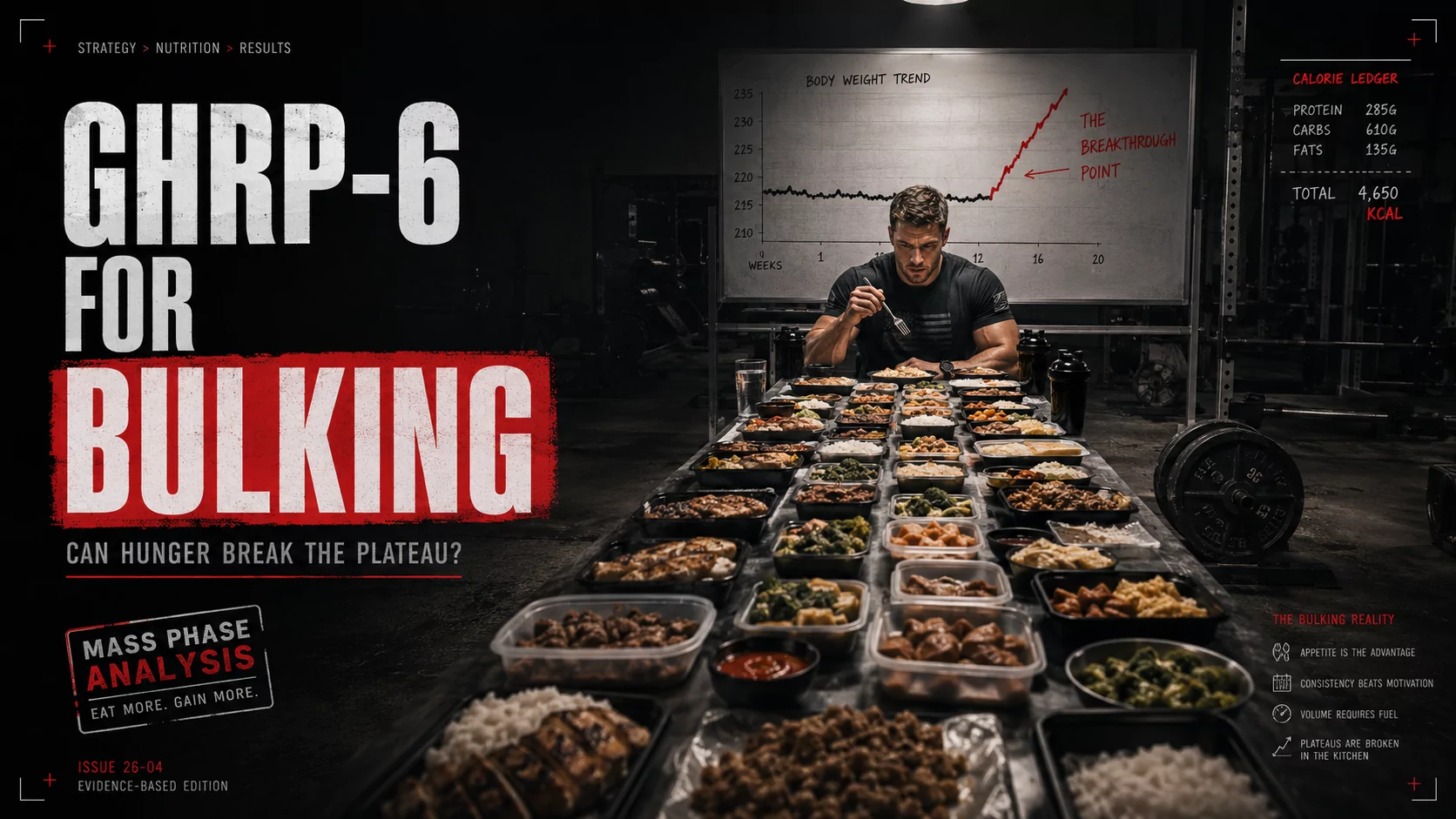
Bulking sounds simple on paper: train progressively, eat more calories than you burn, recover properly and allow body weight to climb. In practice, many lifters eventually reach a point where the scale stalls, appetite disappears and another plate of food feels harder than the workout itself.
That is where GHRP-6 enters the bodybuilding conversation. Unlike compounds marketed primarily for fat loss or cosmetic recovery, GHRP-6 is known for two effects that appear highly relevant to a mass-gaining phase: stimulating growth hormone release and activating hunger pathways associated with ghrelin.
This combination has earned GHRP-6 a reputation as a possible “secret weapon” for hard gainers. Yet the marketing frequently outruns the evidence. GHRP-6 is not an anabolic steroid, does not supply human growth hormone directly and has not been proven to smash muscle-building plateaus in controlled trials involving healthy bodybuilders.
Its most realistic bulking advantage may be much less dramatic but still meaningful: making it easier for some people to feel hungry and consistently maintain a calorie surplus. This guide examines how GHRP-6 works, whether it can actually support muscle gain, how it compares with other GH-related peptides and what athletes need to know about side effects, product quality and anti-doping rules.

Important: GHRP-6 is an investigational growth hormone secretagogue and is not FDA-approved as a bodybuilding, bulking, recovery or anti-aging treatment. This article is educational and does not provide a personal dosing, injection or stacking protocol.
What Is GHRP-6?
GHRP-6 stands for growth hormone-releasing peptide 6. It is a synthetic hexapeptide, meaning it consists of six amino-acid residues arranged to activate the growth hormone secretagogue receptor.
That receptor is now commonly called the ghrelin receptor, or GHS-R1a, because ghrelin is its natural hormone ligand. Ghrelin is produced mainly in the gastrointestinal system and participates in appetite, meal initiation, energy balance, gastrointestinal function and growth hormone secretion.
GHRP-6 acts as a ghrelin mimetic. By activating the same receptor system, it can create a signal that increases pituitary growth hormone release while also influencing hunger-related pathways.
Key point: GHRP-6 does not contain growth hormone. It activates the ghrelin receptor and encourages the pituitary gland to release more of the body’s own GH.
Is GHRP-6 a Steroid?
No. GHRP-6 is a peptide, not an anabolic-androgenic steroid.
It does not have the characteristic steroid-ring structure of testosterone derivatives and does not produce its principal effects through androgen receptors. It is therefore not expected to create the same direct anabolic, androgenic or reproductive-axis effects as testosterone, nandrolone or similar compounds.
This does not make it harmless. GHRP-6 manipulates a different endocrine pathway involving ghrelin, growth hormone, IGF-1, appetite and glucose regulation.
GHRP-6 vs. Recombinant HGH
Recombinant human growth hormone supplies somatropin directly. GHRP-6 instead stimulates endogenous secretion from the pituitary.
The distinction can be summarized simply:
- GHRP-6: Sends a release signal through the ghrelin receptor.
- Recombinant HGH: Supplies the hormone itself.
Direct HGH can act even when the pituitary response is limited, whereas GHRP-6 depends on the body’s capacity to release GH. Readers seeking a detailed comparison with a branded somatropin product can review our Dragontropin HGH analysis.
Why Did GHRP-6 Become Popular in Bodybuilding?
GHRP-6 attracted attention because it appears to combine several traits that sound useful during a gaining phase:
- Acute stimulation of growth hormone release
- A noticeable increase in hunger for many users
- Interest in downstream IGF-1 signaling
- Potential effects on recovery and sleep
- No direct androgenic mechanism
- Possible use alongside a GHRH analogue
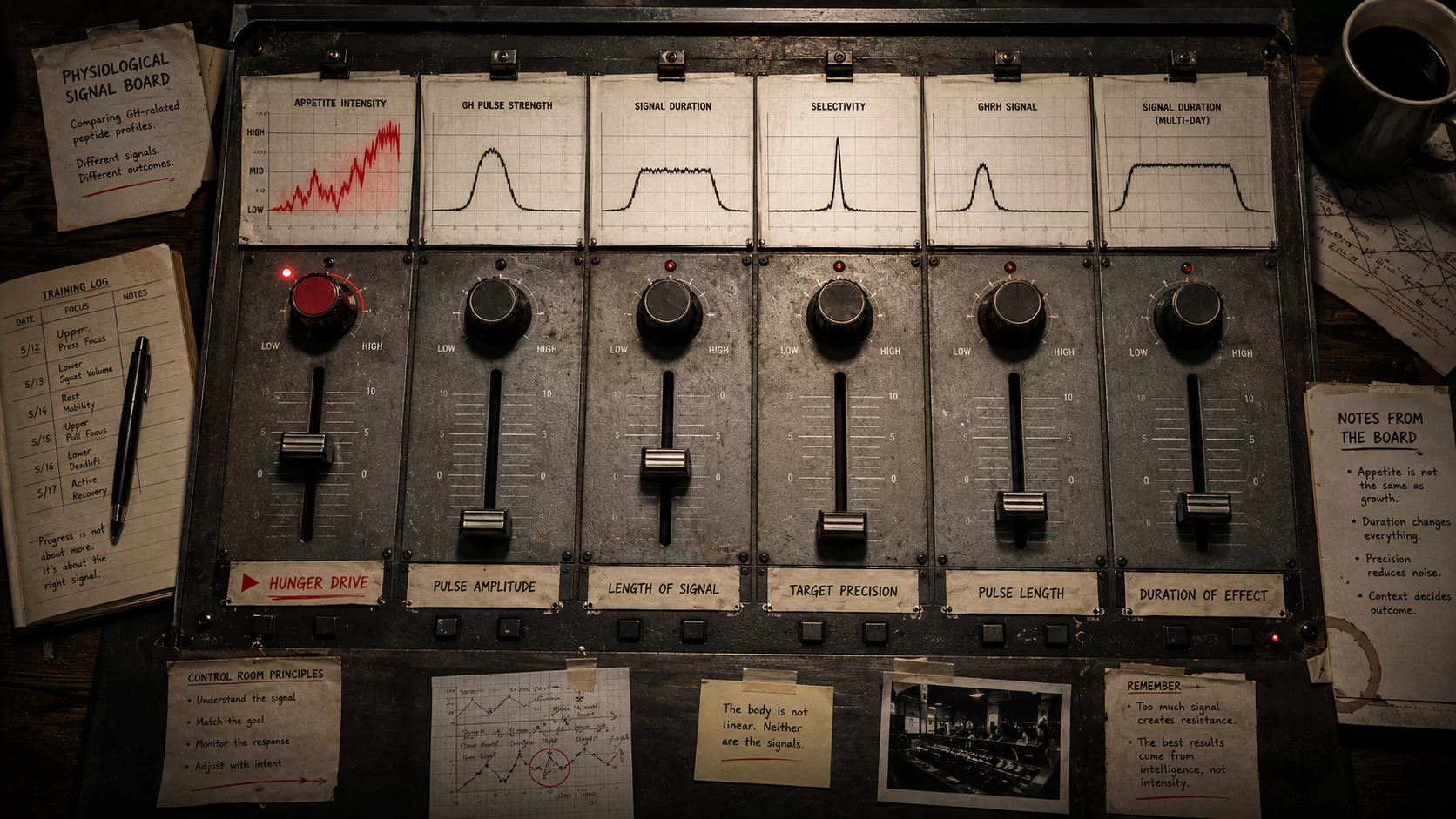
The appetite effect is what separates it most clearly from several competing secretagogues. For a bodybuilder who already eats easily, that effect may be unnecessary or counterproductive. For someone whose progress is limited by food intake, it may be the main reason GHRP-6 is considered at all.
How Does GHRP-6 Work?
GHRP-6 primarily activates the growth hormone secretagogue receptor type 1a. These receptors are found in the hypothalamus, pituitary and several peripheral tissues.
Its actions involve at least two closely related systems:
- Growth hormone signaling: GHRP-6 stimulates the pituitary to release GH.
- Appetite signaling: Ghrelin-receptor activation influences hunger, food-seeking behavior and energy intake.
Activating the Ghrelin Receptor
Ghrelin is often called the “hunger hormone,” although its biology extends well beyond appetite. Circulating ghrelin generally rises before meals and falls after eating, helping signal meal initiation and energy need.
GHRP-6 imitates part of this signal. The resulting hunger can be rapid and pronounced in some users, while others report only a modest change.
A scientific overview of the ghrelin receptor system describes ghrelin as a powerful orexigenic signal—meaning it promotes appetite and food intake—and explains its broader roles in metabolism and energy balance. The mechanism is reviewed in detail by the National Library of Medicine’s review of ghrelin-receptor appetite signaling.
Stimulating Growth Hormone Release
When GHRP-6 activates ghrelin receptors in the hypothalamus and pituitary, it can promote an acute growth hormone pulse. This occurs through a pathway distinct from natural growth hormone-releasing hormone, or GHRH.
Because GHRP-6 and GHRH analogues act through different receptors, researchers have observed that their signals can complement each other. This is the biological basis behind combining a GHRP with a compound such as modified GRF or CJC-1295.
The existence of a stronger GH pulse does not automatically prove greater muscle gain. Clinical studies can demonstrate hormone release more easily than they can prove meaningful hypertrophy, strength improvements or better bodybuilding outcomes.
What Happens to IGF-1?
Growth hormone can stimulate the liver and other tissues to produce insulin-like growth factor 1. IGF-1 participates in cell growth, tissue maintenance, protein metabolism and bone turnover.
Repeated stimulation of the GH axis could theoretically affect average IGF-1 concentrations, but the response depends on exposure pattern, nutrition, age, liver function and individual physiology.
It is inaccurate to assume that every brief GH pulse creates a large or sustained rise in IGF-1. It is equally inaccurate to assume that a higher IGF-1 value guarantees more functional muscle.
Why Does GHRP-6 Make People Hungry?
The appetite effect is not an unrelated side effect—it follows directly from the receptor GHRP-6 activates.
Ghrelin-receptor signaling communicates with hypothalamic pathways involved in hunger and reward. It can increase the desire to eat, make food more appealing and reduce the effort required to consume another meal.
For a hard gainer, this may help correct the real cause of a stalled bulk: insufficient energy intake. For someone already prone to overeating, it may encourage poor food choices and excessive fat gain.

Why Is GHRP-6 Popular for Bulking?
GHRP-6 is not popular because it has been proven to add pounds of muscle on its own. Its popularity comes largely from how its appetite effect fits the practical problems of bulking.
It May Make a Calorie Surplus Easier
A calorie surplus is necessary for maximizing the rate of muscle gain, particularly once a lifter has progressed beyond the beginner stage. Yet deliberately eating above maintenance becomes difficult when:
- Body weight is already high
- Training volume suppresses appetite
- Meals become repetitive
- Work or travel disrupts meal timing
- Digestive comfort limits meal size
- A person naturally has weak hunger signals
If GHRP-6 increases hunger, the lifter may find it easier to finish meals and reach a planned calorie target. That is an adherence benefit, not evidence of a unique muscle-building pathway.
It Appeals to “Hard Gainers”
The term hard gainer is often used for someone who struggles to gain weight. In many cases, the person is simply overestimating food intake or underestimating activity.
Before considering any endocrine compound, a plateau should be investigated objectively:
- Track body weight using weekly averages
- Measure calorie intake consistently
- Check whether activity has increased
- Review training volume and progression
- Assess sleep and stress
- Look for gastrointestinal or medical issues
When calorie intake is the limiting factor, greater hunger can be useful. When poor programming or insufficient recovery is the problem, eating more may simply produce additional fat.
Food Intake Is Easier to Sustain
Bulking success depends less on one enormous meal than on repeatedly hitting an appropriate energy target. Appetite support may help reduce the daily negotiation required to eat enough.
However, appetite should not be confused with digestive capacity. Feeling hungry does not guarantee that someone can comfortably digest a high volume of food or tolerate a poorly designed diet.
Growth Hormone Signaling Sounds Anabolic
The GH and IGF-1 pathway influences tissue growth and repair, which makes GHRP-6 sound attractive for hypertrophy. Marketing often stretches this into claims of dramatic lean-mass gain.
In healthy trained adults, the evidence is far less impressive. Raising a hormone temporarily is not the same as proving that the intervention improves muscle protein accretion over months.
Can GHRP-6 Actually Build Muscle?
There is insufficient high-quality evidence to conclude that GHRP-6 directly produces substantial muscle growth in healthy bodybuilders.
Direct Muscle-Building Evidence Is Weak
GHRP-6 has been studied for its ability to release growth hormone, but hormone-response studies are not bodybuilding trials. They generally do not measure:
- Changes in contractile skeletal muscle
- Strength progression
- Training performance
- Long-term body composition
- Results in resistance-trained athletes
Calling GHRP-6 anabolic solely because it increases GH is therefore an overstatement.
Indirect Muscle Gain Is More Plausible
The stronger case is indirect. GHRP-6 might support a bulk by helping someone:
- Consume enough total calories
- Reach a consistent protein target
- Avoid unplanned missed meals
- Maintain body weight during very high activity
- Possibly improve subjective sleep or recovery
If those changes lead to better training progression, muscle gain may improve. The peptide would be facilitating the conditions for growth rather than acting like a direct anabolic steroid.
Training Remains the Primary Signal
Skeletal-muscle hypertrophy requires progressive mechanical tension. A larger appetite does not compensate for a program that lacks progression, adequate effort or appropriate exercise selection.
The foundation remains:
- Progressive resistance training
- An appropriate calorie surplus
- Sufficient dietary protein
- Adequate sleep
- Fatigue management
- Consistency over months
Scale Weight Is Not Automatically Muscle
GHRP-6 users may see faster scale changes because of:
- Higher food intake
- More glycogen storage
- Additional gastrointestinal contents
- Water retention
- Actual tissue gain
A rapid increase on the scale should not be presented as proof of new muscle. Waist measurements, gym performance, progress photos and a controlled rate of gain provide better context.
Can GHRP-6 Help Smash Through a Bulking Plateau?
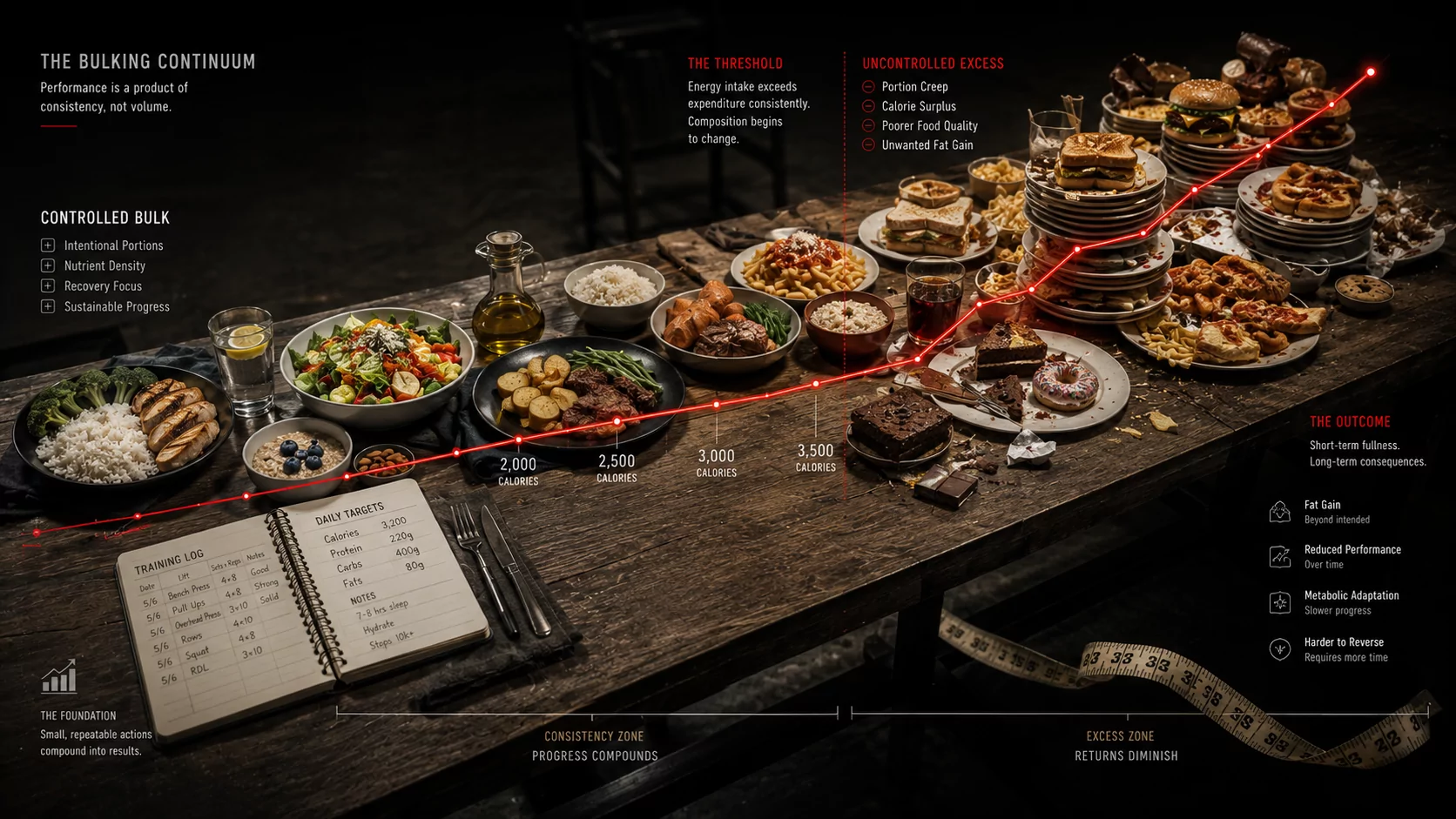
Possibly—but only when the plateau is caused by insufficient intake or poor dietary adherence.
When It Might Address the Real Problem
GHRP-6 may be relevant when:
- Calorie tracking confirms that intake repeatedly falls short
- Low appetite is the primary obstacle
- The training program is still progressing appropriately
- Sleep and recovery are adequate
- The planned surplus is reasonable
When It Is Unlikely to Fix the Plateau
It is unlikely to solve:
- A training program with no progressive overload
- Excessive fatigue or chronic sleep loss
- A plateau caused by unrealistic expectations
- Poor exercise execution
- Digestive illness or another medical condition
- A surplus that is already excessive
- Advanced development where gains naturally occur slowly
A Plateau May Be Normal
Muscle growth slows as training age increases. A beginner can add muscle much faster than an advanced bodybuilder. A slower rate of gain does not necessarily indicate a hormonal problem or justify adding an investigational peptide.
Sometimes the correct solution is simply to accept a longer timeframe.
GHRP-6 vs. Other Growth Hormone-Related Peptides
| Compound | Primary pathway | Appetite effect | Activity profile | Main bodybuilding discussion |
|---|---|---|---|---|
| GHRP-6 | Ghrelin-receptor agonist | Often pronounced | Short acting | Bulking, hunger and GH release |
| GHRP-2 | Ghrelin-receptor agonist | Generally discussed as less pronounced than GHRP-6 | Short acting | GH release with less emphasis on appetite |
| Ipamorelin | Selective ghrelin-receptor agonist | Usually mild | Short acting | GH signaling with a more selective profile |
| CJC-1295 No DAC | GHRH-receptor agonist | No primary direct hunger effect | Short acting | Timed GH-pulse combinations |
| CJC-1295 DAC | Long-acting GHRH analogue | No primary direct hunger effect | Several days | Sustained GH and IGF-1 exposure |
| Recombinant HGH | Direct growth hormone replacement | Not used primarily as an appetite stimulant | Depends on formulation and exposure | Direct GH administration |
GHRP-6 vs. GHRP-2
Both compounds activate the ghrelin receptor and stimulate growth hormone release. The practical distinction most often discussed is appetite: GHRP-6 has a stronger reputation for inducing hunger.
That can make GHRP-6 more appealing during a bulk but less appealing during fat loss or for someone with poor appetite control. Our detailed GHRP-2 guide examines the alternative more closely.
GHRP-6 vs. Ipamorelin
Ipamorelin is commonly presented as a more selective growth hormone secretagogue, with less influence on appetite, cortisol and prolactin than earlier GHRPs.
For someone specifically struggling to eat, GHRP-6’s hunger effect may appear advantageous. For someone interested primarily in GH signaling, it may be an unwanted drawback.
GHRP-6 vs. CJC-1295 No DAC
These compounds target different receptors. GHRP-6 acts through the ghrelin receptor, while CJC-1295 No DAC—or modified GRF (1-29)—acts through the GHRH receptor.
This complementary mechanism explains why the two are frequently discussed together. For more detail on short-acting GHRH and secretagogue combinations, read our CJC-1295 No DAC and ipamorelin guide.
GHRP-6 vs. CJC-1295 DAC
CJC-1295 DAC creates prolonged GHRH-receptor stimulation through albumin binding. GHRP-6 creates a shorter ghrelin-receptor signal.
The long-acting option offers convenience but less control over prolonged exposure. Our article on CJC-1295 DAC benefits, drawbacks and pharmacology explains this distinction in depth.
Potential Benefits of GHRP-6 for Bulking
1. Increased Appetite
This is GHRP-6’s most recognizable and practically relevant effect. For a lifter who repeatedly fails to eat enough, stronger hunger may improve adherence to a mass-gaining diet.
It should not be assumed that appetite will increase equally in every person. Individual response varies, and some users may find the hunger uncomfortable or difficult to control.
2. Easier Meal Completion
Hitting a calorie target is not just about choosing energy-dense foods. The person must still be willing and able to finish the meals.
By increasing food motivation, GHRP-6 may make larger or more frequent meals feel less forced. This is particularly relevant late in a gaining phase, when appetite often decreases as body weight and calorie needs rise.
3. Acute Growth Hormone Release
Human studies support the ability of GHRP compounds to stimulate GH secretion. A review of synthetic growth hormone-releasing peptides discusses GHRP-6’s investigational pharmacology and early human research through the National Library of Medicine.
That supports the mechanism, not every bodybuilding claim made about it.
4. Possible Recovery Support
Growth hormone and IGF-1 participate in tissue turnover, collagen metabolism and recovery biology. Users may report less soreness, better sleep or greater tolerance for training.
Controlled evidence showing that GHRP-6 reliably improves resistance-training recovery in healthy athletes is limited. Soreness is also not a complete measure of recovery or readiness.
5. Possible Sleep Effects
Growth hormone secretion is linked with sleep, and ghrelin signaling interacts with multiple neurological systems. Some users describe deeper sleep or more vivid dreams.
These reports are subjective. Hunger, fluid retention, headache or changes in glucose regulation may also disrupt sleep.
6. Bulking Convenience
For certain hard gainers, the main benefit may simply be logistical: eating becomes easier. That can have more practical value than a small theoretical change in hormone signaling.
Convenience must still be weighed against injection burden, cost, uncertain product quality and health risks.
GHRP-6 Pros and Cons
Potential Advantages
- Strong appetite reputation: It may help lifters who struggle to maintain a calorie surplus.
- Established GH-release mechanism: GHRP-6 activates the ghrelin receptor and can stimulate acute GH secretion.
- Not an anabolic steroid: It does not act through androgen receptors or aromatize into estrogen.
- Possible indirect bulking support: Greater food intake may improve training progression and weight gain.
- Complementary pathway: Its receptor mechanism differs from that of GHRH analogues.
- Short activity window: Exposure is more time-limited than with long-acting DAC peptides.
- No established direct liver toxicity: It is not a conventional oral hepatotoxic anabolic drug.
Potential Disadvantages
- Not a proven muscle builder: Controlled bodybuilding evidence is lacking.
- Hunger can become excessive: Increased appetite may promote poor food choices and unnecessary fat gain.
- Glucose concerns: FDA materials identify possible reduced insulin sensitivity and increased blood glucose.
- Possible cortisol effects: GHRP-6 may influence more than the GH axis.
- Water retention: Changes in fluid balance can increase scale weight and discomfort.
- Injection and contamination risks: Purity testing alone does not prove sterility.
- Limited long-term safety data: Repeated systemic use has not been adequately characterized.
- Prohibited in tested sport: Competitive athletes can face sanctions.
GHRP-6 Side Effects and Safety Concerns
GHRP-6 is often portrayed as safer than HGH because it stimulates endogenous release. That comparison can be misleading. A substance does not become safe merely because it acts upstream of a hormone.
The FDA states that compounded GHRP-6 may pose an immunogenicity risk because of aggregation and peptide-related impurities. The agency also identifies limited safety data and concerns involving cortisol and increased blood glucose due to reduced insulin sensitivity. Readers can review the current FDA summary of bulk substances that may present significant safety risks.
Intense Hunger
Hunger may be the intended effect during a bulk, but it can still become disruptive. Possible consequences include:
- Unplanned binge eating
- Difficulty controlling food quality
- Rapid fat gain
- Night eating
- Gastrointestinal discomfort from oversized meals
A successful bulk requires controlled intake, not the maximum possible intake.
Water Retention
Changes in GH signaling can affect sodium and fluid balance. Users may notice puffiness, swollen hands, tighter rings, increased blood pressure or rapid weight gain.
Water gain can create the appearance of fuller muscles while masking the true rate of tissue gain.
Tingling and Numbness
Fluid-related pressure around peripheral nerves may contribute to tingling, numbness or carpal-tunnel-like symptoms. Persistent weakness or sensory changes require medical evaluation.
Headache, Flushing and Fatigue
Headache, facial warmth and temporary fatigue are commonly discussed with secretagogues. These symptoms are nonspecific and should not automatically be interpreted as evidence that the peptide is working correctly.
Blood-Glucose Changes
Growth hormone can reduce insulin sensitivity. The FDA specifically identifies increased blood glucose as a potential GHRP-6 concern related to reduced insulin sensitivity.
This is particularly relevant to people with:
- Prediabetes or diabetes
- Metabolic syndrome
- A strong family history of type 2 diabetes
- High body fat
- Concurrent use of HGH or other glucose-altering drugs
Bulking itself often involves high calorie and carbohydrate intake, which may compound metabolic strain.
Possible Cortisol Effects
GHRP-6 is less selective than some newer secretagogues and may affect cortisol signaling. The practical significance varies with exposure and individual response, but it undermines claims that GHRP-6 influences only GH.
Injection-Site Reactions
Pain, redness, swelling, itching or bruising may occur. Worsening tenderness, heat, drainage, fever or spreading redness can indicate infection.
Immunogenicity
Peptides can aggregate or contain related impurities, especially when manufacturing, storage or reconstitution is poorly controlled. The immune system may recognize these materials and form antibodies or trigger allergic reactions.
Product Mislabeling and Contamination
Unregulated peptide products may contain:
- Less or more GHRP-6 than labeled
- A different peptide
- Degraded material
- Bacterial endotoxins
- Microbial contamination
- Residual manufacturing chemicals
A high chemical-purity result does not prove that an injectable vial is sterile.
Seek urgent medical care for chest pain, severe difficulty breathing, fainting, confusion, facial or throat swelling, persistent rapid heart rate, high fever or signs of a serious injection-site infection.
Who Should Be Especially Cautious?
GHRP-6 self-experimentation deserves particular caution for people with:
- Diabetes, prediabetes or impaired glucose tolerance
- Active cancer or a significant tumor history
- Pituitary or hypothalamic disorders
- Severe sleep apnea
- Uncontrolled hypertension
- Significant edema or nerve-compression symptoms
- Pregnancy, plans for pregnancy or breastfeeding
- A history of serious reactions to injectable peptides
- Participation in drug-tested sport
A persistent loss of appetite or unexplained inability to gain weight may also require medical assessment rather than an appetite-stimulating peptide.
How to Manage a GHRP-6-Style Appetite During a Bulk
Whether hunger is produced naturally or by a compound, the nutritional goal remains the same: create a controlled surplus that supports muscle gain without allowing unnecessary fat accumulation.
Set a Measured Calorie Target
Do not use hunger alone to determine intake. Start from a measured maintenance estimate and adjust according to weekly average body weight.
A moderate surplus is generally more useful than eating without limits. The more advanced the athlete, the less likely a very rapid rate of gain is to represent muscle.
Track the Rate of Weight Gain
Daily weight fluctuates with sodium, carbohydrate intake, fluid, bowel contents and training inflammation. Use weekly averages rather than reacting to one reading.
If body weight and waist circumference rise rapidly while performance barely improves, the surplus is probably too large.
Prioritize Protein
Additional calories are most useful when protein intake is adequate. Distribute high-quality protein across several meals rather than relying on a single enormous serving.
Use Calorie-Dense Foods Strategically
Hard gainers often benefit from foods that provide energy without excessive volume:
- Rice, pasta, oats and bread
- Olive oil, nut butters and avocado
- Whole-fat dairy when tolerated
- Smoothies containing fruit, milk and protein
- Dried fruit and nuts
This does not require turning the entire diet into processed “dirty bulk” food.
Maintain Fiber and Micronutrients
A calorie surplus should still include fruit, vegetables, whole grains and varied nutrient sources. Poor food quality can worsen digestion, blood pressure and glucose control.
Do Not Let Hunger Dictate Food Quality
A strong appetite can make hyper-palatable food difficult to control. Planning meals before hunger peaks helps preserve structure.
Monitor Waist Circumference
Scale weight alone cannot separate muscle, water and fat. Waist measurements provide useful context during a bulk, especially when fluid retention is possible.
Support Energy Metabolism Without Expecting Magic
Readers interested in non-hormonal performance nutrition can also review our guide to L-carnitine beyond its reputation as a fat burner. No supplement replaces adequate calories and progressive training.
Common GHRP-6 Stack Discussions
Stacking refers to combining several compounds in an attempt to create complementary effects. Mechanistic compatibility does not prove that a combination is safe or effective.
GHRP-6 and CJC-1295 No DAC
This is one of the most commonly discussed combinations because the compounds activate different receptors:
- GHRP-6 activates the ghrelin receptor.
- CJC-1295 No DAC activates the GHRH receptor.
Two complementary pituitary signals may produce a larger GH pulse than either alone. The combination remains investigational and has not been validated as a standardized bodybuilding treatment.
GHRP-6 and CJC-1295 DAC
CJC-1295 DAC creates prolonged GHRH-receptor stimulation, while GHRP-6 provides shorter ghrelin-receptor activation.
The combination may increase overall GH-axis exposure and reduce the ability to identify which compound caused hunger, edema, glucose changes or another adverse effect.
GHRP-6 and Ipamorelin
Both are ghrelin-receptor agonists. Combining two compounds that share a primary receptor pathway may add complexity without providing a clear advantage.
Some users discuss alternating them for different appetite effects, but controlled evidence is lacking.
GHRP-6 and HGH
Combining a GH secretagogue with exogenous growth hormone could increase total GH and IGF-1 pathway exposure. It does not necessarily make HGH more physiological.
Potential concerns include greater fluid retention, impaired glucose control, nerve symptoms and tissue-growth effects.
GHRP-6 and Anabolic Steroids
GHRP-6 is sometimes added to a mass-building steroid cycle to stimulate appetite and support recovery. It does not protect against steroid-related effects involving cholesterol, blood pressure, fertility, cardiac structure, estrogen or androgenic hair loss.
Combining multiple endocrine drugs also makes adverse reactions and laboratory changes harder to interpret.
How to Evaluate a GHRP-6 Product Listing
Commercial listings can provide basic product details, but they should not be mistaken for medical validation. Readers researching a branded 10 mg vial can view GHRP-6 details regarding the labeled substance, presentation and available batch information.
When evaluating any listing, look for:
- The exact active substance
- The labeled quantity per vial
- A batch or lot number
- A recent, independently verifiable lab report
- Identity and quantitative assay information
- Purity testing
- Storage instructions
- Clear manufacturer and seller details
What a Lab Report Does Not Prove
A conventional peptide assay may establish identity, amount and chemical purity. It may not establish:
- Sterility
- Endotoxin levels
- Absence of all contaminants
- Vial-to-vial consistency
- Correct storage during shipping
- Clinical effectiveness
- Long-term safety
These limitations matter more for an injectable product than for an ordinary oral supplement.
Is GHRP-6 Legal and Allowed in Tested Sport?
Legal status varies by country and depends on manufacturing, sale, compounding, importation and intended use. A “research use only” label does not convert a product into an approved bodybuilding medicine.
In the United States, GHRP-6 is not an FDA-approved treatment for bulking, muscle growth or general wellness.
GHRP-6 Is Prohibited in Competitive Sport
Growth hormone-releasing peptides are prohibited under anti-doping rules. Athletes should consult the current World Anti-Doping Agency Prohibited List and their governing organization’s medication-checking resources.
Athletes are typically subject to strict liability, meaning they may be held responsible for a prohibited substance even when a product was mislabeled or contaminated.
Who Might Be Interested in GHRP-6?
The compound is most commonly discussed among:
- Bodybuilders who struggle to eat enough during a mass phase
- Strength athletes with very high energy expenditure
- So-called hard gainers with consistently low appetite
- Enhanced athletes already exploring the GH axis
- People comparing different growth hormone secretagogues
Interest does not equal medical suitability. For most recreational lifters, correcting calorie tracking, meal structure, training progression and sleep provides a clearer and safer path through a plateau.
Frequently Asked Questions About GHRP-6 for Bulking
Its strongest practical bulking argument is appetite stimulation. It may help someone maintain a calorie surplus, but it has not been proven to directly produce substantial muscle growth in healthy bodybuilders.
It often does because it activates the ghrelin receptor, which participates in appetite and meal initiation. The magnitude varies between individuals.
User reports often describe a relatively rapid hunger response, but timing and intensity vary. Controlled evidence does not establish a universal response window for bodybuilding use.
There is insufficient human evidence showing a meaningful direct hypertrophic effect in trained adults. Greater calorie intake and possibly altered GH signaling could provide indirect support.
No. It is a synthetic growth hormone-releasing peptide that activates the ghrelin receptor. It does not act like a testosterone-derived anabolic steroid.
It is not established as a meaningful testosterone-boosting compound. Its primary endocrine target is the GH secretory pathway.
It does not have the direct androgenic feedback mechanism associated with anabolic-steroid suppression. That does not mean it has no endocrine effects.
Traditional steroid PCT is intended to address suppression of the reproductive hormone axis. That rationale does not directly apply to GHRP-6 used alone. PCT claims involving SERMs should not be treated as routine or evidence-based for a non-androgenic peptide.
Yes, indirectly. If the increase in appetite produces an excessive calorie surplus, fat gain may accelerate. The peptide cannot determine whether extra calories become muscle or fat.
It may. The FDA identifies increased blood glucose due to decreased insulin sensitivity as a safety concern associated with GHRP-6.
Water retention is possible with increased GH-axis activity. Scale weight may rise from fluid rather than new muscle.
Both stimulate the ghrelin receptor and GH release. GHRP-6 is more strongly associated with appetite stimulation, while GHRP-2 is often chosen when less hunger is desired.
Ipamorelin is generally discussed as a more selective secretagogue with a milder appetite effect. GHRP-6’s stronger hunger signal may be more relevant to bulking but less attractive for other goals.
The combination is widely discussed because the compounds activate different receptors. Controlled evidence has not established a safe, standardized bodybuilding protocol, and combined use may increase side effects.
It is not androgenic and is not expected to cause steroid-like virilization. However, that does not establish safety for women, particularly during pregnancy or breastfeeding.
No. It is not FDA-approved as a bodybuilding, bulking, anti-aging or general recovery treatment.
No. Growth hormone-releasing peptides are prohibited under WADA anti-doping rules.
GH-axis biology is relevant to collagen and tissue turnover, but GHRP-6 has not been proven to heal orthopedic injuries in controlled athletic studies. Proper diagnosis and rehabilitation remain essential.
They are not directly interchangeable. GHRP-6 stimulates endogenous GH release and appetite, while HGH supplies growth hormone directly. Neither is approved as a routine bulking treatment for healthy athletes.
Final Verdict: A Hunger Tool, Not a Muscle-Growth Shortcut
GHRP-6 has a logical place in bodybuilding discussions because it combines ghrelin-receptor activation with acute growth hormone release. For someone whose bulk repeatedly fails because appetite disappears, the hunger effect may make calorie and protein targets easier to reach.
That is not the same as proving that GHRP-6 builds muscle directly. Human evidence supports its secretagogue mechanism much more clearly than claims involving hypertrophy, strength, injury recovery or long-term body recomposition.
Its appetite effect can also work against the user. Uncontrolled hunger may turn a measured surplus into rapid fat gain, while GH-axis manipulation can contribute to water retention, tingling, glucose changes and other systemic effects. Product purity, sterility and accurate concentration add further uncertainty.
Bottom line: GHRP-6 may help a genuine hard gainer eat enough to move the scale, but it is not a substitute for progressive training, structured nutrition or patience. Its most credible bulking role is improving appetite and adherence—not delivering steroid-like muscle growth or magically breaking every plateau.