

Growth hormone occupies a complicated place in bodybuilding. It is associated with recovery, connective-tissue maintenance, fat metabolism and insulin-like growth factor 1, yet simply pushing growth hormone higher does not guarantee more muscle, better performance or faster recovery.
This is where the combination commonly called the CJC-1295 No DAC and Ipamorelin stack enters the conversation. Rather than supplying growth hormone directly, these two research peptides are designed to stimulate the body’s own growth hormone release through different signaling pathways. The theory is that activating both pathways at approximately the same time may create a stronger, more coordinated pulse than using either compound alone.
That mechanism has made the stack popular among bodybuilders, strength athletes and fitness enthusiasts interested in recovery, sleep and body composition. However, popularity should not be confused with clinical validation. Neither peptide is approved as a bodybuilding treatment, evidence for the exact combination is limited, product terminology is often inconsistent, and both compounds are prohibited in drug-tested sport.
This guide separates the biological rationale from the marketing, explains what each peptide does and examines what athletes can—and cannot—reasonably conclude from the available research.
Key point: CJC-1295 No DAC and Ipamorelin may stimulate growth hormone release, but evidence that the stack produces meaningful muscle gain, fat loss or athletic recovery in healthy trained adults remains limited. Increased hormone levels are not the same as proven performance outcomes.
What Is CJC-1295 No DAC?
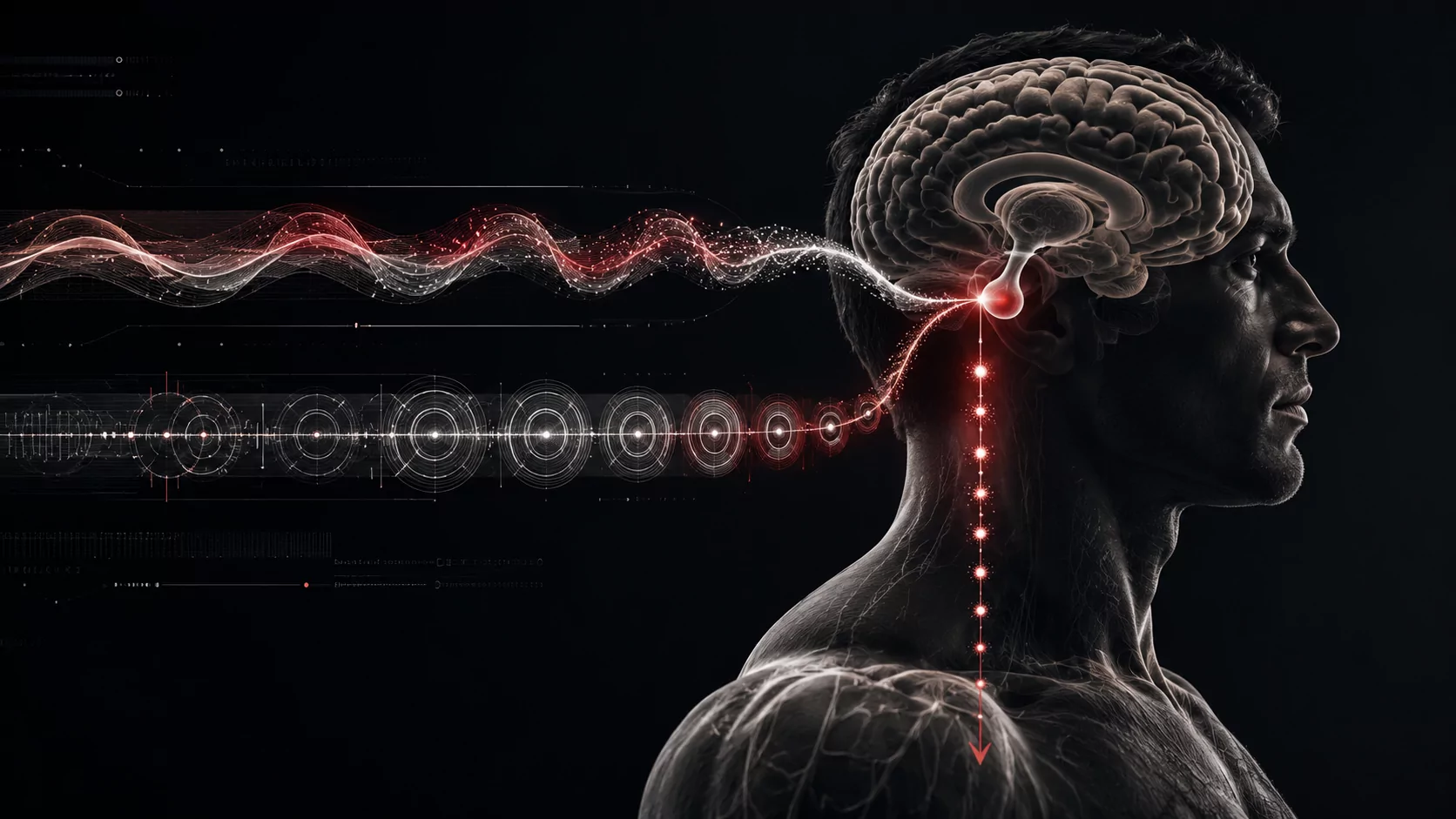
CJC-1295 No DAC is the commercial name commonly used for a short-acting analogue of growth hormone-releasing hormone, or GHRH. It is intended to imitate part of the signal the hypothalamus naturally uses to tell the pituitary gland to release growth hormone.
GHRH is produced in the hypothalamus and travels to the anterior pituitary, where it binds to GHRH receptors on specialized cells called somatotrophs. This interaction helps initiate the production and release of growth hormone.
Natural GHRH is cleared rapidly. Researchers therefore developed modified sequences intended to resist enzymatic breakdown while retaining activity at the GHRH receptor. The short-acting peptide sold as CJC-1295 No DAC is generally understood to be a modified version of GRF (1-29), the active portion of the native GHRH sequence.
An important naming clarification
The phrase “CJC-1295 No DAC” is widely used by peptide sellers and fitness communities, but it is not especially precise scientific terminology.
The original CJC-1295 was developed with a Drug Affinity Complex, abbreviated DAC. This chemical addition allows the peptide to bind to albumin in the bloodstream, substantially extending its activity. Removing that albumin-binding structure produces a different, much shorter-acting compound commonly known as Modified GRF (1-29).
In practical online usage:
- CJC-1295 with DAC usually refers to the long-acting albumin-binding GHRH analogue.
- CJC-1295 No DAC usually refers to short-acting Modified GRF (1-29).
This distinction matters because the best-known human CJC-1295 studies examined the long-acting DAC compound. Results from those trials cannot automatically be applied to the short-acting “No DAC” peptide.
What does the No DAC version do?
The short-acting peptide activates the GHRH receptor and is intended to amplify a temporary growth hormone release. Because it does not contain the albumin-binding DAC structure, its signaling window is substantially shorter than that of long-acting CJC-1295.
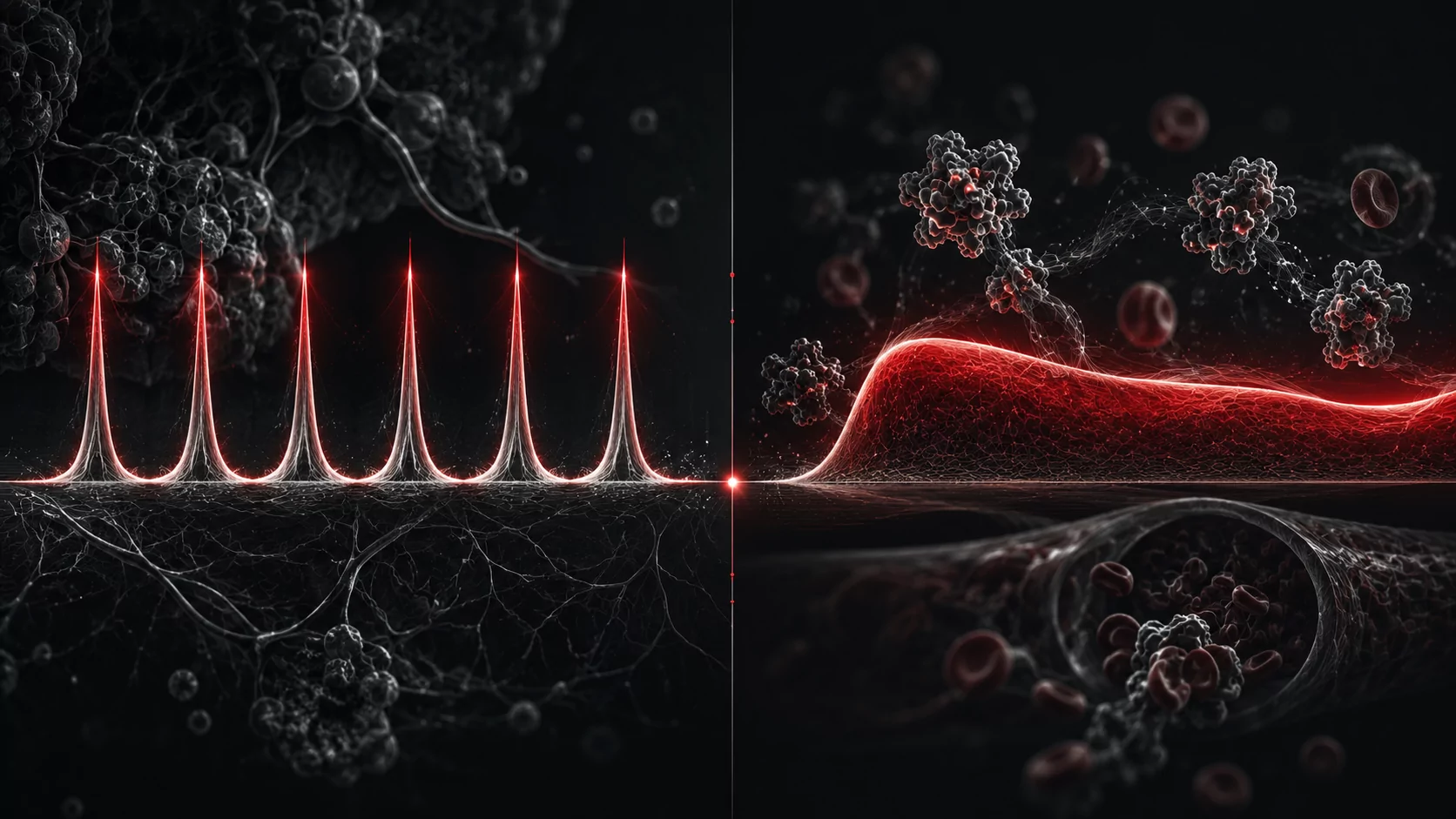
This short duration is the feature many athletes find attractive. Rather than maintaining a prolonged elevation of growth hormone and IGF-1, the No DAC version is promoted as supporting a more pulse-oriented pattern.
“More natural,” however, should not be interpreted as “proven safe.” A synthetic peptide can imitate one element of normal physiology while still producing effects, exposure patterns or impurities that have not been adequately studied.
What Is Ipamorelin?
Ipamorelin is a synthetic pentapeptide—a chain of five amino-acid-derived components—with growth hormone-releasing activity. It belongs to a group commonly called growth hormone secretagogues.
Unlike a GHRH analogue, Ipamorelin does not primarily activate the GHRH receptor. It binds to the growth hormone secretagogue receptor, now more commonly called the ghrelin receptor or GHS-R1a.
Ghrelin is best known as a hunger-related hormone, but its receptor also participates in growth hormone regulation. Activating that receptor can trigger the pituitary to release growth hormone through a pathway that is distinct from, but complementary to, GHRH signaling.
The National Institutes of Health’s PubChem record for Ipamorelin identifies it as a ghrelin mimetic with growth hormone-releasing activity.
Why is Ipamorelin described as selective?
Early experimental research compared Ipamorelin with older growth hormone-releasing peptides and found that it stimulated growth hormone with comparatively little effect on certain other pituitary-adrenal hormones in the studied models.
In a frequently cited preclinical paper, researchers described Ipamorelin as a selective growth hormone secretagogue with a hormonal profile more similar to GHRH than several earlier compounds. The study is available through the National Library of Medicine.
This finding is the source of the common claim that Ipamorelin is “cleaner” than GHRP-2, GHRP-6 or Hexarelin. It is more accurate to say that Ipamorelin showed greater selectivity in early experimental settings. That does not establish that it has no effect on cortisol, prolactin, appetite, glucose regulation or other systems in every person and at every exposure.
Why Stack CJC-1295 No DAC With Ipamorelin?
The proposed advantage of the stack comes from using two separate inputs to the growth hormone axis:
- CJC-1295 No DAC activates the GHRH receptor.
- Ipamorelin activates the ghrelin receptor.
These pathways can interact at the pituitary. GHRH signaling helps prepare and stimulate growth hormone-producing cells, while ghrelin-receptor signaling can provide another strong release signal. In experimental endocrinology, combining a GHRH-type stimulus with a growth hormone secretagogue can produce a greater hormonal response than either pathway generates alone.
This is often described as synergy. Synergy does not mean that the resulting muscle or fat-loss effect has been proven to be dramatically greater. It means the immediate growth hormone response may be amplified because the compounds act through complementary receptors.
The “amplifier and trigger” analogy
A simplified way to understand the combination is to imagine one peptide increasing the pituitary’s readiness to release growth hormone while the other helps trigger the release.
This analogy makes the mechanism easier to visualize, but the endocrine system is more complicated. Growth hormone output is also influenced by:
- somatostatin, which inhibits growth hormone release;
- age and biological sex;
- sleep architecture;
- nutritional status and blood glucose;
- body-fat level;
- exercise;
- previous hormone exposure; and
- individual pituitary responsiveness.
Two people using the same compounds could therefore experience very different hormone responses and side effects.
How Natural Growth Hormone Secretion Works
Growth hormone is not normally released at a flat, constant rate. It is secreted in pulses, with larger episodes often occurring during the early stages of nighttime sleep. Exercise, fasting, stress, glucose availability and other physiological factors can modify this pattern.
Three major signals shape the rhythm:
- GHRH encourages growth hormone synthesis and release.
- Somatostatin suppresses growth hormone release.
- Ghrelin can stimulate growth hormone through the growth hormone secretagogue receptor.
Once released, growth hormone acts directly on some tissues and stimulates the production of insulin-like growth factor 1, commonly abbreviated IGF-1, particularly in the liver. Growth hormone and IGF-1 have overlapping but distinct effects.
Growth hormone is involved in fat metabolism, fluid balance and tissue maintenance. IGF-1 participates in cellular growth, protein metabolism, bone physiology and several repair processes. Neither should be reduced to a simple “muscle-building hormone.”
No DAC Versus DAC: What Is the Practical Difference?
The DAC distinction is one of the most important parts of understanding this stack.
| Characteristic | Commonly Called CJC-1295 No DAC | CJC-1295 With DAC |
|---|---|---|
| More precise identity | Modified GRF (1-29) | Long-acting CJC-1295 |
| Albumin-binding complex | No | Yes |
| Activity pattern | Shorter, pulse-oriented signal | Prolonged exposure |
| Effect on IGF-1 | Not well characterized in controlled human trials | Prolonged increases documented in early human research |
| Published human data | Very limited under this commercial identity | Some early pharmacokinetic and hormonal studies |
| Why athletes discuss it | To pair a brief GHRH signal with a GHRP | To create longer-lasting GH and IGF-1 stimulation |
In a study of healthy adults, long-acting CJC-1295 increased growth hormone for several days and elevated IGF-1 for longer. That research established that the DAC compound can produce sustained endocrine effects, but it did not prove bodybuilding outcomes, and it should not be cited as direct evidence for Modified GRF (1-29). The study can be reviewed through the National Library of Medicine’s CJC-1295 record.
Potential Benefits Discussed by Athletes
The stack is marketed around several potential benefits. Most are biologically plausible because of the growth hormone and IGF-1 axis, but evidence for meaningful outcomes in healthy trained adults is weak or absent.
Training recovery
Growth hormone participates in tissue turnover and connective-tissue biology. Athletes therefore speculate that stimulating endogenous growth hormone may improve recovery between demanding sessions.
Recovery is not one measurement, however. It includes soreness, sleep, nervous-system fatigue, glycogen restoration, tendon capacity, inflammation and readiness to reproduce performance. A temporary hormone increase does not prove improvement across all of these areas.
Athletes focused specifically on tendon or ligament injuries may also encounter BPC-157. That peptide acts through a different proposed set of mechanisms, which are examined in our guide to BPC-157 and injury recovery.
Lean-mass support
Growth hormone and IGF-1 participate in protein metabolism and tissue growth, so the stack is frequently promoted for lean-muscle development.
This claim requires context. Increasing growth hormone in healthy adults does not necessarily produce the type of contractile muscle growth associated with progressive resistance training or anabolic-androgenic steroids. Some measured increases in “lean body mass” may reflect changes in extracellular water or connective tissue rather than large improvements in functional muscle.
There is no strong clinical evidence showing that the exact CJC-1295 No DAC and Ipamorelin combination builds substantial muscle in trained bodybuilders.
Fat-loss support
Growth hormone encourages lipolysis, the process through which stored triglycerides are broken down into fatty acids. This provides a reasonable mechanism for interest in body composition.
Yet fat loss still depends heavily on energy balance, food intake, activity and adherence. Stimulating a lipolytic signal does not guarantee that released fatty acids will ultimately be oxidized rather than stored again.
Readers comparing peptide-related fat-loss strategies may find our guides to AOD-9604 and L-Carnitine for bodybuilders useful. These compounds work through different mechanisms and should not be treated as interchangeable.
Sleep quality
Because major natural growth hormone pulses are associated with deep sleep, peptide marketing often reverses the relationship and claims that raising growth hormone will automatically improve sleep.
That conclusion is not established. Sleep influences growth hormone secretion, but increased growth hormone does not necessarily create deeper or more restorative sleep. Some users report subjective improvement, while others experience headaches, fluid retention, tingling or sleep disruption.
Connective-tissue support
Growth hormone and IGF-1 are involved in collagen turnover and connective-tissue maintenance. This has led to interest among lifters managing accumulated stress in the elbows, shoulders, knees and hips.
Potential connective-tissue signaling should not be mistaken for restored load tolerance. Tendons and ligaments still require progressive rehabilitation and sufficient time to remodel.
Healthy-aging claims
Declining growth hormone output is one feature of aging, but it does not follow that artificially increasing the pathway reverses aging or improves longevity. Age-related hormone changes may be adaptive as well as degenerative, and long-term manipulation can carry metabolic and growth-related risks.
Claims involving “anti-aging,” cellular repair and rejuvenation should be assessed especially cautiously. Readers exploring that broader field can review our article on Epitalon and telomerase research.
What Does the Research Actually Show?
The scientific evidence can be divided into three categories: research on Ipamorelin, research on long-acting CJC-1295 and evidence for the exact short-acting combination.
Research on Ipamorelin
Early animal and human pharmacology studies show that Ipamorelin can stimulate growth hormone release. A study involving healthy volunteers examined its pharmacokinetic and pharmacodynamic behavior, confirming that growth hormone response changed with exposure.
These studies establish biological activity. They do not establish that Ipamorelin improves hypertrophy, strength, athletic recovery or fat loss in healthy trained adults.
Research on CJC-1295
The strongest human data involve long-acting CJC-1295 with DAC. Researchers found prolonged increases in growth hormone and IGF-1 after administration in healthy adults.
Again, the endpoint was primarily hormone concentration—not improved squat strength, added contractile muscle, reduced injury time or superior sports performance.
Research on the exact stack
There is no robust body of published clinical research demonstrating that short-acting Modified GRF (1-29) combined with Ipamorelin produces the bodybuilding benefits frequently claimed online.
The rationale is largely extrapolated from:
- known interaction between GHRH and ghrelin-receptor pathways;
- studies of other GHRH and GHRP combinations;
- pharmacology of each compound separately;
- clinical observations involving growth hormone testing; and
- uncontrolled user reports.
That is enough to explain why the stack may stimulate a growth hormone pulse. It is not enough to define a reliable benefit-to-risk ratio for physique enhancement.
Hormone Response Is Not the Same as Physique Transformation
This distinction is one of the most important lessons in peptide research.
A compound may:
- bind to the intended receptor;
- increase growth hormone;
- raise IGF-1;
- alter a laboratory biomarker; and
- still fail to produce a meaningful improvement in strength, muscle or recovery.
Body composition and performance are downstream outcomes influenced by dozens of variables. Training quality, total calories, protein intake, genetics, insulin sensitivity, sleep and starting hormone levels may matter more than a temporary change in one endocrine pathway.

This also explains why anecdotal transformations are difficult to interpret. People experimenting with peptides frequently change their diet, training program, sleep habits or other performance-enhancing compounds at the same time.
CJC-1295 No DAC and Ipamorelin Compared With Other Options
| Compound | Primary Pathway | General Signal Pattern | Notable Distinction |
|---|---|---|---|
| CJC-1295 No DAC | GHRH receptor | Short acting | Usually refers to Modified GRF (1-29) |
| CJC-1295 with DAC | GHRH receptor | Prolonged | Albumin-binding structure extends exposure |
| Ipamorelin | Ghrelin receptor | Relatively brief GH release | Developed as a selective GH secretagogue |
| GHRP-2 | Ghrelin receptor | Brief GH release | May produce broader pituitary-adrenal effects |
| GHRP-6 | Ghrelin receptor | Brief GH release | Frequently associated with appetite stimulation |
| MK-677 | Ghrelin receptor | Longer oral exposure | Non-peptide oral secretagogue |
| Sermorelin | GHRH receptor | Short acting | Corresponds to native GHRH (1-29) |
| Tesamorelin | GHRH receptor | Longer than native GHRH | Has a specific approved medical indication |
Those interested in how Ipamorelin differs from a less selective growth hormone-releasing peptide can read our detailed GHRP-2 guide.
Common Myths About the Stack
“It is basically the same as HGH”
No. Exogenous human growth hormone supplies the hormone directly. CJC-1295 No DAC and Ipamorelin attempt to stimulate the user’s pituitary gland to release endogenous growth hormone.
The distinction affects timing, magnitude, dependence on pituitary capacity and feedback regulation. It does not automatically make the stack safer or more effective.
“Pulsatile secretion means there are no side effects”
A pulse-oriented signal may differ from constant exposure, but it can still alter fluid balance, glucose handling, nerve symptoms and downstream IGF-1. Product impurities and injection-related risks are also independent of hormone timing.
“Ipamorelin never raises hunger, cortisol or prolactin”
Ipamorelin was developed for greater selectivity, and early research supports a more selective profile than some older secretagogues. “More selective” does not mean that off-target or individual effects are impossible.
“The stack melts fat without dieting”
Growth hormone can stimulate fat mobilization, but sustained fat loss still requires the body to use more energy than it stores. Appetite changes, food intake and reduced insulin sensitivity could counteract the theoretical advantage.
“Higher IGF-1 always means more muscle”
IGF-1 is involved in growth and repair, but a blood concentration does not directly measure muscle protein accretion. More is not automatically better, and chronically excessive signaling may introduce additional risks.
“Peptides do not suppress anything because they are natural signals”
Introducing an external receptor agonist changes feedback loops. The body may adapt its own signaling, receptor sensitivity or hormone output. The long-term consequences of repeated use in healthy athletes are not well characterized.
Potential Side Effects and Health Concerns
Because controlled safety data for the exact stack are limited, no complete side-effect rate can be calculated. Potential concerns are inferred from early studies, growth hormone physiology, reported use and risks associated with unapproved injectable products.
Fluid retention
Growth hormone activity can influence sodium and water balance. Users may experience puffiness, rapid scale-weight changes or swelling in the hands and feet. Increased body weight from fluid should not be mistaken for new muscle tissue.
Numbness and tingling
Fluid shifts around peripheral nerves may contribute to tingling, numbness or carpal-tunnel-like symptoms. These effects are also associated with excessive growth hormone exposure.
Headaches and flushing
Headache, warmth, flushing and light-headedness may occur around changes in vascular or hormonal signaling. Persistent or severe symptoms require medical assessment rather than simply lowering expectations and continuing.
Glucose regulation
Growth hormone can oppose some of insulin’s actions. Repeated elevation may worsen glucose tolerance or insulin sensitivity, particularly in people with obesity, prediabetes, diabetes or a strong family history of metabolic disease.
Increased appetite
Ipamorelin is usually described as less appetite-stimulating than GHRP-6, but it still acts on the ghrelin receptor. Individual appetite responses may vary.
Injection-site and contamination risks
Unapproved injectable products introduce risks involving sterility, endotoxins, incorrect concentration, degradation and infection. Even a chemically active peptide can be unsafe if it was manufactured, transported or stored improperly.
Unknown long-term growth signaling
Growth hormone and IGF-1 participate in normal cellular growth. People with active cancer, unexplained masses or relevant medical histories should be especially cautious about any compound intended to elevate this axis. Long-term consequences in healthy performance users have not been adequately established.
FDA and Product-Quality Concerns
The U.S. Food and Drug Administration has identified potential safety concerns involving certain substances proposed for compounding, including CJC-1295-related substances and Ipamorelin. The agency has noted issues such as limited clinical safety information, immunogenicity, peptide impurities and insufficient characterization of risks for proposed routes of administration.
Readers can review the FDA’s current page on bulk drug substances that may present significant safety risks.
Product quality and biological effectiveness are separate questions. Before accepting any product claim, ask:
- Does the compound itself have evidence for the claimed outcome?
- Has the specific batch been independently tested for identity and purity?
- Was sterility or endotoxin testing performed when relevant?
- Can the laboratory report be traced to the batch being sold?
- Has the product been stored and transported correctly?
Readers reviewing a commercial blend may encounter CJC-1295/Ipamorelin stack info. Product specifications and manufacturer claims should be evaluated separately from regulatory approval and clinical proof. A branded vial cannot establish that the combination will deliver a particular physique or recovery outcome.
Are CJC-1295 and Ipamorelin Legal in Competitive Sport?
Both are prohibited for athletes competing under World Anti-Doping Agency rules.
The 2026 WADA Prohibited List includes CJC-1295 among growth hormone-releasing hormone analogues and Ipamorelin among growth hormone secretagogues. These categories are prohibited at all times, including both in and out of competition.
Athletes should review the current WADA Prohibited List and their federation’s rules before using any hormone-modulating product.
Labeling a compound “for research only” does not exempt an athlete from anti-doping rules. Under strict-liability systems, the athlete is generally responsible for prohibited substances detected in a sample, including exposure resulting from contamination or inaccurate labeling.
Who Should Be Especially Cautious?
Anyone considering a compound that alters the growth hormone–IGF-1 axis should involve a qualified healthcare professional. Particular caution is warranted for people with:
- diabetes, prediabetes or impaired fasting glucose;
- active or previous cancer;
- unexplained lumps, masses or abnormal test results;
- pituitary or endocrine disorders;
- significant swelling or carpal-tunnel symptoms;
- untreated sleep apnea;
- cardiovascular or kidney disease;
- pregnancy or breastfeeding; or
- participation in drug-tested sport.
Symptoms that resemble low growth hormone—fatigue, poor recovery, increased body fat or reduced performance—are nonspecific. They may instead reflect inadequate sleep, excessive training volume, calorie restriction, depression, thyroid problems, anemia or other medical conditions.
Training and Nutrition Still Determine the Outcome
No growth hormone secretagogue can replace the fundamentals that create an athletic physique.
Progressive resistance training
Muscle adapts to repeated mechanical tension. A peptide cannot substitute for appropriate exercise selection, progression, technique and fatigue management.
Adequate protein and energy
Athletes need enough total protein and calories to support adaptation. During a cutting phase, the calorie deficit must still be controlled. During a gaining phase, excessive surplus is more likely to add unnecessary fat than accelerate muscle growth indefinitely.
Sleep consistency
Sleep naturally supports hormone rhythms, motor learning, immune function and training readiness. Attempting to manipulate growth hormone while sleeping five hours per night addresses the wrong variable.
Recovery-aware programming
Persistent soreness and falling performance often indicate poorly managed workload rather than a peptide deficiency. Deloads, exercise rotation and intelligent volume distribution may produce more predictable benefits.
Metabolic health
Good glucose control, cardiovascular fitness and a reasonable body-fat level improve both performance and long-term health. These factors are especially important when considering anything that may alter growth hormone or insulin sensitivity.
For a broader look at energy production and exercise recovery, see our guide to NAD+ and mitochondrial function in athletes.
Frequently Asked Questions
It is the commercial name commonly used for Modified GRF (1-29), a short-acting GHRH analogue intended to stimulate a temporary growth hormone release. It should not be confused with long-acting CJC-1295 containing DAC.
DAC stands for Drug Affinity Complex. It enables long-acting CJC-1295 to bind to albumin, extending its presence and endocrine activity.
Ipamorelin activates the ghrelin receptor and stimulates growth hormone release from the pituitary. Early research suggests greater selectivity for growth hormone than several older growth hormone-releasing peptides.
They act through complementary receptors. The GHRH analogue stimulates the GHRH receptor, while Ipamorelin activates the ghrelin receptor. Combining both signals may amplify the immediate growth hormone response.
No. HGH supplies exogenous growth hormone directly. This peptide combination attempts to stimulate endogenous release from the pituitary.
There is no strong clinical evidence that the exact stack produces substantial muscle gain in healthy trained adults. Hormonal activity and increased lean-body-mass measurements do not necessarily indicate large gains in contractile muscle.
Growth hormone can stimulate fat mobilization, but meaningful fat loss still depends primarily on sustained energy balance, nutrition, activity and adherence.
It is generally associated with less appetite stimulation than GHRP-6, but it acts on the ghrelin receptor, so individual appetite changes remain possible.
They produce different exposure patterns and cannot be ranked universally. The short-acting version is selected for a pulse-oriented signal, while the DAC version produces prolonged hormone stimulation. Neither has been established as a superior bodybuilding treatment.
No. The CJC-1295 No DAC and Ipamorelin combination is not FDA approved for bodybuilding, athletic recovery, fat loss or anti-aging.
No. CJC-1295 and Ipamorelin fall within prohibited growth hormone-releasing categories under WADA rules and are banned at all times.
A reliable long-term safety profile has not been established in healthy performance users. Potential concerns include fluid retention, tingling, headaches, glucose changes, injection reactions, contamination and unknown effects of sustained growth signaling.
The Bottom Line
CJC-1295 No DAC and Ipamorelin form a biologically logical peptide combination. One compound activates the GHRH receptor, while the other acts through the ghrelin receptor. These complementary signals may create a stronger growth hormone pulse than either compound alone.
That mechanism explains the stack’s popularity, but it does not prove the dramatic claims often attached to it. Evidence for substantial muscle gain, accelerated fat loss, improved sleep and faster athletic recovery in healthy trained adults remains inadequate. Published CJC-1295 human research mainly involves the long-acting DAC compound, and controlled research on the exact No DAC–Ipamorelin combination is extremely limited.
The stack also carries unresolved safety, quality-control and regulatory concerns. Both compounds are prohibited in drug-tested sport, neither is an approved bodybuilding treatment and online products may not consistently match their labels.
For athletes, the most dependable improvements still come from progressive training, sufficient nutrition, consistent sleep and well-managed recovery. CJC-1295 No DAC and Ipamorelin are best understood as experimental hormone-releasing compounds—not a proven replacement for those fundamentals and not a guaranteed shortcut to a better physique.