

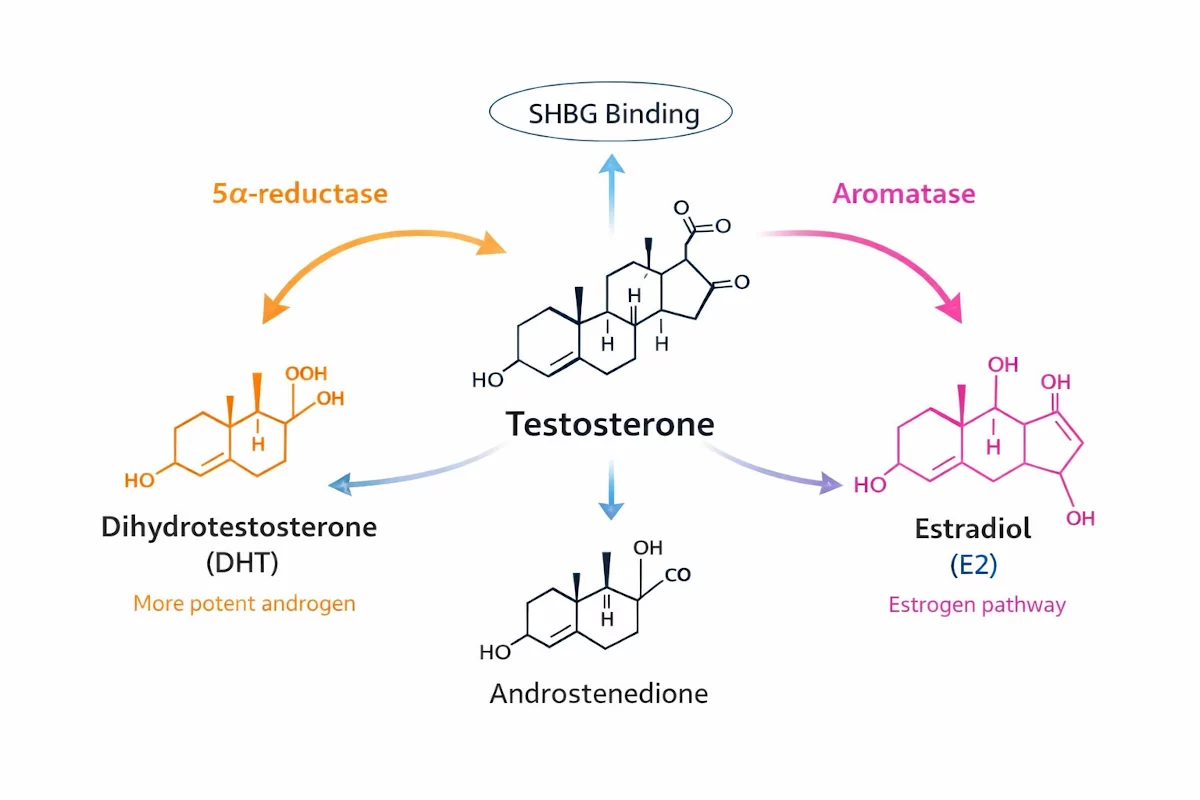
Testosterone doesn’t just “exist” in the body and magically build muscle. Once it’s produced naturally—or introduced through injection—it follows several biological pathways that determine how it ultimately affects performance, physique, and health.
Understanding these pathways helps explain why hormones like DHT and estradiol matter so much, and why balance—not elimination—is the real goal.
Natural Testosterone Production vs. Exogenous Testosterone
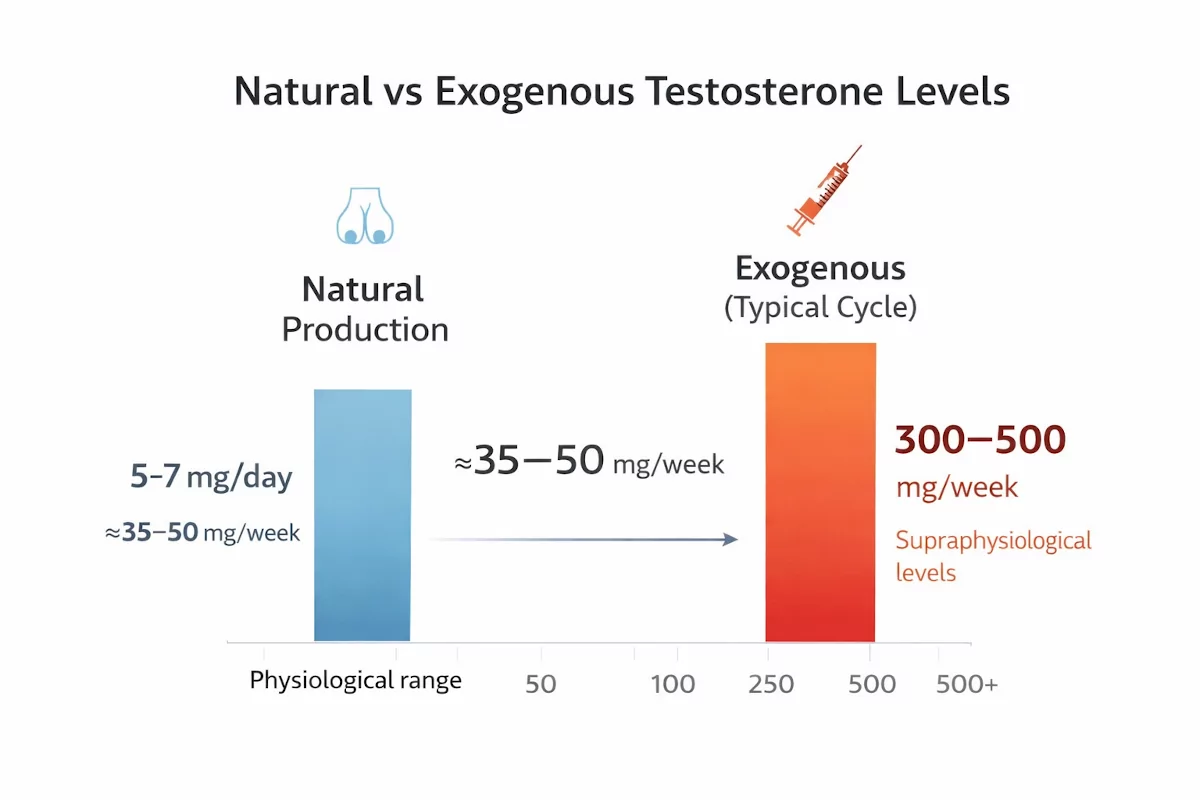
The human body naturally produces approximately 5–7 mg of testosterone per day, which adds up to roughly 35–40 mg per week.
When you compare this to a typical testosterone cycle, it becomes clear just how dramatic the difference is. Even modest exogenous testosterone use can elevate androgen levels to 15–20 times natural production, which explains both the enhanced results—and the increased responsibility to manage side effects.
Once testosterone enters circulation, it doesn’t act alone. Instead, it is metabolized through multiple pathways.
The DHT Pathway (5α-Reduction)
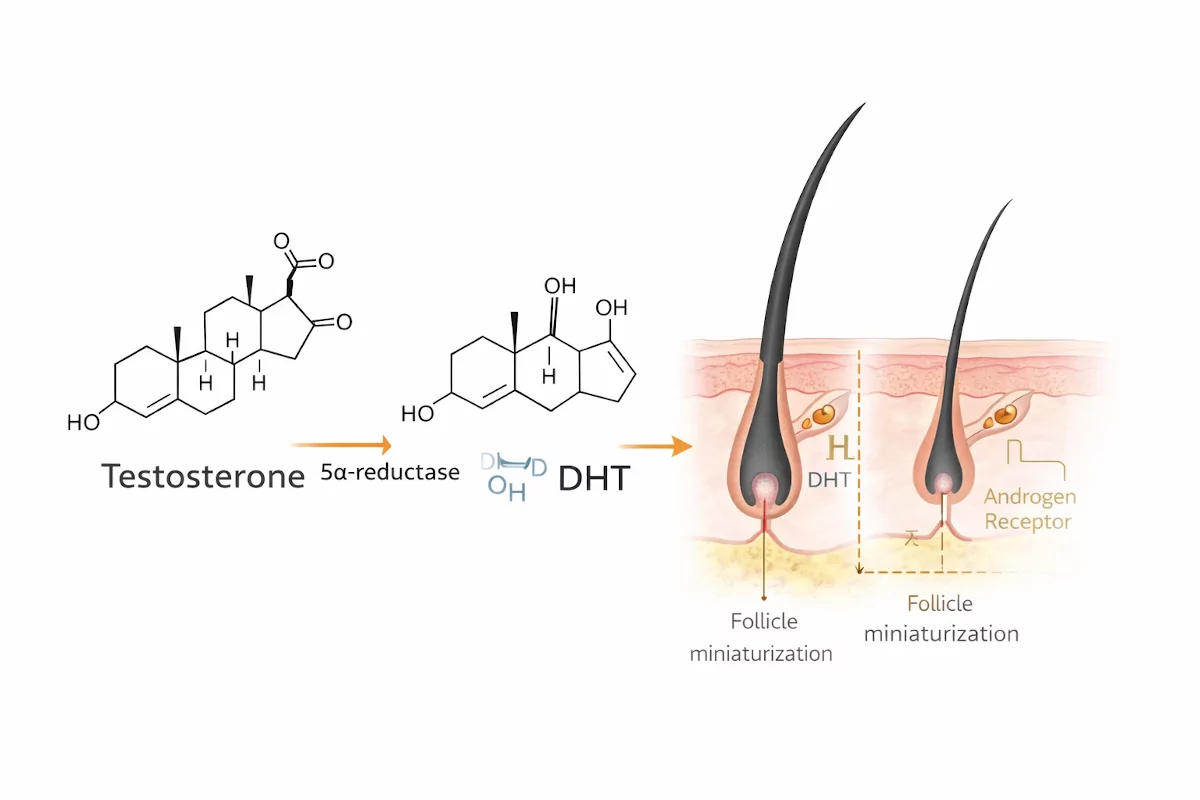
One major pathway converts testosterone into dihydrotestosterone (DHT) via the enzyme 5α-reductase.
Why DHT Matters
- DHT is a more potent androgen than testosterone
- t plays a role in strength, libido, and androgen signaling
- It is strongly associated with male pattern hair loss in genetically predisposed individuals
Because of this, some individuals choose to inhibit this pathway using 5α-reductase inhibitors such as finasteride (Propecia, Proscar), which reduce the conversion of testosterone into DHT.
That said, DHT also has physiological roles, so suppressing it entirely is not without trade-offs.
The Aromatization Pathway (Estradiol Conversion)
Another key pathway converts testosterone into estradiol (E2) through the enzyme aromatase.
Estradiol is often misunderstood—especially in performance-focused communities.
Why Estradiol Is Essential
While excessive estradiol can lead to unwanted side effects, crushing estradiol levels is not the solution.
Estradiol plays a critical role in:
- Muscle growth and strength
- Bone density and joint health
- Brain function, mood, and cognition
- Cardiovascular support
This is why aromatase inhibitors are typically used to control, not eliminate, estradiol levels. Healthy testosterone function depends on a proper androgen–estrogen balance.
Why Hormonal Balance Matters
Testosterone does not work in isolation. Its downstream metabolites—DHT and estradiol—are part of a tightly regulated hormonal system.
Problems often arise not from testosterone itself, but from:
- Excessive conversion into one pathway
- Over-inhibition of another
- Ignoring the physiological roles of these hormones
Optimizing results while minimizing side effects comes down to understanding pathways, not fighting biology.
Final Thoughts
Testosterone is more than just a muscle-building hormone—it’s a precursor to multiple biologically essential compounds. Whether produced naturally or introduced externally, it follows predictable metabolic routes that influence everything from physique to cognitive function.
The goal isn’t to eliminate DHT or estradiol—but to manage them intelligently within healthy ranges.
Understanding these pathways is the first step toward smarter, more informed decisions.