

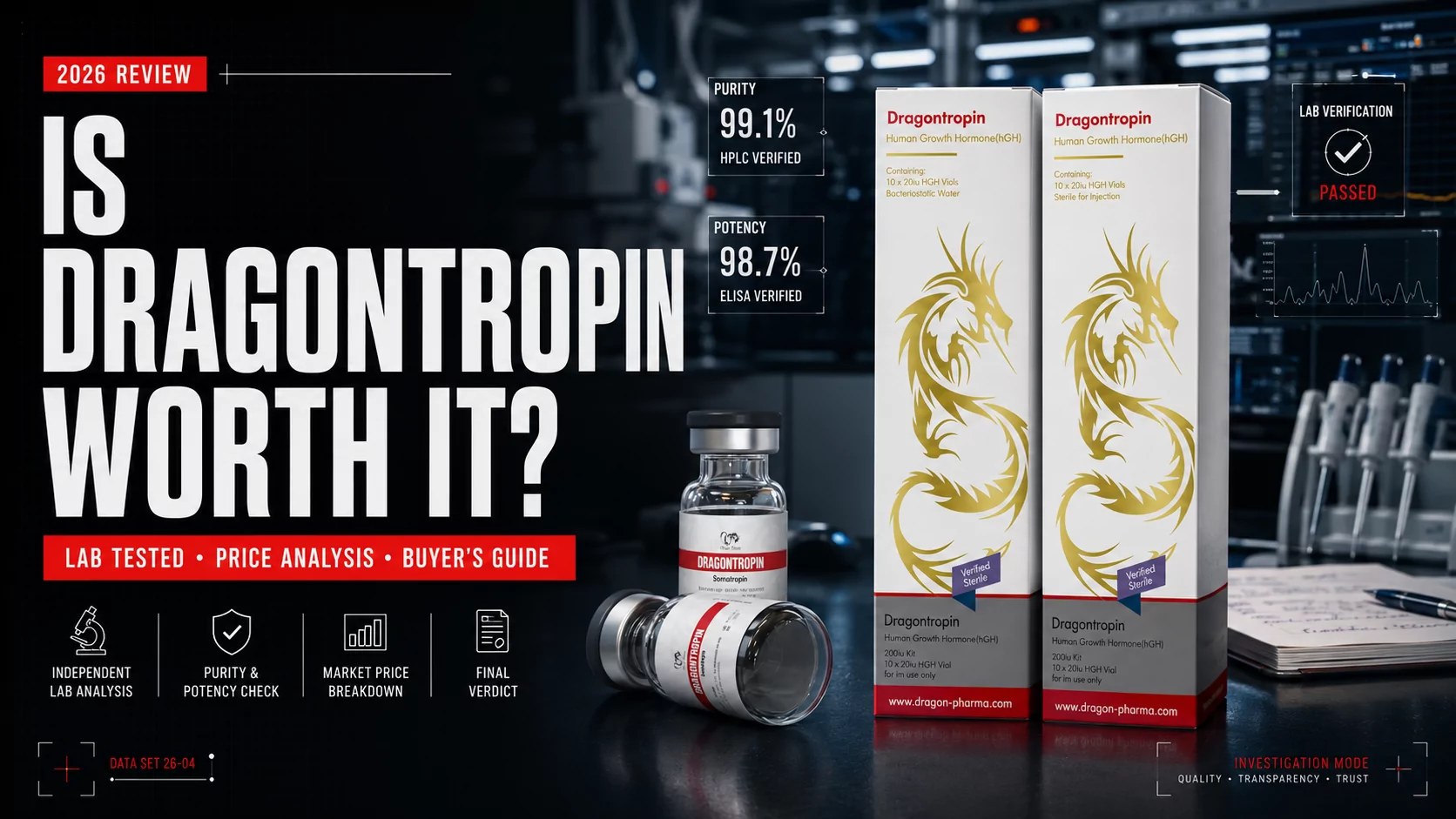
Human growth hormone occupies a complicated corner of the performance-enhancement market. It is expensive, temperature-sensitive, widely counterfeited and surrounded by claims that often blur the line between established physiology and bodybuilding folklore. That makes the quality of a specific HGH product especially difficult—and important—to assess.
Dragontropin is Dragon Pharma’s brand of recombinant human growth hormone, or rHGH. It is sold in two kit sizes: a 100 IU kit containing ten 10 IU vials and a 200 IU kit containing ten 20 IU vials. Both versions use lyophilized powder supplied in 2 mL vials.
On paper, the product has several points in its favor: recognizable branding, two strength options and recent laboratory reports showing high purity and more somatropin than the label claims. However, a favorable assay does not answer every question. Buyers must also consider sterility, batch consistency, handling, authenticity, side effects, legal restrictions and whether HGH is appropriate for their goals in the first place.
This Dragontropin review examines the product without treating it as either a miracle drug or an automatic scam. We will look at what is included in each kit, how recombinant HGH works, what the March 20, 2026 laboratory results indicate, how much each version costs per labeled IU and whether the larger kit offers better value.
Medical and legal notice: Somatropin is a prescription medication used for specific diagnosed medical conditions. It is not FDA-approved for bodybuilding, routine fat loss, athletic enhancement or general anti-aging. Nonmedical use can cause serious adverse effects and may violate applicable laws and sports regulations. This article is educational and does not provide a dosage or self-administration protocol.
What Is Dragontropin?
Dragontropin is the product name used by Dragon Pharma for its recombinant human growth hormone. Its listed active substance is somatropin, a laboratory-produced form of the 191-amino-acid growth hormone naturally secreted by the human pituitary gland.
Unlike peptides that encourage the pituitary to release more of the body’s own growth hormone, recombinant HGH supplies the hormone directly. That distinction affects its mechanism, predictability, medical uses, side-effect profile and anti-doping status.
Dragontropin is supplied as a freeze-dried, or lyophilized, powder. Lyophilization removes water under controlled low-temperature conditions, helping stabilize a protein that would otherwise be vulnerable to degradation. The powder must remain intact through manufacturing, storage and transportation if the product is to retain its expected biological activity.
Is Dragontropin Real HGH?
According to its product labeling and recent laboratory reports, Dragontropin contains recombinant somatropin rather than a growth hormone-releasing peptide. The reported assay results are relevant because they measure the quantity and purity of the submitted sample.
However, the phrase “real HGH” can mean several different things:
- Does the tested sample contain somatropin?
- Does it contain the amount stated on the label?
- Is the somatropin structurally intact and biologically active?
- Is every vial in the kit consistent?
- Was the product manufactured and filled under sterile conditions?
- Has the specific kit in the buyer’s hands been stored correctly?
A strong chemical assay helps answer the first two questions. It does not independently prove all the others. This is why lab data should be considered an important quality signal rather than a complete guarantee.
Key point: Dragontropin is presented and tested as recombinant somatropin. Its recent potency results are encouraging, but potency and purity are only two parts of overall injectable-product quality.
Dragontropin Kit Options: 100 IU vs. 200 IU
Dragon Pharma offers two Dragontropin formats. Each kit contains ten lyophilized-powder vials, but the labeled amount in each vial differs.
| Feature | Dragontropin 100 IU | Dragontropin 200 IU |
|---|---|---|
| Vials per kit | 10 | 10 |
| Vial size | 2 mL | 2 mL |
| Labeled amount per vial | 10 IU | 20 IU |
| Total labeled amount | 100 IU | 200 IU |
| Form | Lyophilized powder | Lyophilized powder |
| Listed price | $275 per kit | $475 per kit |
Dragontropin 100 IU
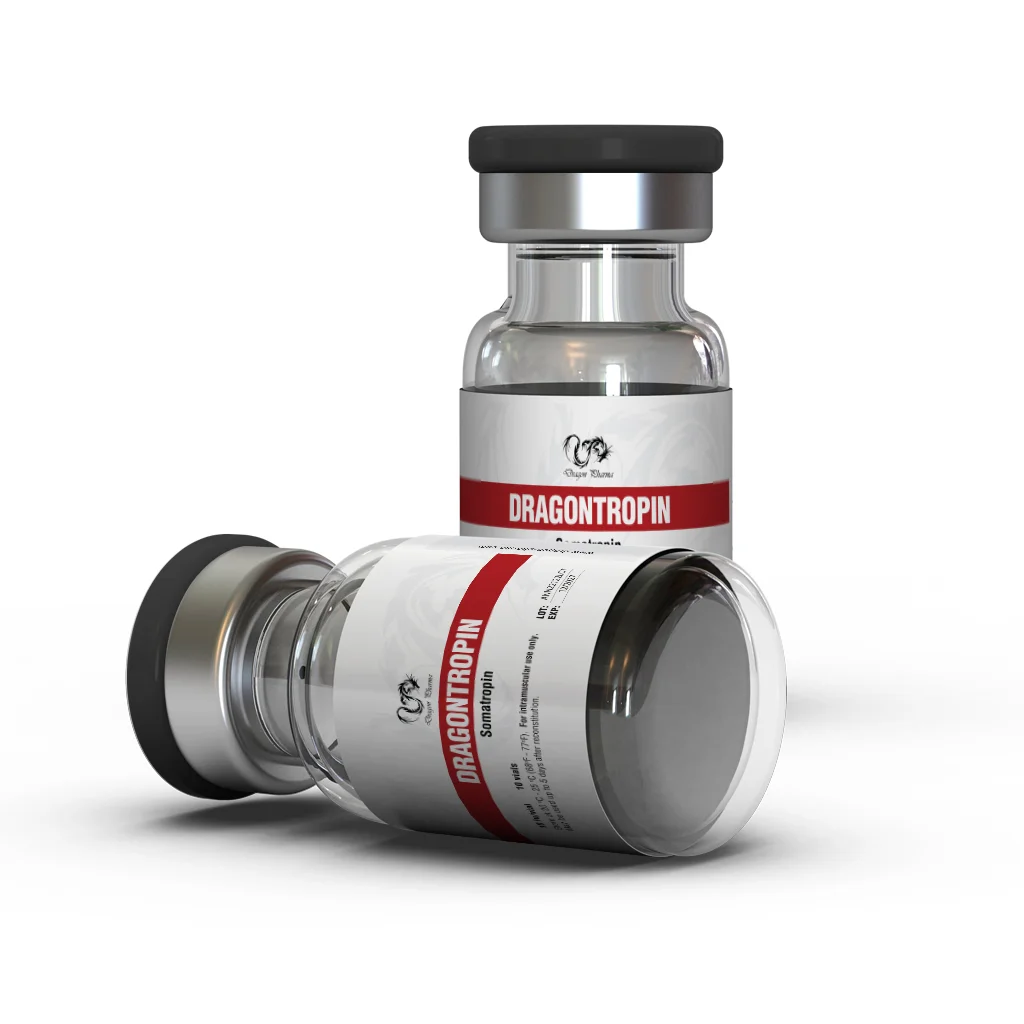
The smaller kit contains ten vials labeled at 10 IU each, for 100 labeled IU in total. At a listed price of $275, it has a straightforward cost of $2.75 per labeled IU.
The Dragontropin HGH 100 IU product page provides the current commercial listing, product format and purchasing information. Those details should be distinguished from independent medical guidance: a product page describes what is being sold, not whether HGH is appropriate for a particular person.
Dragontropin 200 IU
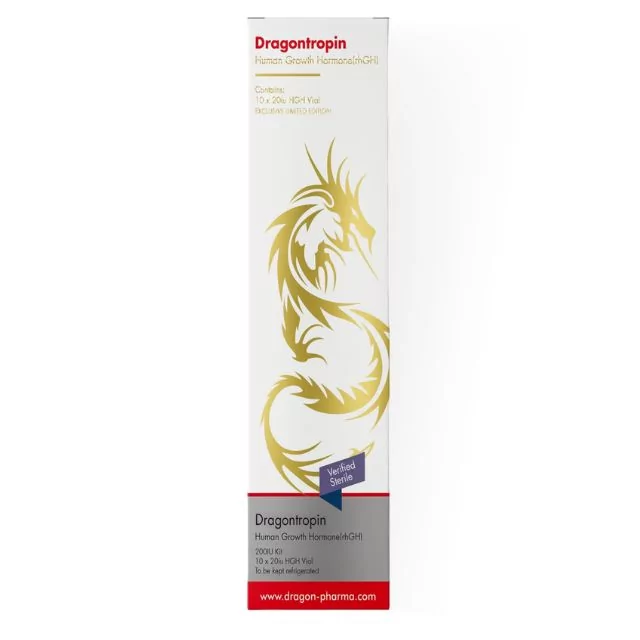
The larger kit contains ten vials labeled at 20 IU each, for 200 labeled IU in total. It is listed at $475, producing a lower price of $2.38 per labeled IU when rounded to the nearest cent.
The Dragontropin HGH 200 IU product page lists the higher-strength format. Because both kits contain ten vials, the larger kit doubles the labeled amount of somatropin per vial rather than simply adding more vials.
Which Kit Offers Better Headline Value?
Based strictly on the listed prices and labeled totals, the 200 IU version offers the lower nominal cost per IU:
- 100 IU kit: $275 ÷ 100 IU = $2.75 per labeled IU
- 200 IU kit: $475 ÷ 200 IU = $2.375 per labeled IU
That makes the 200 IU kit approximately 13.6% less expensive per labeled IU. A buyer pays $200 more upfront than for the smaller kit but receives twice the labeled product.
This does not automatically make the larger kit the better purchase for everyone. A larger amount increases the financial commitment, places more product at risk if transportation or storage conditions are poor and may be unnecessary for someone who has not received a medical diagnosis or prescription.
How Does Dragontropin HGH Work?
Natural growth hormone is produced by the anterior pituitary gland and released in pulses, with secretion influenced by sleep, exercise, nutrition, age, sex and feedback from other hormones.
Recombinant somatropin acts through the same growth hormone receptors as endogenous GH. Once in circulation, it can exert direct metabolic effects and stimulate the production of insulin-like growth factor 1, commonly abbreviated as IGF-1, in the liver and other tissues.
The basic pathway can be summarized as follows:
- Somatropin enters the circulation.
- It binds to growth hormone receptors in responsive tissues.
- Growth hormone signaling influences metabolism, fluid balance and tissue turnover.
- The liver and other tissues increase IGF-1 production.
- IGF-1 contributes to growth, protein turnover, bone metabolism and cellular signaling.
Dragontropin vs. Growth Hormone-Releasing Peptides
Direct HGH and growth hormone secretagogues should not be treated as interchangeable.
Compounds such as GHRP-2 act through receptors that signal the pituitary to release endogenous GH. You can read more about that mechanism in our guide to GHRP-2, its potential benefits and commonly discussed combinations.
GHRH analogues work through another part of the same upstream signaling system. For example, CJC-1295 DAC produces prolonged GHRH-receptor stimulation, while the CJC-1295 No DAC and ipamorelin combination is generally discussed as a shorter, pulse-oriented approach.
Dragontropin bypasses these upstream release signals by supplying recombinant growth hormone directly. Its effect therefore does not depend on the pituitary producing a comparable pulse in response to a secretagogue.
Does HGH Work Like an Anabolic Steroid?
No. Somatropin does not bind to androgen receptors and is not an anabolic-androgenic steroid. It does not produce the same direct androgenic effects or the same pattern of reproductive-axis suppression associated with testosterone derivatives.
That does not mean HGH is mild or risk-free. It influences a different hormonal network involving IGF-1, insulin sensitivity, fluid retention and tissue growth. Combining HGH with anabolic drugs may increase physiological strain rather than simply adding benefits.
Dragontropin Lab Results: What the March 2026 Tests Show
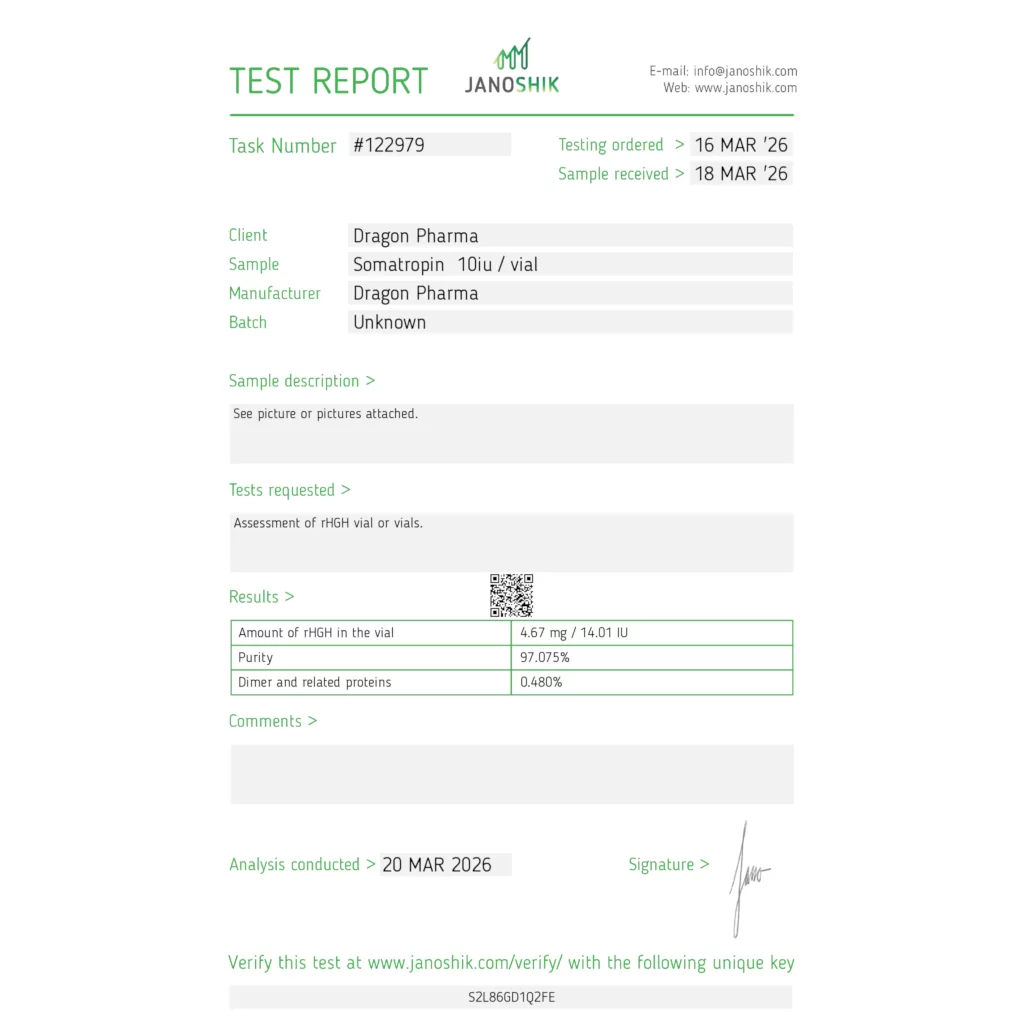
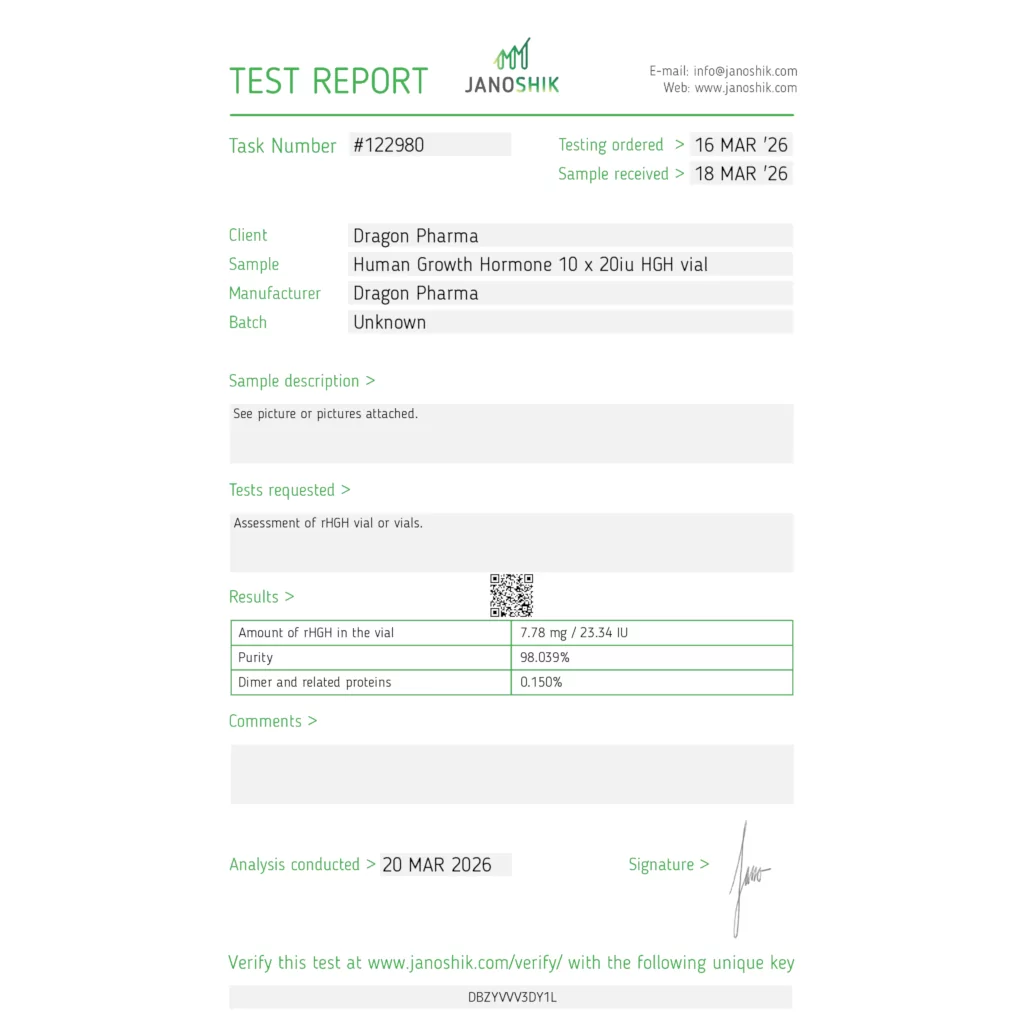
The latest supplied laboratory reports for both Dragontropin formats are dated March 20, 2026. The reported results were:
| Version | Labeled amount per vial | Reported amount | Reported purity | Difference from label |
|---|---|---|---|---|
| Dragontropin 10 IU | 10 IU | 14.01 IU | 97% | 40.1% above label claim |
| Dragontropin 20 IU | 20 IU | 23.34 IU | 98% | 16.7% above label claim |
Interpreting the 10 IU Result
The tested 10 IU sample reportedly contained 14.01 IU at 97% purity. That is 4.01 IU above the stated amount, or approximately 40.1% more than the label claim.
From a buyer’s value perspective, an above-label assay may appear favorable. From a medication-quality perspective, however, substantial overfilling is more complicated. Accurate pharmaceutical manufacturing aims for consistency around a validated target—not simply the highest possible reading.
A 40% difference can affect predictability. Someone calculating exposure from the label could receive materially more somatropin than expected if the tested result reflects every vial in the batch.
Interpreting the 20 IU Result
The tested 20 IU sample reportedly contained 23.34 IU at 98% purity. This is 3.34 IU above the stated amount, or approximately 16.7% more than the label claim.
Its reported purity is one percentage point higher than that of the tested 10 IU sample, and its amount is closer to the label in percentage terms. Based solely on these two assay figures, the 20 IU result shows tighter alignment with its labeled strength.
What Does 97–98% Purity Mean?
Purity generally describes how much of the detected peptide material corresponds to the target compound compared with peptide-related impurities. A result of 97% or 98% is strong in the context of many performance-market products.
It is important not to overinterpret this figure. Peptide purity is not the same as:
- Sterility
- Absence of bacterial endotoxins
- Correct protein folding
- Full biological activity
- Vial-to-vial uniformity
- Freedom from all non-peptide contaminants
- Stability after shipping or storage
An assay can show high chemical purity while leaving these other quality characteristics untested. For an injectable protein, those distinctions matter.
Does One Lab Report Prove Every Kit Is Equally Potent?
No. A laboratory report describes the submitted sample. The confidence it provides depends on whether buyers can connect that sample to the exact production batch they receive.
A useful report should ideally include:
- A clearly identified product and batch number
- The date the sample was received and analyzed
- The analytical method used
- The measured quantity and purity
- Identifiable laboratory information
- A way to verify the report independently
Repeated testing across batches is more informative than a single favorable result because it helps demonstrate consistency over time.
Lab-test verdict: Both March 20, 2026 samples reportedly exceeded their label claims and showed high purity. The 20 IU sample was closer to its stated strength, while the 10 IU sample showed a notably larger overfill. Neither result, by itself, proves sterility or uniformity across every vial and batch.
Dragontropin Price and Value Analysis
“Worth the money” depends on more than the kit price. A useful comparison should consider nominal cost, tested content, purity, upfront expense and the reliability of the supporting evidence.
Cost per Labeled IU
| Version | Kit price | Labeled total | Cost per labeled IU |
|---|---|---|---|
| Dragontropin 100 IU | $275 | 100 IU | $2.75 |
| Dragontropin 200 IU | $475 | 200 IU | $2.38 |
The 200 IU kit is the clear winner when comparing advertised quantity with listed price. Its cost per labeled IU is approximately $0.38 lower.
Estimated Cost per Tested IU
If each vial matched the reported March 2026 assay—and that assumption cannot be confirmed from a single tested sample—the theoretical kit totals would be:
- 10 IU version: 14.01 IU × 10 vials = 140.1 tested IU per kit
- 20 IU version: 23.34 IU × 10 vials = 233.4 tested IU per kit
Using those hypothetical totals:
- 100 IU kit: $275 ÷ 140.1 = approximately $1.96 per tested IU
- 200 IU kit: $475 ÷ 233.4 = approximately $2.04 per tested IU
This reverses the apparent ranking: the heavily overfilled 10 IU sample would produce a slightly lower cost per measured IU. However, this calculation should not be treated as a promise of kit contents. It assumes every vial contains the same amount as the single submitted sample, which has not been established.
Why Predictability May Matter More Than Overfilling
In supplements, receiving more active ingredient than expected may sound like a bonus. With an injectable hormone, inaccurate labeling can make exposure harder to predict.
A product that consistently delivers close to its stated amount may be preferable to one that varies widely, even when the variation is upward. The 20 IU report’s 16.7% overfill is still meaningful, but it is less extreme than the 40.1% result reported for the 10 IU version.
Potential Effects of Recombinant HGH
Dragontropin is a branded somatropin product, so its plausible effects derive from growth hormone pharmacology rather than from a brand-specific mechanism. The presence of HGH does not mean every marketed outcome is guaranteed.
Changes in Body Composition
Growth hormone can increase lipolysis, the process through which stored triglycerides are broken down and fatty acids are released. This creates a biological basis for reduced fat mass under some conditions.
HGH may also increase measured lean body mass, but “lean mass” is not synonymous with newly built contractile muscle. Water, connective tissue, organs and other fat-free components all contribute to lean-mass measurements.
In healthy adults, HGH has not been shown to replace the fundamentals of fat loss: sustained energy control, resistance training, adequate protein, sleep and consistent activity. Readers interested in more conventional metabolic support can compare the mechanism with L-carnitine’s role in fatty-acid transport and athletic nutrition.
Recovery and Connective Tissue
Growth hormone and IGF-1 participate in collagen turnover and tissue remodeling. This has contributed to HGH’s reputation for supporting tendons, joints and recovery from demanding training.
Those mechanisms do not mean HGH can safely repair a torn tendon, eliminate joint degeneration or replace structured rehabilitation. Pain may also be worsened by fluid retention, swelling or nerve compression.
For a separate examination of a compound marketed specifically around tissue repair, see our evidence-focused review of BPC 157 and injury recovery claims.
Muscle Growth and Performance
HGH influences protein turnover and IGF-1 signaling, but its muscle-building reputation is often exaggerated. In non-deficient trained adults, increases in lean mass do not always translate into comparable improvements in strength or athletic performance.
The most dramatic bodybuilding transformations attributed to HGH commonly involve numerous confounding factors, including anabolic steroids, insulin, thyroid drugs, calorie changes and years of specialized training. Such examples cannot isolate the effect of somatropin.
Sleep and General Well-Being
Natural GH secretion is closely associated with deep sleep, leading some users to report improved sleep quality after using HGH. Others experience numbness, headache, swelling or discomfort that can make sleep worse.
Subjective energy and recovery reports are difficult to separate from placebo effects, training changes and concurrent substances. They should not be presented as predictable clinical outcomes.
Bone and Tissue Metabolism
Growth hormone and IGF-1 affect bone turnover and help maintain normal tissue function in people with diagnosed GH deficiency. In medical care, benefits are evaluated against a confirmed deficiency and treatment is adjusted under supervision.
That context is different from raising GH exposure above normal in a healthy athlete. Correcting a deficiency and enhancing a normal hormonal system are not equivalent risk-benefit decisions.
Anti-Aging Claims
HGH is frequently marketed as an anti-aging therapy because normal growth hormone secretion declines with age. A normal age-related decline does not automatically represent a disease that should be reversed.
In healthy adults, HGH use can cause edema, joint and muscle pain, carpal-tunnel symptoms, elevated blood sugar and other adverse effects. The medical evidence does not support treating somatropin as a general youth-restoration drug.
Dragontropin Pros and Cons
Potential Advantages
- Two kit sizes: Buyers can compare a lower-entry-cost 100 IU option with a lower-cost-per-label-IU 200 IU option.
- Recent analytical data: Both versions have supplied laboratory reports dated March 20, 2026.
- High reported purity: The tested samples showed 97% and 98% purity.
- Above-label assay results: Both samples reportedly contained more somatropin than stated.
- Recognizable product identity: Dragontropin has consistent branding and dedicated listings rather than being sold as anonymous generic HGH.
- Lyophilized presentation: Freeze-dried powder is a standard approach for improving protein stability before reconstitution.
- Better nominal value in the larger kit: The 200 IU kit costs less per labeled IU.
Potential Disadvantages
- High upfront cost: The kits cost $275 and $475 before any related supplies or medical monitoring.
- Above-label content reduces predictability: More product is not automatically better when a hormone’s amount differs materially from its label.
- Assays do not prove sterility: Potency and purity reports cannot replace microbiological and endotoxin testing.
- Cold-chain vulnerability: Protein quality may deteriorate if storage and transport conditions are poor.
- Counterfeit risk: HGH is a high-value product category that attracts imitation packaging and unauthorized resale.
- Serious side effects are possible: Glucose regulation, fluid balance, nerve symptoms and tissue growth require consideration.
- Not approved for physique enhancement: Medical somatropin approvals do not cover routine bodybuilding, sports performance or anti-aging use.
- Prohibited in tested sport: Athletes can face sanctions regardless of product authenticity or intent.
Dragontropin Side Effects and Safety Concerns
The risks associated with Dragontropin are primarily the risks of recombinant somatropin, compounded by any uncertainty involving product identity, manufacturing, sterility and storage.
Official MedlinePlus information about somatropin injection describes approved medical uses, precautions and possible adverse effects. Prescription somatropin treatment is normally supervised by a clinician experienced in the relevant diagnosis.
Fluid Retention and Swelling
Somatropin can promote sodium and water retention. This may cause swollen hands or feet, facial puffiness, rapid scale-weight changes and increased blood pressure.
Fluid retention can be mistaken for rapid lean-tissue gain. It may also contribute to joint discomfort and nerve-compression symptoms.
Carpal-Tunnel-Like Symptoms
Numbness, tingling, burning or weakness in the hands can develop when swelling increases pressure around the median nerve. Mild tingling should not automatically be treated as proof that HGH is “working.” Persistent symptoms can indicate clinically significant nerve compression.
Joint and Muscle Pain
Joint stiffness, muscle discomfort and generalized aching are recognized complaints with somatropin exposure. These effects can undermine training quality despite HGH’s reputation as a recovery drug.
Reduced Insulin Sensitivity
Growth hormone can oppose some of insulin’s effects and may impair glucose tolerance. This can result in elevated fasting glucose, worsening prediabetes or increased difficulty controlling existing diabetes.
Risk may be greater when HGH is combined with other substances that affect blood glucose. Attempting to counteract this effect without medical oversight can create additional danger.
Headache and Intracranial Hypertension
Headache can have many causes, but severe headache accompanied by visual changes, nausea or vomiting deserves prompt medical evaluation. Intracranial hypertension is a recognized serious adverse effect associated with medical somatropin therapy.
Sleep Apnea
Growth-promoting and fluid-related effects may worsen obstructive sleep apnea in susceptible individuals. Loud snoring, witnessed pauses in breathing, severe daytime sleepiness or waking with choking sensations should not be ignored.
Thyroid and Adrenal Considerations
Somatropin treatment can reveal or alter other endocrine problems. In clinical settings, thyroid function and adrenal status may require evaluation, particularly in people with pituitary disease.
Abnormal Tissue Growth
Chronically excessive GH and IGF-1 signaling is associated with unwanted tissue growth. Concerns include enlarged facial or extremity features, organ growth and progression of certain pre-existing tumors.
Somatropin is contraindicated in active malignancy under approved prescribing information. Anyone with cancer, a history of tumors or unexplained symptoms requires qualified medical assessment rather than self-directed hormone use.
Injection-Related Risks
Any injectable product can cause pain, redness, swelling or infection at the injection site. Contaminated water, poor handling, reused equipment or a nonsterile vial can increase the risk of abscesses and systemic infection.
A potency report does not confirm that an injectable product is sterile. Severe redness, spreading warmth, drainage, fever or escalating pain requires medical attention.
Seek urgent medical care for chest pain, severe shortness of breath, fainting, major visual changes, confusion, signs of an allergic reaction, rapidly spreading swelling or symptoms of a serious injection-site infection.
Who Should Not Treat HGH as a Casual Fitness Product?
HGH should not be approached like a conventional sports supplement. Extra caution is necessary for people with:
- Active cancer or concern about tumor recurrence
- Diabetes, prediabetes or metabolic syndrome
- Untreated or severe obstructive sleep apnea
- Significant heart, kidney or liver disease
- Uncontrolled high blood pressure
- Pituitary or other endocrine disorders
- Diabetic retinopathy or unexplained vision changes
- Severe edema or carpal-tunnel symptoms
- Pregnancy, plans for pregnancy or breastfeeding
- Participation in drug-tested sport
Medical HGH treatment begins with diagnosis, not with choosing a kit size. A low or isolated serum GH measurement is not enough to diagnose adult growth hormone deficiency because natural secretion is pulsatile. Proper assessment may involve clinical history, IGF-1 testing and medically supervised stimulation testing.
Dragontropin and Tested Sport
Human growth hormone is prohibited in competitive sport under anti-doping rules. This applies to exogenous GH itself as well as various growth hormone-releasing factors.
Athletes subject to testing should consult the current World Anti-Doping Agency Prohibited List. A product being openly sold, accurately labeled or supported by a lab report does not make it permissible in sport.
Contamination and substitution create an additional risk. An athlete remains responsible for prohibited substances found in a sample, even when a seller’s description was inaccurate.
How to Evaluate Whether Dragontropin Is Genuine
HGH’s high price and compact packaging make it attractive to counterfeiters. Visual inspection cannot prove authenticity, but it can reveal warning signs.
Check Packaging Consistency
Compare the kit with current official product images rather than old forum posts. Look for consistent:
- Typography and logo placement
- Print resolution and color
- Vial labels and cap appearance
- Lot or batch identifiers
- Expiration information
- Security or verification features
- Outer-box seals and internal organization
Misspellings, blurred printing, mismatched batch details and labels applied at visibly different angles can justify suspicion, although sophisticated counterfeits may still look convincing.
Connect the Lab Report to the Batch
A report is more meaningful when its sample identifier corresponds to the batch being sold. A seller displaying one strong test indefinitely may be using old data to represent newer inventory.
The March 20, 2026 reports are useful current evidence only when the kits being evaluated belong to the tested production run or can be reliably traced to it.
Do Not Rely on the Powder’s Appearance
A compact white puck or fine white powder does not prove that a vial contains intact somatropin. Numerous inexpensive substances can be freeze-dried into a visually similar form.
Likewise, the amount of visible powder is not a reliable measure of IU content. Excipients may account for much of the material in the vial.
Consider the Supply Chain
Even an authentic product can be compromised after leaving the manufacturer. Relevant questions include:
- How long was the product in transit?
- Was it exposed to prolonged heat?
- Was the packaging damaged or wet?
- Was it shipped through multiple resellers?
- Can the batch and source be verified?
Authenticity and stability are separate issues. A genuine vial that has degraded is still a poor-quality product.
Be Skeptical of Extreme Discounts
A price dramatically below the established market level may indicate counterfeit, degraded, diverted or inaccurately labeled product. Discounts are not proof of fraud, but they should not override questions about source and storage.
How Does Dragontropin Compare With Other HGH Brands?
A fair comparison requires current laboratory data for each exact product and batch. Brand reputation alone is not enough, and comparing a tested Dragontropin sample with an untested competitor would create a misleading advantage.
Useful comparison criteria include:
| Criterion | Why it matters |
|---|---|
| Identity testing | Indicates whether the sample contains the claimed protein. |
| Quantitative assay | Measures how closely the content matches the label. |
| Purity | Estimates the proportion of target peptide relative to related impurities. |
| Sterility and endotoxin testing | Addresses safety characteristics that potency testing cannot establish. |
| Batch traceability | Links the report to the product actually being sold. |
| Repeated testing | Shows whether quality is consistent rather than based on one favorable sample. |
| Storage and distribution | Helps preserve a fragile protein after manufacturing. |
| Cost per labeled IU | Allows a basic price comparison. |
Dragontropin’s principal competitive advantage is that recent quantitative and purity figures are available for both kit formats. Its main unresolved questions are the same ones facing most performance-market HGH: sterility evidence, batch-to-batch consistency, cold-chain handling and regulatory status.
Is Dragontropin Worth the Money?
The answer depends on what “worth it” means and which evidence is given the most weight.
From a Product-Testing Perspective
The March 20, 2026 results are favorable in the narrow sense that both submitted samples reportedly contained identifiable, high-purity somatropin at amounts above their labels.
The 20 IU version produced the stronger overall quality impression because its reported purity was slightly higher and its potency was closer to the declared amount. The 10 IU version’s 14.01 IU result looks generous but also raises a larger question about dosing accuracy and manufacturing consistency.
From a Price Perspective
The 200 IU kit offers better nominal value at approximately $2.38 per labeled IU compared with $2.75 for the 100 IU kit. It is the logical choice in a simple price-per-label-IU comparison.
The 100 IU kit requires $200 less upfront and may appeal to someone focused on minimizing initial expenditure. Its unusually high assay result creates an attractive theoretical cost per tested IU, but that calculation cannot safely be generalized to every vial.
For Competitive Bodybuilders
Dragontropin may look competitive compared with untested HGH products because it has current assay data and recognizable packaging. Nevertheless, potency does not eliminate HGH’s health risks, and serious bodybuilding use often involves combinations that make adverse effects harder to predict.
A tested product reduces one category of uncertainty; it does not make nonmedical HGH use medically safe.
For Drug-Tested Athletes
No. For athletes governed by WADA-compliant rules, HGH is prohibited. Neither a therapeutic-sounding label nor a laboratory report changes that status.
For Recreational Fitness Enthusiasts
The value proposition is difficult to justify for most healthy recreational lifters. The cost is high, the desired effects are not guaranteed, appropriate monitoring adds further expense and the risk profile is substantially different from that of ordinary supplements.
Training design, calorie control, protein intake, sleep and evidence-based supplementation will usually deliver a clearer benefit-to-risk ratio.
For Anti-Aging Purposes
Dragontropin should not be considered a general anti-aging product. Although GH deficiency can be medically treated when properly diagnosed, using HGH to reverse normal aging is unsupported and can cause meaningful harm.
Overall Dragontropin Verdict
Dragontropin presents a stronger case than an anonymous or untested HGH product, but it should not be confused with an approved, pharmacy-dispensed somatropin treatment.
Its strengths include recent lab data, high reported purity, above-label potency, two kit sizes and a favorable nominal cost per IU in the 200 IU version. Its weaknesses include substantial overfilling in the tested 10 IU sample, incomplete information about sterility and batch uniformity, dependence on proper storage and all the medical and legal concerns associated with nonmedical HGH use.
For someone comparing only underground or performance-market HGH brands, Dragontropin’s test results make it a noteworthy candidate. For someone asking whether HGH itself is a sensible purchase, the decision cannot be answered by purity and price alone.
Bottom line: Based on the supplied March 20, 2026 tests, Dragontropin appears potent and comparatively pure. The 200 IU kit offers better value per labeled IU and a result closer to its declared strength. Still, neither version should be described as risk-free, medically appropriate for healthy users or fully validated by potency testing alone.
Frequently Asked Questions About Dragontropin
Dragontropin is marketed as Dragon Pharma’s recombinant human growth hormone product.
Each kit contains ten 2 mL vials of lyophilized powder. The 100 IU kit has ten vials labeled at 10 IU each, while the 200 IU kit has ten vials labeled at 20 IU each.
The listed price is $275 for the 100 IU kit and $475 for the 200 IU kit. Prices can change, so the live product listings should be checked for current information.
Based on labeled totals, the 200 IU kit is cheaper. It costs approximately $2.38 per labeled IU, compared with $2.75 per labeled IU for the 100 IU kit.
The supplied reports dated March 20, 2026 showed 14.01 IU at 97% purity for the 10 IU version and 23.34 IU at 98% purity for the 20 IU version.
The result indicates that the submitted sample contained approximately 40.1% more somatropin than its label claimed. This may look favorable in terms of quantity, but it also means the labeled amount did not accurately predict the tested content.
No. Peptide purity and sterility are different tests. A high-purity result does not prove the absence of bacteria, fungi or bacterial endotoxins.
“Pharmaceutical grade” should be used cautiously. A product can have strong analytical results without being an FDA-approved medicine manufactured and distributed through a regulated pharmacy system. Potency and purity alone do not establish pharmaceutical-grade status.
No. Dragontropin supplies recombinant human growth hormone directly. CJC-1295 is a GHRH analogue that stimulates the pituitary component of the body’s growth hormone axis.
Somatropin is a temperature-sensitive protein. Exact storage requirements should follow validated manufacturer or pharmacy instructions for the specific formulation. Heat, freezing, light and improper handling can potentially damage protein medicines.
HGH can influence IGF-1, protein turnover and lean body mass, but it is not proven to create dramatic muscle growth on its own in healthy trained adults. Some lean-mass gain may reflect water and non-contractile tissue rather than functional muscle.
Growth hormone promotes lipolysis, creating a plausible fat-metabolism effect. It does not replace an appropriate calorie deficit, diet adherence and physical activity, and it is not approved as a routine weight-loss treatment.
It can. Edema and related symptoms are recognized effects of somatropin, particularly when exposure is excessive or an individual is susceptible.
Somatropin may be prescribed to women with recognized medical indications, but there is no approved Dragontropin protocol for female bodybuilding or anti-aging. Pregnancy and breastfeeding require specific medical guidance.
The legal status of somatropin distribution, possession, prescribing and importation depends on the jurisdiction and intended use. In the United States, HGH is a prescription medication approved for specific conditions rather than general bodybuilding or anti-aging use.
No. Human growth hormone is prohibited under WADA anti-doping rules both in and out of competition.
A report can strengthen confidence when it is independently verifiable and linked to the exact batch. It cannot guarantee that every kit sold under the same name is authentic, equally potent, sterile or correctly stored.
Final Thoughts
Dragontropin stands out because buyers are not being asked to rely entirely on branding or user reviews. The supplied March 2026 reports provide measurable evidence that the tested samples contained high-purity somatropin in amounts exceeding their stated strengths.
The 100 IU and 200 IU versions serve different price points, but the larger kit has the stronger nominal value. At $475 for 200 labeled IU, it costs approximately 13.6% less per labeled IU than the $275 kit. Its 23.34 IU result was also closer to its label than the 10 IU version’s 14.01 IU result.
Still, a purchasing decision should not stop at “more IU for less money.” HGH is an injectable prescription hormone with genuine metabolic and systemic risks. Chemical purity does not establish sterility, a favorable sample does not guarantee every batch, and above-label potency can reduce predictability.
The fairest conclusion is that Dragontropin appears competitive within its market based on the available assay data, especially in the 200 IU format. Whether it is worth buying depends on much larger questions: medical need, legal access, athletic eligibility, trustworthy sourcing and willingness to accept the risks of manipulating the GH–IGF-1 axis.