


CJC-1295 DAC occupies an unusual place in the peptide conversation. It is frequently discussed in bodybuilding and performance circles as a long-acting way to increase growth hormone signaling, yet the compound remains investigational, has limited human research behind it, and is not an FDA-approved treatment.
What makes CJC-1295 DAC distinctive is not simply that it can stimulate growth hormone release. Its defining feature is the Drug Affinity Complex, or DAC, which allows the peptide to remain active far longer than short-acting growth hormone-releasing hormone analogues. That extended activity may sound convenient, but it also creates important tradeoffs involving hormone exposure, side effects, athletic eligibility, and the ability to stop treatment quickly.
This guide explains what CJC-1295 DAC is, how it affects the growth hormone and IGF-1 axis, what the available human research actually shows, and where popular claims go beyond the evidence.
Important: CJC-1295 is an investigational peptide and is not approved by the FDA for bodybuilding, fat loss, anti-aging, injury recovery, or general wellness. This article is for educational purposes and should not be treated as medical advice or a usage protocol.
What Is CJC-1295 DAC?
CJC-1295 DAC is a synthetic analogue of growth hormone-releasing hormone, commonly abbreviated as GHRH. Natural GHRH is produced in the hypothalamus and acts on receptors in the anterior pituitary gland, helping signal the release of growth hormone.
CJC-1295 was engineered to imitate part of that signaling process while resisting rapid enzymatic breakdown. The DAC version was further modified so that it could bind to albumin, a common protein circulating in the blood. This binding dramatically extends the period during which the peptide can influence the growth hormone axis.
In simple terms, CJC-1295 DAC does not contain human growth hormone. Instead, it sends a prolonged signal that may encourage the pituitary gland to secrete more of the body’s own growth hormone, assuming the pituitary remains capable of responding.
Key distinction: CJC-1295 DAC is a growth hormone-releasing hormone analogue, not injectable recombinant human growth hormone. It stimulates an upstream part of the hormonal pathway rather than supplying GH directly.
A Modified Form of GHRH
Natural GHRH has a very short duration of action because enzymes rapidly break it down. Researchers developed modified analogues to preserve GHRH receptor activity while increasing resistance to degradation.
CJC-1295 is based on a shortened, modified portion of the original GHRH molecule. Strategic amino-acid substitutions make it more stable than endogenous GHRH. The attached Drug Affinity Complex then gives the DAC version its unusually long pharmacological profile.
Why Is It Discussed in Bodybuilding?
Growth hormone and its downstream mediator, insulin-like growth factor 1, are involved in numerous physiological processes, including protein metabolism, tissue remodeling, fluid regulation, bone turnover and the mobilization of stored fat.
That biology has led to interest in CJC-1295 DAC among athletes seeking better recovery, improved body composition or more restful sleep. However, biological plausibility is not the same as proven performance enhancement. The early clinical trials primarily measured hormone concentrations and short-term tolerability in healthy adults; they were not designed to demonstrate bodybuilding results.
How Does CJC-1295 DAC Work?
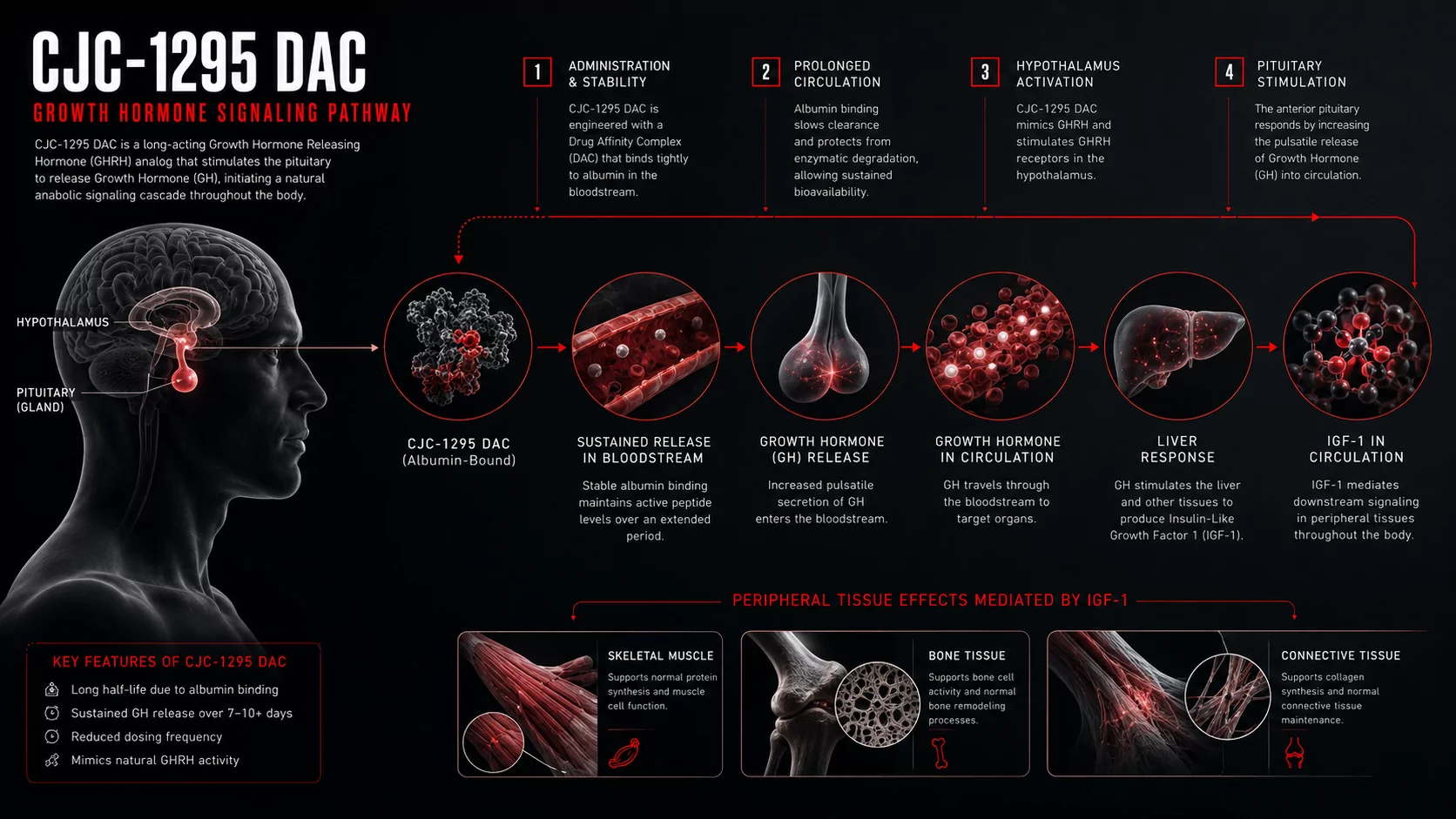
To understand CJC-1295 DAC, it helps to view growth hormone production as a communication chain:
- The hypothalamus releases natural GHRH.
- GHRH binds to receptors on somatotroph cells in the pituitary gland.
- The pituitary releases growth hormone into circulation.
- Growth hormone acts directly on tissues and stimulates the liver and other tissues to produce IGF-1.
- Growth hormone, IGF-1 and somatostatin provide feedback that helps regulate future secretion.
CJC-1295 DAC acts near the beginning of this chain. By activating pituitary GHRH receptors for an extended period, it can raise average and baseline growth hormone output. The resulting increase in GH signaling can subsequently elevate IGF-1.
Growth Hormone Does Not Normally Stay Constant
Growth hormone is normally released in pulses rather than at a fixed rate. These pulses are influenced by sleep, exercise, age, sex, nutrition, blood glucose, stress and other hormones. A substantial secretion pulse commonly occurs around deep sleep, although individual patterns vary.
One early human investigation found that CJC-1295 increased mean and trough GH concentrations while preserving detectable pulsatility. In other words, secretion did not become completely flat. Nevertheless, “preserved pulsatility” should not be interpreted as meaning that the hormone profile remains identical to normal physiology. Raising trough concentrations can substantially increase total exposure even when peaks and valleys remain visible.
The Role of IGF-1
IGF-1 is one of the principal downstream mediators of growth hormone activity. It participates in cell growth, protein synthesis, bone metabolism and tissue repair. Because CJC-1295 DAC can elevate GH secretion over multiple days, IGF-1 concentrations may remain elevated for considerably longer than they would after a brief natural GH pulse.
A small randomized human trial reported sustained, dose-dependent increases in both GH and IGF-1 after CJC-1295 administration. The researchers observed GH elevation for at least six days and IGF-1 elevation for approximately nine to eleven days after a single administration in some study groups. Readers can review the original study through the PubMed record for the CJC-1295 clinical trial.
These findings establish that the compound can activate the GH/IGF-1 axis. They do not establish that it safely produces meaningful muscle gain, fat loss, rejuvenation or injury healing over the long term.
What Does “DAC” Mean in CJC-1295 DAC?
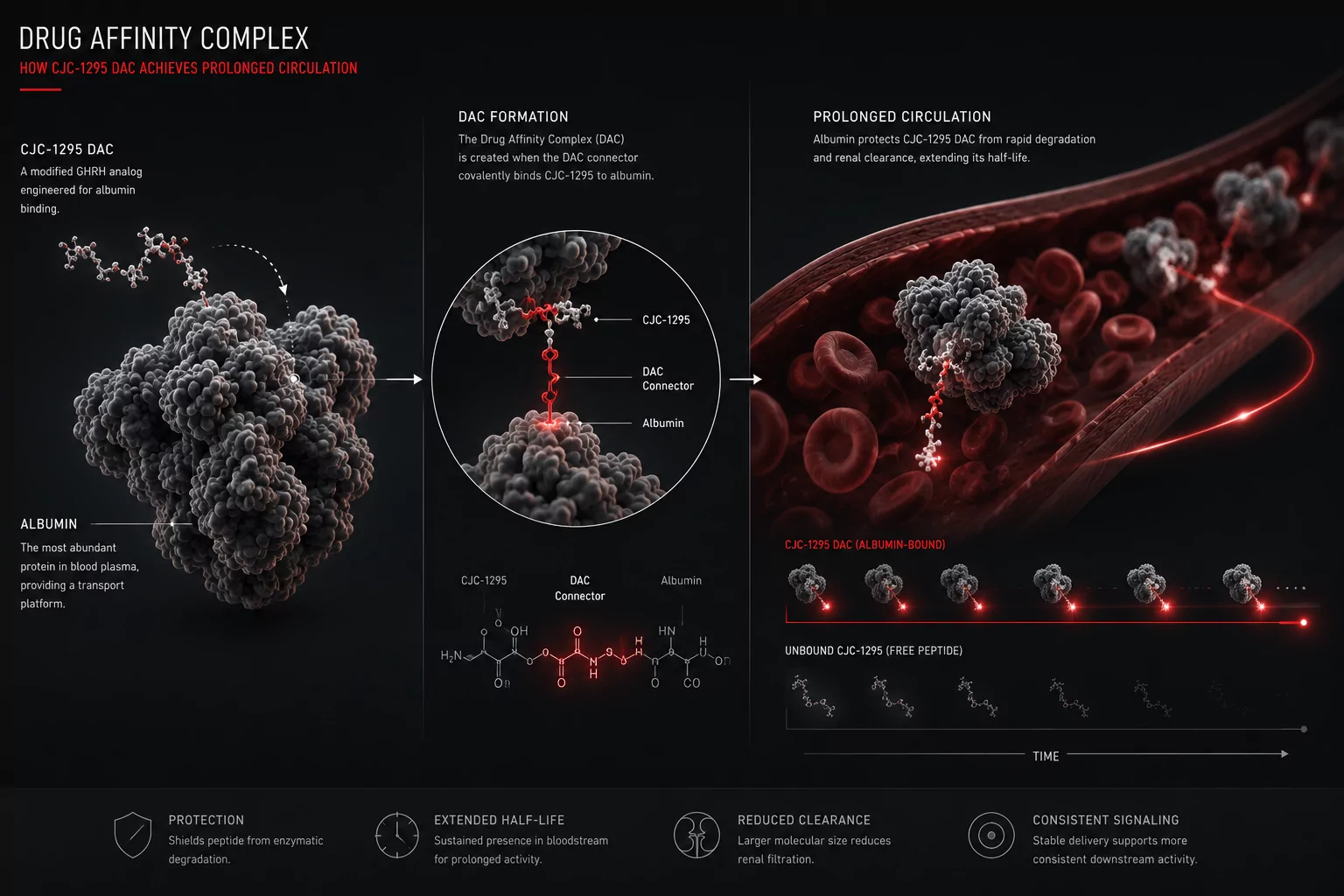
DAC stands for Drug Affinity Complex. It is a chemical modification designed to bind the peptide to serum albumin after administration.
Albumin circulates in the blood for a relatively long time. Once CJC-1295 DAC attaches to it, the peptide is protected from rapid clearance and enzymatic degradation. The albumin effectively acts as a carrier, allowing prolonged receptor stimulation.
Why Albumin Binding Matters
Without DAC, a modified GHRH fragment is cleared relatively quickly and produces a brief signaling window. With DAC, exposure extends across several days. Published research has described a terminal half-life measured in days, although the precise figure varies depending on the study design, dose, sampling method and individual physiology.
This produces the main practical difference between the two compounds commonly described online as “CJC-1295”:
- CJC-1295 with DAC: an albumin-binding, long-acting GHRH analogue.
- CJC-1295 without DAC: usually a marketing name for modified GRF (1-29), a short-acting GHRH analogue that does not contain the Drug Affinity Complex.
The naming is often inconsistent. Technically, the compound studied under the name CJC-1295 was developed with DAC. Products labeled “CJC-1295 No DAC” are generally modified GRF (1-29), also called mod GRF.
CJC-1295 DAC vs. CJC-1295 No DAC
The difference is more significant than injection frequency alone. DAC changes the duration and character of exposure to the GHRH signal.
| Feature | CJC-1295 DAC | CJC-1295 No DAC / Mod GRF (1-29) |
|---|---|---|
| Drug Affinity Complex | Present | Absent |
| Albumin binding | Yes | No meaningful DAC-mediated binding |
| Activity profile | Prolonged across several days | Brief signaling window |
| GH exposure | Raises mean and trough concentrations for an extended period | More closely associated with a short, timed pulse |
| Scheduling flexibility | Lower; exposure cannot be quickly withdrawn | Higher; activity declines relatively quickly |
| Human evidence | Limited early clinical studies measuring GH and IGF-1 | Often discussed by extrapolating from GHRH physiology and related compounds |
| Common online positioning | Convenience and sustained hormone elevation | Pulse-based combinations with a secretagogue |
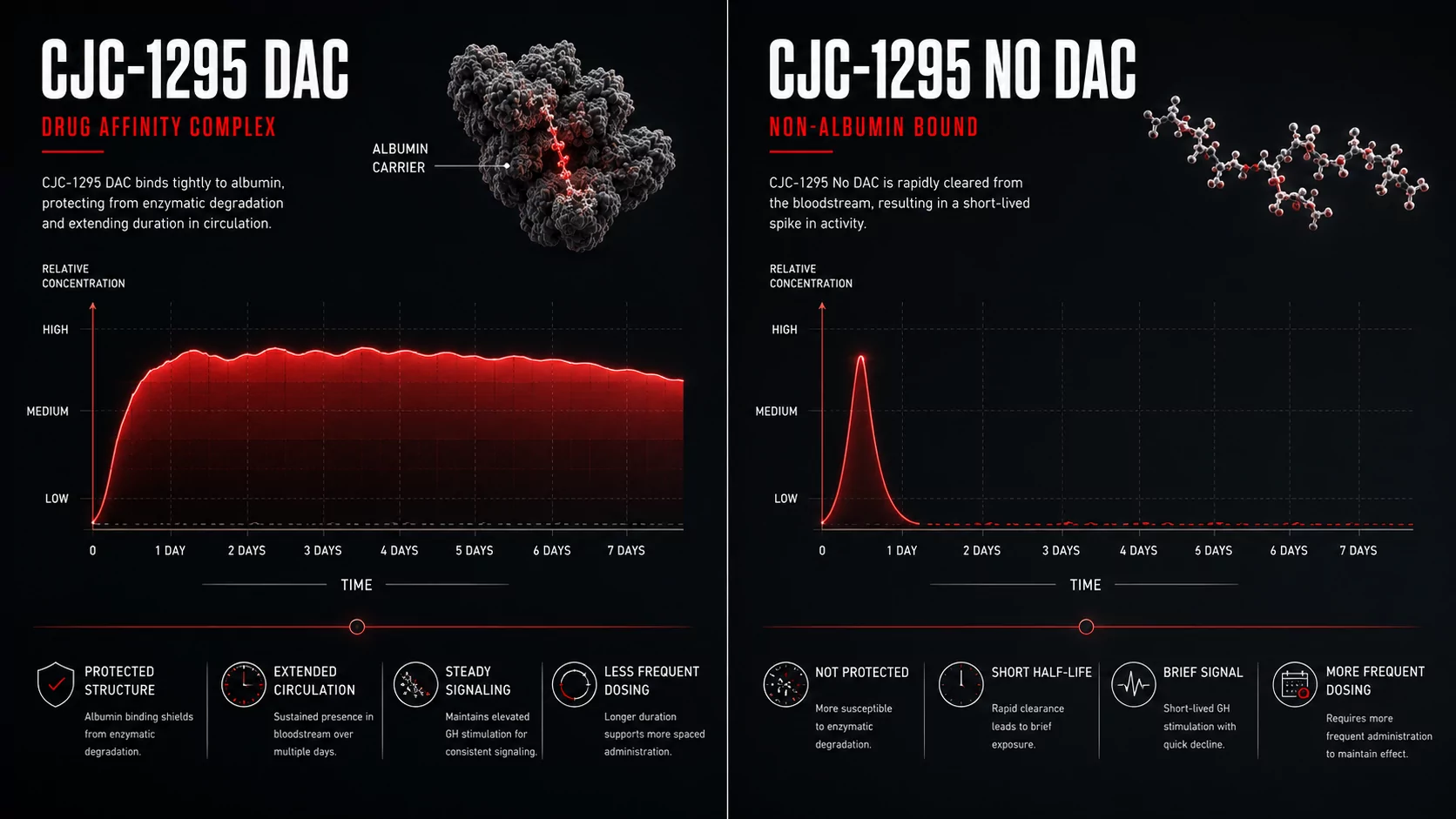
The long-acting version may appeal to someone focused on convenience, but the short-acting version provides greater control over when the signal occurs. Neither approach has been established as a safe or approved bodybuilding therapy.
For a closer examination of the short-acting combination often discussed in fitness communities, see our guide to CJC-1295 No DAC and Ipamorelin.
Potential CJC-1295 DAC Effects and Benefits
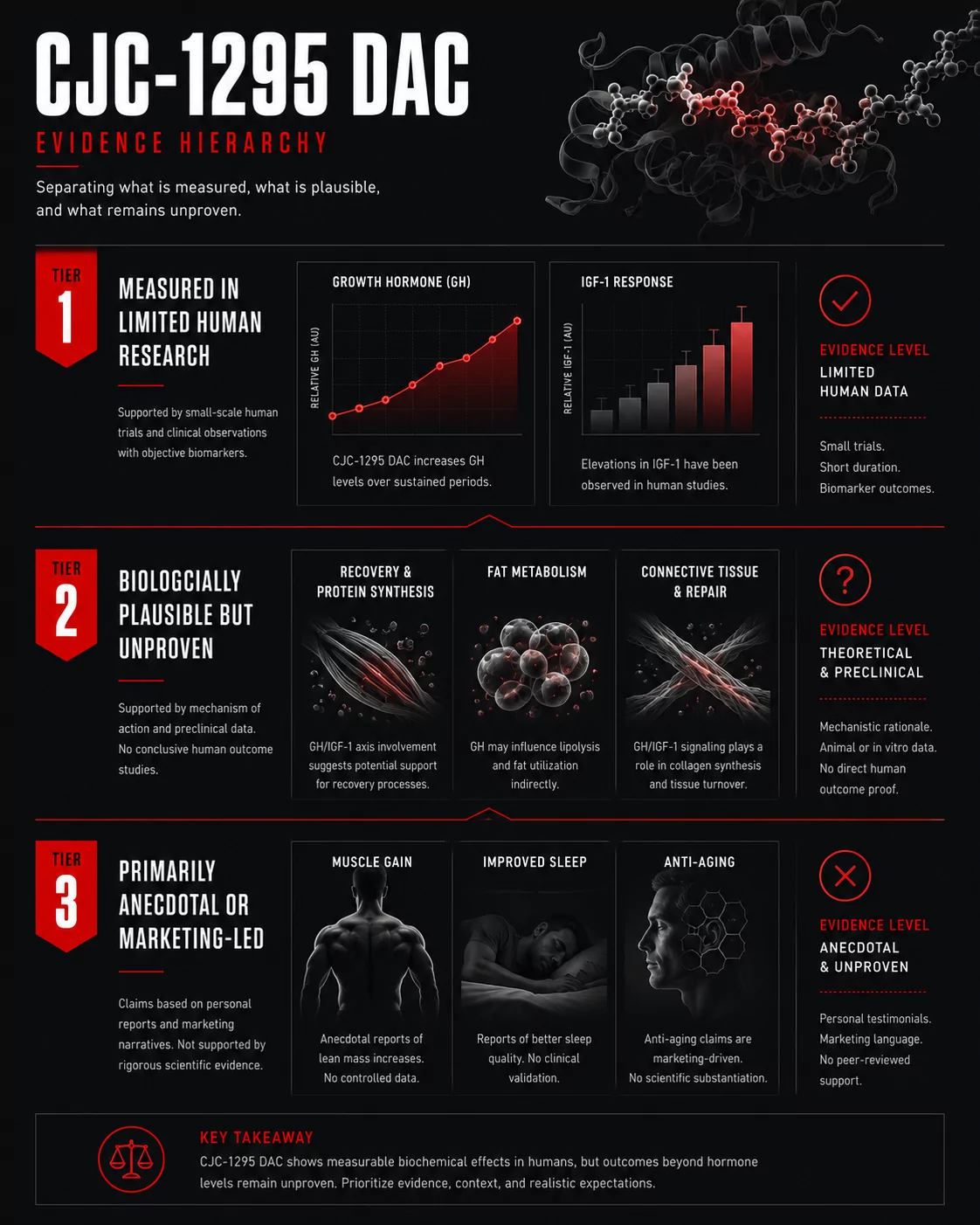
Claims surrounding CJC-1295 DAC frequently expand far beyond the available data. It is therefore useful to separate three different categories:
- Demonstrated pharmacological effects: outcomes directly measured in controlled human research.
- Biologically plausible effects: outcomes that could theoretically follow from increased GH and IGF-1 signaling.
- Anecdotal claims: user-reported effects that have not been reliably demonstrated in clinical trials.
1. Sustained Growth Hormone and IGF-1 Elevation
This is the most strongly supported effect. Early human studies found that CJC-1295 could produce sustained increases in circulating GH and IGF-1. Repeated exposure also appeared to create a cumulative effect.
That does not automatically make higher concentrations beneficial. Hormones generally operate within regulated ranges, and chronically increasing exposure can produce unwanted metabolic and cardiovascular effects alongside any desired outcome.
2. Recovery and Tissue Remodeling
Growth hormone and IGF-1 participate in protein turnover, collagen metabolism and tissue remodeling. This makes improved exercise recovery a plausible area of interest. Users commonly report less soreness or an increased ability to tolerate training volume.
However, no robust clinical trials have shown that CJC-1295 DAC accelerates healing from sports injuries or consistently shortens recovery time in resistance-trained adults. It should not replace diagnosis, rehabilitation, appropriate load management or evidence-based treatment.
Readers interested specifically in the broader research surrounding injury-focused peptides can compare these claims with our evidence-conscious guide to BPC 157 and injury recovery.
3. Lean-Mass Support
GH and IGF-1 are associated with anabolic signaling, but “anabolic” does not necessarily mean large increases in functional skeletal muscle. Growth hormone-related increases in lean body mass can partly reflect extracellular water, connective tissue and other non-muscle components.
Clinical research has not established CJC-1295 DAC as an effective muscle-building drug. Claims of dramatic hypertrophy are generally based on extrapolation, uncontrolled use or combinations with other performance-enhancing substances.
4. Fat-Metabolism Support
Growth hormone promotes lipolysis, the release of fatty acids from stored body fat. This creates a plausible mechanism for changes in fat metabolism. Yet no high-quality evidence demonstrates that CJC-1295 DAC independently produces substantial or sustainable fat loss.
Actual fat loss still depends heavily on energy balance, dietary adherence, physical activity, sleep and individual metabolic factors. A compound that influences lipolysis cannot override a consistently excessive calorie intake.
For a comparison with a peptide developed around fat-metabolism signaling rather than prolonged GHRH activation, read our AOD 9604 peptide guide.
5. Sleep Quality
Some users describe deeper sleep, more vivid dreams or improved morning recovery. Because growth hormone secretion is closely linked with slow-wave sleep, this association may appear intuitive.
Nevertheless, evidence that CJC-1295 DAC reliably improves sleep quality is weak. Sleep can also deteriorate when a compound causes flushing, headache, palpitations, fluid retention or changes in glucose regulation.
6. Skin, Collagen and “Anti-Aging” Effects
Claims involving firmer skin, faster hair growth, improved collagen or rejuvenation are common in peptide marketing. Growth hormone signaling can affect skin thickness and connective tissue, but CJC-1295 DAC has not been proven to reverse aging or improve long-term health.
“Anti-aging” is especially misleading when it implies that raising GH or IGF-1 is universally beneficial. Normal aging is complex, and unusually high growth hormone activity can carry genuine health risks.
Potential Advantages of CJC-1295 DAC
Long Duration of Action
The albumin-binding mechanism substantially extends activity compared with short-acting GHRH analogues. This is the compound’s defining pharmacological advantage.
Less Frequent Administration in Research Settings
Because its effects persist for days, CJC-1295 DAC does not require the repeated daily timing associated with short-acting GHRH analogues. Fewer administrations may appear more convenient and may reduce the number of injection-site events, although each injection still carries sterility and product-quality risks.
Sustained GH/IGF-1 Axis Activation
For researchers investigating prolonged GHRH receptor stimulation, DAC provides a way to maintain elevated mean GH and IGF-1 concentrations without directly administering recombinant growth hormone.
Some Physiological Pulsatility May Remain
Research suggests that measurable GH pulses can persist during exposure. This distinguishes CJC-1295 DAC from the simple continuous delivery of exogenous GH, but it should not be described as perfectly reproducing natural secretion.
No Direct Testosterone Suppression Mechanism
CJC-1295 DAC does not act through the androgen receptor and is not an anabolic steroid. It is therefore not expected to suppress the hypothalamic-pituitary-gonadal axis in the same direct way as exogenous anabolic-androgenic steroids.
This does not mean it is free of endocrine consequences. Manipulating the GH/IGF-1 axis can still affect glucose control, fluid balance, blood pressure and interactions between hormonal systems.
Cons and Limitations of CJC-1295 DAC
Long Exposure Cannot Be Quickly Reversed
The same long half-life that makes DAC convenient can become a disadvantage when side effects occur. Once administered, the albumin-bound compound may continue influencing hormone secretion for days. Skipping the next administration does not immediately end the current exposure.
Limited Human Research
The principal human studies were small, short and focused largely on hormone concentrations, pharmacokinetics and immediate tolerability. Large randomized trials have not established long-term safety, optimal clinical use, meaningful athletic outcomes or effects in diverse populations.
No FDA-Approved Indication
CJC-1295 is not an FDA-approved medication. The FDA has specifically stated that compounded drugs containing CJC-1295 may present risks involving immune responses, peptide impurities and difficulty characterizing the active ingredient. The agency also notes limited clinical data and reports of serious adverse events, including increased heart rate and systemic vasodilatory reactions. These concerns are summarized on the FDA’s page covering bulk drug substances that may present significant safety risks.
Product Identity and Purity Can Be Uncertain
Products purchased outside regulated pharmaceutical channels may be underdosed, overdosed, contaminated or incorrectly labeled. A vial labeled “CJC-1295” may also fail to clarify whether it contains genuine DAC-modified CJC-1295 or short-acting mod GRF (1-29).
A certificate showing one laboratory measurement is useful only when it can be connected to the exact batch being sold. It does not replace validated manufacturing, sterility testing, cold-chain control or regulatory oversight.
Marketing Often Overstates the Evidence
Online descriptions frequently present fat loss, muscle gain, recovery and anti-aging as predictable results. Current research supports prolonged activation of the GH/IGF-1 axis—not guaranteed physique transformation.
Prohibited in Tested Sport
Competitive athletes must consider anti-doping rules regardless of local access or how a seller labels the product. The World Anti-Doping Agency Prohibited List includes growth hormone-releasing factors and specifically identifies GHRH analogues such as CJC-1295. It is prohibited at all times for athletes governed by WADA-compliant rules.
CJC-1295 DAC Side Effects and Safety Concerns
Side-effect information comes from limited trials, pharmacology, regulatory safety signals and user reports. The true frequency of adverse reactions is unknown because CJC-1295 DAC has not undergone the level of testing required for an approved medicine.
Injection-Site Reactions
Redness, pain, itching, swelling or irritation can occur after an injection. A worsening area of redness, warmth, severe tenderness, drainage or fever requires medical evaluation because it may indicate infection.
Flushing and Vasodilatory Symptoms
Warmth, facial flushing, dizziness and a temporary drop in vascular resistance have been reported. FDA safety materials reference systemic vasodilatory reactions among the serious adverse events associated with CJC-1295.
Increased Heart Rate or Palpitations
A rapid heartbeat, pronounced palpitations, chest discomfort, fainting or shortness of breath should not be dismissed as a normal peptide response. Acute cardiovascular symptoms warrant prompt medical attention.
Fluid Retention
Higher GH and IGF-1 activity can influence sodium and water balance. Possible effects include puffiness, swollen hands or ankles, rapid changes in scale weight and increased blood pressure.
Numbness, Tingling and Nerve-Compression Symptoms
Fluid-related pressure around peripheral nerves may contribute to tingling, numbness or carpal-tunnel-like discomfort. Similar effects are recognized with excessive growth hormone exposure.
Headache, Fatigue or Dizziness
Headache and transient tiredness are commonly mentioned in peptide discussions, but these symptoms are nonspecific. Persistent or severe neurological symptoms should be assessed rather than attributed automatically to hormonal adjustment.
Changes in Glucose Regulation
Growth hormone can oppose some actions of insulin. Sustained GH elevation may therefore reduce insulin sensitivity or worsen blood-glucose control in susceptible individuals. This may be particularly relevant to people with diabetes, prediabetes, metabolic syndrome or a strong family history of glucose disorders.
Potential Effects of Chronically Elevated IGF-1
IGF-1 supports cell growth and survival. That is part of its normal biology, but it is also why prolonged, unmonitored elevation deserves caution. There is not enough evidence to quantify the long-term risk of CJC-1295 DAC in people with active cancer, a history of certain tumors or other conditions affected by growth signaling.
Immunogenicity and Peptide Impurities
As a modified peptide, CJC-1295 can potentially trigger an immune response. Manufacturing impurities, aggregates or degradation products may add further risk, especially when the source lacks robust pharmaceutical-quality controls.
Seek urgent medical help for chest pain, difficulty breathing, fainting, severe or rapidly spreading swelling, signs of anaphylaxis, sustained rapid heart rate, confusion or symptoms of a serious injection-related infection.
Who Should Be Especially Cautious?
There is no well-established self-use population for CJC-1295 DAC. Medical evaluation is especially important for anyone with:
- Diabetes, prediabetes or impaired glucose control
- Active cancer or a significant cancer history
- Pituitary, hypothalamic or other endocrine disorders
- Cardiovascular disease, arrhythmias or uncontrolled hypertension
- Severe sleep apnea
- Significant edema or nerve-compression symptoms
- Pregnancy, plans to become pregnant or breastfeeding
- A history of severe reactions to injectable peptides
- Participation in drug-tested sport
Drug interactions are poorly characterized. Using CJC-1295 alongside insulin, diabetes medication, growth hormone, corticosteroids or other compounds that alter glucose and fluid balance may create additional risks.
CJC-1295 DAC Dosage: What Does the Evidence Establish?
There is no FDA-approved CJC-1295 DAC dosage for muscle growth, fat loss, anti-aging, athletic recovery or general wellness. This distinction matters because internet “protocols” are not validated prescribing guidelines.
Early clinical studies evaluated weight-based experimental doses under controlled conditions and monitored participants with laboratory testing and medical oversight. Translating those research exposures into a self-directed bodybuilding schedule is not scientifically justified. Differences in concentration, peptide identity, purity and individual health make online dosing recommendations particularly unreliable.
The extended pharmacokinetics add another complication: repeated administration can produce cumulative exposure before the full effect of an earlier administration has resolved. Increasing the amount or frequency may therefore raise GH and IGF-1 more than expected.
Anyone reviewing a commercial listing such as the Dragon Pharma CJC-1295 DAC product page should distinguish manufacturer or retailer information from approved medical guidance. Product availability and marketing claims do not establish safety, effectiveness or an appropriate personal dose.
Monitoring Is More Than Checking IGF-1
In a legitimate clinical research or medical context, evaluation may involve more than a single IGF-1 result. Depending on the person and the clinical question, a qualified clinician may consider symptoms, glucose markers, blood pressure, fluid retention, thyroid function, other pituitary hormones, medication interactions and the reason GH-axis treatment is being considered.
An IGF-1 result within a laboratory reference interval does not by itself prove that an unapproved peptide is safe, correctly identified or free from contaminants.
How Long Does CJC-1295 DAC Take to Work?
The compound can alter laboratory hormone concentrations relatively quickly, but visible or subjective effects are less predictable.
Within Hours to Days
Hormonal changes begin after exposure, while flushing, headache, injection-site irritation or appetite changes—when they occur—may also appear early.
During the First Few Weeks
Some users report changes in sleep, water balance or exercise recovery. These experiences are not specific enough to prove that the peptide is producing a beneficial physiological adaptation. Increased scale weight, for example, may reflect fluid rather than muscle tissue.
Over Several Months
Claims involving substantial fat loss, muscle gain, tendon healing or younger-looking skin generally assume prolonged use. This is precisely the timeframe for which strong controlled safety and efficacy evidence is lacking.
Results are also confounded by training, calorie intake, protein consumption, sleep, anabolic-drug use and other peptides. Before-and-after reports cannot isolate the effect of CJC-1295 DAC when several variables change simultaneously.
CJC-1295 DAC Stacks: Mechanisms and Added Risks
Peptide “stacking” usually means combining compounds that act at different points in a signaling pathway. With CJC-1295 DAC, the most commonly discussed partners are growth hormone secretagogues that act through the ghrelin receptor.
CJC-1295 DAC and Ipamorelin
Ipamorelin is a growth hormone secretagogue receptor agonist. In theory, CJC-1295 provides GHRH-receptor stimulation while ipamorelin activates a separate pituitary signaling route. This mechanistic complementarity is often described as synergy.
Yet the combination has not been validated as a safe, standardized bodybuilding treatment. Combining two secretory signals may increase total GH exposure and make fluid retention, glucose changes, headache, tingling or other effects more likely or more difficult to attribute to one substance.
CJC-1295 DAC and GHRP-2
GHRP-2 is another ghrelin-receptor agonist discussed for its ability to stimulate growth hormone secretion. It may have a stronger or less selective hormonal profile than ipamorelin, with potential effects on appetite and other pituitary hormones.
Our separate guide to GHRP-2, its effects and commonly discussed stacks examines that compound in greater depth. Combining it with a long-acting GHRH analogue should not be assumed safe simply because the mechanisms differ.
CJC-1295 DAC and GHRP-6
GHRP-6 is known for stimulating the ghrelin receptor and is commonly associated with a pronounced increase in hunger. As with other secretagogues, combining it with CJC-1295 DAC may amplify growth hormone release but also adds uncertainty and potential side effects.
Why More Signaling Is Not Always Better
The GH/IGF-1 axis is regulated by feedback loops for a reason. Stronger or more sustained elevation does not guarantee proportionally better recovery or muscle growth. It may instead increase water retention, nerve symptoms, impaired glucose tolerance and other consequences of excessive exposure.
Stacking also makes troubleshooting difficult. When several unapproved substances are introduced together, neither the user nor a clinician can easily identify which product caused a reaction—or whether the reaction came from contamination rather than the labeled ingredient.
Is CJC-1295 DAC Legal?
Legal status depends on the country, intended use, sale method and applicable medicines laws. In the United States, CJC-1295 is not an FDA-approved drug. A “research use only” label does not transform a product into an approved medicine or establish that personal administration is lawful or safe.
Rules governing prescribing, compounding, importation, possession and online sales may differ by jurisdiction and can change. Consumers should consult current local regulations rather than relying on a retailer’s description.
For competitive athletes, the anti-doping position is clearer: CJC-1295 falls within WADA’s prohibited category for growth hormone-releasing factors and is banned both in and out of competition.
How to Evaluate CJC-1295 Claims Critically
Marketing language can make a limited research compound sound more established than it is. Use the following questions when assessing any claim:
- Was the outcome measured in humans or only in animals and cell models?
- Did the study measure actual muscle, performance or healing—or only GH and IGF-1 concentrations?
- Was there a randomized control group?
- How many participants were included?
- How long were they followed?
- Was the tested compound chemically identical to the commercial product?
- Did the study evaluate the combination being promoted?
- Are side effects and regulatory status presented as clearly as possible benefits?
Statements such as “increases GH,” “supports lipolysis” or “promotes collagen synthesis” may describe a plausible mechanism while still failing to prove a meaningful real-world outcome.
Frequently Asked Questions About CJC-1295 DAC
No. Recombinant human growth hormone supplies GH directly. CJC-1295 DAC is a GHRH analogue that signals the pituitary gland to increase endogenous GH secretion. Both can increase activity within the GH/IGF-1 axis, but they do so differently.
Yes. Small human studies found sustained increases in circulating IGF-1 after CJC-1295 administration. The magnitude and duration varied with exposure, and long-term clinical outcomes remain uncertain.
It has not been proven to produce substantial skeletal-muscle growth in healthy athletes or bodybuilders. Increased GH and IGF-1 provide a plausible anabolic mechanism, but lean-mass changes can also include water and connective tissue.
Growth hormone can increase lipolysis, but controlled research has not established CJC-1295 DAC as an effective or sustainable fat-loss treatment. Nutrition, calorie balance and activity remain the dominant factors in fat loss.
Published research describes a terminal half-life measured in several days, with pharmacological effects that can persist beyond one week. Exact estimates vary, so a single precise number should not be treated as universal.
The label is widely used commercially, but most products sold as CJC-1295 No DAC are modified GRF (1-29). The genuine DAC modification is central to the compound originally studied as long-acting CJC-1295.
Traditional anabolic-steroid PCT is intended to address suppression of the reproductive hormone axis. CJC-1295 does not directly suppress testosterone through an androgenic mechanism, so this concept does not translate neatly. That does not eliminate the need to monitor possible endocrine and metabolic effects.
There is no approved sex-specific protocol for its use in bodybuilding or wellness. Research is too limited to establish safety for women, and it should not be used during pregnancy or breastfeeding.
The combination is commonly discussed because the compounds signal through different receptors, but popularity does not establish safety. Controlled evidence supporting the stack is limited, and combined use may increase both hormone exposure and adverse effects.
Some users report improved sleep, but this has not been established as a reliable clinical effect. Side effects such as headache, flushing, rapid heart rate or fluid retention may also interfere with sleep.
No. CJC-1295 is included among the growth hormone-releasing factors prohibited under WADA rules. Tested athletes should also be aware that products can contain undeclared substances.
Storage requirements depend on the formulation and manufacturer. Peptides can be sensitive to heat, moisture, light, agitation and repeated temperature changes. A commercial storage instruction does not verify product identity, sterility or pharmaceutical quality.
Final Thoughts: Powerful Hormonal Effects, but Limited Clinical Certainty
CJC-1295 DAC is best understood as a long-acting experimental GHRH analogue. Through its Drug Affinity Complex, it binds to albumin and can stimulate the growth hormone axis for days rather than minutes. Human research supports sustained increases in GH and IGF-1, making the peptide pharmacologically significant.
The evidence becomes much weaker when the discussion moves from hormone concentrations to promises of muscle gain, rapid fat loss, injury repair, better sleep or age reversal. These outcomes remain inadequately tested, especially over the extended periods commonly promoted in performance and wellness settings.
Its greatest apparent advantage—long-lasting activity—is also one of its principal disadvantages. Prolonged exposure is convenient only while the response is desirable. When adverse effects occur, the compound cannot be removed from circulation or switched off immediately.
CJC-1295 DAC should therefore not be treated as a routine supplement or a proven shortcut to a better physique. Its unapproved status, uncertain product quality, limited long-term evidence, metabolic risks and prohibition in tested sport all deserve as much attention as its ability to elevate GH and IGF-1.